Most Popular
Based on Countries Been user data.
-
1
 Vienna
Vienna is one of the great cities of human civilisation — the seat of the Habsburg Empire for six centuries, a city that shaped classical music, psychoanalysis, and Modernism, and whose Ringstrasse boulevard of imperial museums, opera houses, and parliament buildings constitutes the most concentrated assembly of nineteenth-century cultural ambition in the world. The Kunsthistorisches Museum's collection of Vermeer, Bruegel, and Velázquez, the Vienna Philharmonic, the Spanish Riding School, and the Naschmarkt's food stalls stretch across centuries of excellence without any sense of contradiction. Coffeehouse culture — the Viennese café as a room of one's own, a place to read newspapers, argue philosophy, and nurse a Melange for hours — is UNESCO-listed intangible heritage and the city's most sustainable gift to civilisation.
-
2
 Salzburg
Salzburg is arguably the most beautiful city in the Alps, a compact Baroque jewel on the Salzach River whose UNESCO-listed old town, fortress, and surrounding salt-trade heritage feel almost implausibly well-preserved. Mozart was born here in 1756 at Getreidegasse 9, and the city has never quite recovered from the marketing opportunity — the Mozarteum, the countless concerts, the Mozartkugeln chocolate balls sold at every corner are all entirely sincere expressions of a city that genuinely lives its musical heritage. The surrounding Salzburg state offers the Salzkammergut lakes to the east and the Hohe Tauern mountains to the south, giving the whole region a natural framework that the Sound of Music filming crew recognised immediately.
-
3
 Tyrol
Tyrol
Tyrol is Austria's mountain heartland and the country's most internationally recognised ski destination, anchored by Innsbruck — the only city in the world to have hosted the Winter Olympics twice — and a ring of world-famous resorts including Kitzbühel, St. Anton, Ischgl, and the Ötztal valley. The Nordkette mountain chain rises directly behind Innsbruck's old town and can be reached by funicular from the city centre in under 20 minutes, a vertical transport miracle that makes the city's combination of urban culture and Alpine wilderness genuinely unique. The Ötzi the Iceman, a 5,300-year-old glacially preserved prehistoric man found in the Ötztal Alps, is now displayed in the South Tyrol Museum of Archaeology in Bolzano — a reminder that these mountains have been a highway between north and south Europe since before recorded history.
-
4
 Styria
Styria is the green heart of Austria, a state of forested mountains, vine-terraced hills, and spa towns that has somehow remained less internationally famous than its considerable attractions deserve. Graz, the state capital and Austria's second-largest city, is a UNESCO World Heritage Site in its own right — its Renaissance old town and the cliff-top Schlossberg, topped by a clock tower visible from every corner of the city, make it one of the most rewarding urban destinations in Central Europe. The southern Styrian wine road through the Südsteiermark, lined with Buschenschanken serving local Sauvignon Blanc and pumpkin-seed oil cuisine, is Austria's answer to Tuscany.
-
5
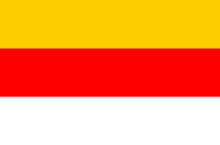 Carinthia
Carinthia occupies Austria's southernmost corner, a land of warm Alpine lakes — Wörthersee, Millstätter See, Faaker See — that make it the country's summer swimming destination par excellence, with water temperatures reaching 28°C in July. Klagenfurt, the state capital, sits on the Wörthersee's eastern end and offers a Venetian-influenced old town, a dragon fountain that has been the city's emblem since 1593, and easy access to the lakeside promenades that fill with Austrian and Italian holidaymakers all summer. The Grossglockner High Alpine Road, snaking up to Austria's highest peak at 3,798 metres, begins in Carinthia and is widely considered the most spectacular mountain road in the Alps.
-
6
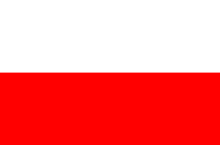 Upper Austria
Upper Austria stretches from the Bohemian Forest in the north to the Dachstein glacier in the south, encompassing Linz — Austria's third-largest city and a former European Capital of Culture — and the extraordinary Salzkammergut lake district that occupies its eastern reaches. Hallstatt, perched on the narrow strip of land between mountain and lake in the Salzkammergut, is so perfectly picturesque that it has inspired a full-scale replica in China, and the salt mines above the village have been worked continuously for over 7,000 years. Linz, long associated with its industrial past, has reinvented itself through the Ars Electronica Centre and the Lentos art museum, establishing a cultural credibility that now competes seriously with Graz.
-
7
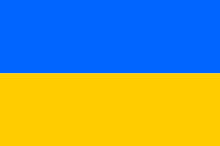 Lower Austria
Lower Austria is the largest of the nine federal states by area and frames the capital on all sides, making it easy to overlook in favour of Vienna — which would be a mistake. The Wachau Valley, a UNESCO World Heritage landscape of apricot orchards, Danube vineyards, and medieval abbeys perched on cliffs above the river, is one of the most beautiful stretches of the entire Danube. Melk Abbey, the fortress-monastery that towers above the valley from a granite spur, contains a library of illuminated manuscripts and a gilded church interior that rank among the finest Baroque achievements in Central Europe.
-
8
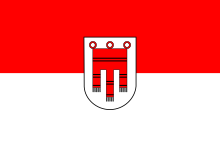 Vorarlberg
Vorarlberg is Austria's westernmost and second-smallest state, a compact Alpine territory bordering Switzerland and Liechtenstein that has developed an identity stubbornly distinct from the rest of the country — closer in dialect, architecture, and cultural sensibility to neighbouring Switzerland than to Vienna. Bregenz, the state capital, sits on the eastern shore of Lake Constance and hosts the Bregenz Festival, whose floating stage on the lake is one of the most dramatic opera venues in the world. The Bregenzerwald valley inland offers traditional Baroque farmhouses, award-winning contemporary architecture, and a cheese-making tradition that has turned the region into one of Austria's most surprising culinary destinations.
-
9
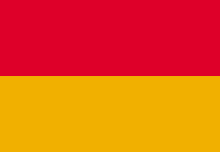 Burgenland
Burgenland is Austria's youngest and easternmost state, a narrow strip of lowland running along the Hungarian border that was only formally incorporated in 1921 and retains a cultural blend quite unlike anywhere else in the country. The Neusiedler See, a vast steppe lake shared with Hungary and listed as a UNESCO World Heritage Site alongside the surrounding national park, is one of Central Europe's most important wetland habitats and a paradise for birdwatchers and windsurfers in equal measure. The region's sunny, continental climate produces Hungary-influenced red wines — Blaufränkisch above all — that have earned Burgenland a place on serious wine lists across Europe.