Most Popular
Based on Countries Been user data.
-
1
 Brussels
Brussels is a city of paradoxes: simultaneously the administrative heart of the European Union and a neighbourhood-driven metropolis of friteries, comic-strip murals, and Art Nouveau facades. The Grand-Place, ringed by gilded guild houses and awarded UNESCO status, is arguably the most beautiful market square in the world. Beyond the tourist trail, Ixelles and Saint-Gilles reward slow exploration with boutiques, galleries, and restaurants that would feel at home in Paris or Berlin.
-
2
 West Flanders
West Flanders contains what many consider the most romantic city in Northern Europe: Bruges, a near-perfectly preserved medieval port whose canals, belfry, and lace-makers have made it a global icon. The North Sea coast — flat, windswept, and lined with belle époque resort towns like Knokke-Heist and De Panne — offers a completely different register of Belgian pleasure. The Flanders Fields around Ypres carry the weight of the First World War, where the Menin Gate's nightly Last Post ceremony draws visitors from across the Commonwealth.
-
3
 Antwerp
Antwerp is Belgium's second city and arguably its most dynamic, built on diamond trading, haute couture, and a port that handles more tonnage than almost anywhere in Europe. The cathedral of Our Lady soars above a dense medieval street grid that now hosts the studios of internationally renowned fashion designers and some of the best restaurants in the country. Mechelen, tucked in the province's south, adds another layer: a smaller city whose belfry is UNESCO-listed and whose Brouwerij Het Anker has been producing Gouden Carolus ales since the fifteenth century.
-
4
 East Flanders
East Flanders is anchored by Ghent, a medieval city of canals and guild houses that rivals Bruges for beauty but wins on atmosphere — less polished, more lived-in, unmistakably Flemish. The Gravensteen castle rises sheer from the city centre, its moat-ringed towers a reminder that this was once the seat of the powerful Counts of Flanders. Beyond Ghent, the province holds the Lys valley flax country that inspired generations of Flemish painters, and the charming small city of Aalst, famous for its irreverent carnival.
-
5
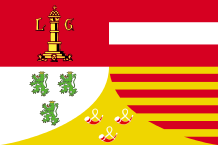 Liège
Liège
Liège is the proud, loud capital of Wallonia, a city of steep hillside stairways, a famous Sunday market that takes over the entire waterfront, and a culinary culture centred on the indulgent liégeois waffle and the rich stew called boudin. The province extends deep into the Ardennes, where Spa has been synonymous with luxury bathing since Roman times and still lends its name to wellness retreats worldwide. The High Fens plateau near Eupen is Belgium's highest terrain — a boggy, wind-scoured moorland that feels more like Scotland than central Europe.
-
6
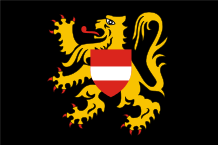 Flemish Brabant
Flemish Brabant wraps around the capital like a green frame, blending university towns with rolling farmland. Leuven, home to one of Europe's oldest universities, anchors the province with Gothic architecture, world-class beer, and a vibrant student energy that spills into every café. The Hageland wine region and the scenic Dijle valley add unexpected rural charm just minutes from Brussels.
-
7
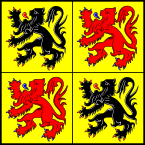 Hainaut
Hainaut stretches across Belgium's industrial southwest, where coal-mining heritage has been recast as cultural legacy. Mons is a university city whose belfry anchors a UNESCO-listed skyline, while Tournai — Belgium's oldest city — boasts a Romanesque cathedral that predates most of Europe's great churches. The Black Country mining sites of the Borinage, now also UNESCO-listed, tell the story of the Industrial Revolution with raw honesty.
-
8
 Namur
Namur
Namur sits at the confluence of the Sambre and Meuse rivers, its medieval citadel commanding the approach to the Ardennes from a dramatically fortified ridge. The provincial capital is compact and walkable, with a surprisingly good art museum and a riverfront that comes alive in summer with kayakers and terrace drinkers. South of the city the province opens into the wild valleys of the Famenne, where Dinant's towering rock face and onion-domed collegiate church have been drawing artists since the Romantic era.
-
9
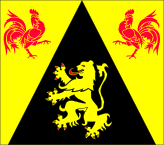 Walloon Brabant
Walloon Brabant is Belgium's smallest province by population, a quiet arc of villages and forest south of Brussels that hides one of history's most consequential sites. The battlefield of Waterloo, where Napoleon met his final defeat in June 1815, now anchors the Memorial 1815 museum and a reconstructed panoramic rotunda that draws history enthusiasts from across the world. The Dyle valley and the wine estate of Domaine du Chenoy hint at a gentler, slower side of the province that rewards those who stay beyond the battlefield.
-
10
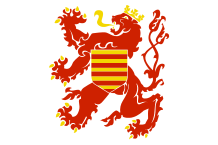 Limburg
Limburg is Belgium's greenest and least-rushed province, a patchwork of heathland, fruit orchards, and cycling routes that wind through villages still proud of their jenever distilling tradition. Hasselt, the provincial capital, punches above its weight with a fashion scene, a celebrated gin museum, and a Japanese garden that feels improbably at home in the Flemish countryside. The Hoge Kempen National Park — Belgium's only national park — preserves a wild moorland landscape rarely associated with this densely populated country.
-
11
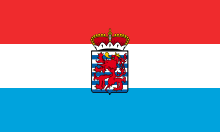 Luxembourg
The Province of Luxembourg occupies Belgium's deepest south, a land of dense Ardennes forest, sandstone gorges, and medieval castles reflected in clear rivers. Bouillon, built around a crusader fortress that once belonged to Godfrey of Bouillon, is the province's most visited landmark — a place where history feels genuinely intact. The Belgian Lorraine plateaux in the very south offer open skies and a quieter, more agricultural character that feels worlds away from the country's northern cities.