Most Popular
Based on Countries Been user data.
-
1
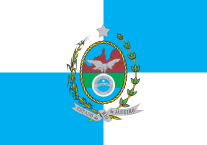 Rio de Janeiro
Rio de Janeiro is one of the world's great cities by any measure — the natural stage of Guanabara Bay, Christ the Redeemer on Corcovado, and the granite spike of Sugarloaf Mountain combine with the beaches of Copacabana and Ipanema to create a scenographic backdrop for a city of 7 million whose Carnaval sambadrome parade, favela samba schools, and sunset caipirinhas over the Mirante do Leblon have made it the world's most romanticised city since the age of the ocean liner. The state beyond the city is equally rewarding: Petrópolis, the mountain summer capital of the Brazilian Empire, shelters the Crystal Palace and the Imperial Museum in an alpine setting an hour from the city; and Paraty, the UNESCO-listed colonial port town on the Costa Verde, is arguably Brazil's most perfectly preserved colonial townscape, its streets inundated by the tide at highest water. The Atlantic Forest remnants of the Serra dos Órgãos National Park, visible from rooftops across the northern bairros, are among the most biodiverse forest fragments on Earth.
-
2
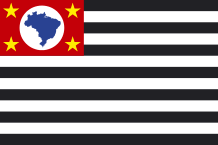 São Paulo
São Paulo is the engine of South America — a city of 22 million people whose restaurant scene rivals New York and Paris and whose club culture in the Vila Madalena and Pinheiros neighbourhoods defines what a nightlife city looks like without sleep. The Avenida Paulista corridor, crowned by MASP — the São Paulo Museum of Art, suspended on red concrete pillars above the avenue — and the surrounding cluster of galleries and cultural centres makes this the best single street for contemporary art in the hemisphere. Beyond the metropolis, the state's Atlantic coast delivers Ubatuba's surf and rainforest beaches, and the interior offers the Vale do Paraíba's colonial history and the Serra da Mantiqueira mountain walks.
-
3
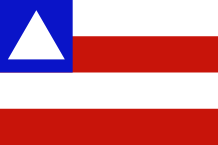 Bahia
Bahia
Bahia is the spiritual and cultural capital of Black Brazil — the state that received more enslaved Africans than any other in the Americas, whose Candomblé religion, capoeira martial art, acarajé street food, and axé music have spread from Salvador across the entire country and outward to the global diaspora. Salvador, Brazil's first colonial capital and a UNESCO World Heritage Site, occupies a hilltop peninsula above the Bay of All Saints where the Pelourinho historical district's coloured colonial facades rise above a bay that still carries the ceremonial canoes used in Candomblé rituals to the sea. The Bahia coastline extends 1,100 kilometres — from the Chapada Diamantina's diamond-mining highland interior with its tabletop mountains and subterranean rivers to the Trancoso resort village and Arraial d'Ajuda beaches whose sophistication has attracted a European-Brazilian clientele since the 1980s.
-
4
 Amazonas
Amazonas is the largest state in Brazil — a territory of 1.5 million square kilometres of intact rainforest whose rivers, oxbow lakes, and flooded forest harbour the greatest concentration of biodiversity on the surface of the Earth. Manaus, the improbable Amazon metropolis of 2.2 million people, rises from the jungle at the confluence of the Rio Negro and the Solimões, its iron-framed Teatro Amazonas opera house — built in 1896 at the height of the rubber boom — an architectural miracle in a location of absolute geographical improbability. The Meeting of the Waters (Encontro das Águas), where the black Rio Negro and sandy-coloured Amazon flow side by side for 6 kilometres without mixing due to differences in temperature and density, is one of the most singular natural spectacles in the world.
-
5
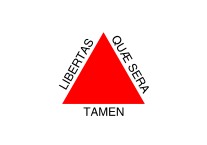 Minas Gerais
Minas Gerais — 'General Mines' — is the historical heart of colonial Brazil, where the 18th-century gold and diamond rush built the extraordinary Baroque cities of the Estrada Real: Ouro Preto, Diamantina, Tiradentes, and Congonhas, whose churches contain the finest Baroque sculpture and painting in the Americas, created by the enslaved and free-coloured artists of the Minas school. Ouro Preto, a UNESCO World Heritage Site, is the most complete surviving colonial city in Brazil — its hilltop churches, cobbled streets, and painted adobes rising above a valley that still conceals worked-out gold mines visitors can enter at the Mina do Veloso. Belo Horizonte, the state capital, is one of Brazil's most sophisticated food cities, its Savassi neighbourhood bars and Mercado Central market operating as a 24-hour eating and drinking institution of national renown.
-
6
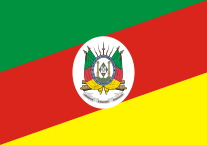 Rio Grande do Sul
Rio Grande do Sul is Brazil's southernmost and most European state — a gaucho country of vineyards, German-style timber houses, and Jesuit mission ruins stretching from the subtropical Serra Gaúcha wine region to the pampas grasslands of the Uruguay border where cattle herders still ride horses through landscapes indistinguishable from rural Argentina. The Serra Gaúcha hill country around Gramado and Canela delivers the most European townscape in South America — baroque Catholic churches alongside half-timbered German-immigrant facades in a landscape of waterfalls and araucária pine forest — while the Aparados da Serra National Park shelters Itaimbezinho Canyon, a 7-kilometre-long gorge with 720-metre walls that is the most dramatic geological formation in southern Brazil. Porto Alegre, the state capital on the Guaíba river-lake, is one of Brazil's most liveable cities — cultured, prosperous, with a bar culture in the Moinhos de Vento neighbourhood that stays loud until morning.
-
7
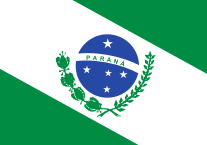 Paraná
Paraná is home to Foz do Iguaçu — the wider Brazilian side of the Iguazu Falls, where 275 separate cataracts spanning nearly 3 kilometres create a curtain of water and spray that remains, by volume and spectacle, the most overwhelming waterfall system on Earth. Curitiba, the state capital, was the first city in the world to implement bus rapid transit in the 1970s, a transport innovation copied by cities from Bogotá to Guangzhou, and its Botanical Garden's Victorian iron greenhouse and Niemeyer-designed arts centre make it one of Brazil's most design-conscious cities. The Serra do Mar escarpment dropping to the Atlantic through one of the last intact Atlantic Forest patches, and the Jesuit ruins accessible from the state's south, round out a state of surprising variety.
-
8
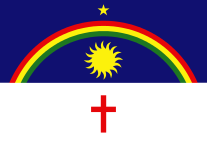 Pernambuco
Pernambuco is where Carnaval was born — the frevo music and multi-coloured umbrella dances of Olinda and Recife predate Rio's samba parade by a century, and the city-wide street party through the hills of UNESCO-listed Olinda is one of the most joyful public celebrations on Earth. Recife's historic Recife Antigo district and the Marco Zero plaza combine with the Boa Viagem beach to give the city an unusual depth of urban history for a tropical coastal metropolis. The Fernando de Noronha archipelago, administered by Pernambuco 350 kilometres offshore, offers the best diving in the South Atlantic and one of the world's most strictly regulated marine protected areas.
-
9
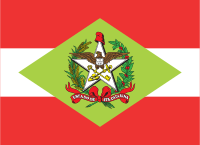 Santa Catarina
Santa Catarina is the Brazil that surprises — a southern state of blond-haired, German-descended cities whose Oktoberfest in Blumenau is the second largest in the world outside Munich, whose Florianópolis beach culture draws Argentine and São Paulo holidaymakers to 42 beaches on an island-capital connected to the mainland by a single bridge, and whose oyster farms in the Lagoa de Conceição produce the freshest shellfish in South America. The Serra Catarinense highland plateau around São Joaquim offers the only part of Brazil that reliably receives snow in winter, while the vineyards above Urussanga produce the first Santa Catarina wines to achieve national recognition. Balneário Camboriú, with its dense canyon of high-rise towers and the world's longest gondola, has become Brazil's answer to Miami Beach — a monument to vertical resort development so intense it is visible from approaching aircraft.
-
10
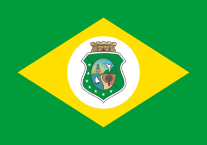 Ceará
Ceará
Ceará is Brazil's most dramatically situated northeastern state — its capital Fortaleza is the country's fifth-largest city, a beach metropolis of nightlife and fresh lobster where the Beira-Mar promenade and the Iracema neighbourhood's live music bars operate as a continuous outdoor party from Thursday through Sunday. The state's interior is dominated by the Sertão — the semi-arid hinterland of mandacaru cactus and red-dust roads that generated the Cangaço bandit tradition, the literatura de cordel broadsheet ballad, and the forró music that now fills dance floors across the country. Jericoacoara, a former fishing village at the end of a sand-track road through coastal dunes accessible only by off-road vehicle, has transformed into Brazil's most celebrated kite-surfing and counterculture beach destination without acquiring a single traffic light.
-
11
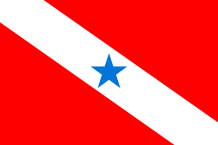 Pará
Pará
Pará is the mouth of the Amazon — the state where the world's greatest river system discharges 20 percent of all fresh water entering the Earth's oceans through a delta wider than the territory of Portugal, enclosing an ecosystem of várzea floodplain forests, manatees, and pink river dolphins on a scale that resists comprehension from the ground. Belém, the state capital, is the great river city of the Amazon — its Ver-o-Peso market, the largest open-air market in Latin America, has sold river fish, exotic herbs, medicinal barks, and Amazonian ceramics in a covered waterfront complex operating continuously since 1688. The Marajó Island, accessible by ferry from Belém, is the world's largest river island — larger than Switzerland — a landscape of water buffalo farms, Marajó pottery traditions, and river channels where boto (pink dolphins) surface within arm's reach of passing boats.
-
12
 Distrito Federal
The Distrito Federal is Brasília — a city that exists because President Juscelino Kubitschek promised the new capital would be built within his term of office (1956–61) and delivered the entire thing from jungle clearing to presidential inauguration in 1,000 days, creating the most ambitious planned capital city since Washington DC. Oscar Niemeyer's modernist buildings — the National Congress with its twin towers and paired domes, the Presidential Palace on the lake, the Foreign Ministry reflected in its artificial pool — constitute the greatest single collection of modernist civic architecture anywhere in the world, all within walking distance on the planned Monumental Axis. The city's UNESCO World Heritage designation (1987), 3 million residents, and status as Brazil's most affluent city per capita tell the story of a capital that succeeded beyond almost everyone's expectations.
-
13
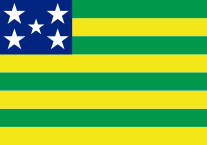 Goiás
Goiás
Goiás is Brazil's central highland state, where the vast cerrado savanna — a UNESCO biodiversity hotspot of twisted trees, crystalline rivers, and luminous waterfalls — shelters the kind of undiscovered Brazil that adventurous travellers arrive for and spend years describing to friends. The Chapada dos Veadeiros National Park, a UNESCO World Heritage Site, offers canyon and waterfall hiking above plateaus of quartz-veined rock where the sunlight generates a luminosity said to be visible from space. The colonial town of Pirenópolis, its baroque churches and craft markets set in a valley of mango trees, provides the most accessible introduction to the gold-rush history that built central Brazil before Brasília was imagined.
-
14
 Mato Grosso do Sul
Mato Grosso do Sul is Brazil's gateway to the Pantanal — the world's largest tropical wetland, covering 150,000 square kilometres of seasonal floodplain across Brazil, Bolivia, and Paraguay, whose density of wildlife during the dry season makes it the best place on Earth to see jaguars in the wild from a river boat. Bonito, in the state's south, is Brazil's eco-tourism showcase: crystal-clear rivers fed by limestone springs allow snorkelling through schools of pacu, dourado, and painted piraputanga alongside otters in conditions of natural aquarium clarity unique to this geological formation. Campo Grande, the state capital, is a modern, prosperous city whose Japanese-Brazilian immigrant community has created the most surprising concentration of Japanese restaurants outside of São Paulo.
-
15
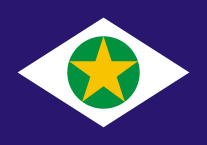 Mato Grosso
Mato Grosso straddles two of South America's great biomes — the Amazon in the north and the Pantanal in the south — in a state whose Chapada dos Guimarães plateau, rising 600 metres above the surrounding plains east of Cuiabá, offers cerrado canyon hiking and the viewpoint described as the 'belly button of South America.' The Cristalino Jungle Lodge in the state's northern Alta Floresta region is considered one of the world's premier birding destinations — a private reserve contiguous with Cristalino State Park where over 600 bird species have been recorded in intact gallery and terra firme Amazon forest. The northern Pantanal around Poconé provides some of the most accessible jaguar-watching in Brazil, its transpantaneira road running through fazendas converted into wildlife lodges where caiman, giant anteater, and capybara are guaranteed daily sightings.
-
16
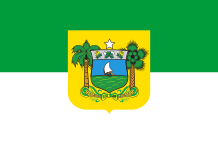 Rio Grande do Norte
Rio Grande do Norte is Brazil's northeastern state most defined by wind — the constant trade winds that have turned Natal and the Genipabu dune landscape north of the city into the continent's premier buggy-riding and kite-surfing destination, and that fill the offshore wind farms now generating a significant share of the state's electricity from what was previously just weather. The Genipabu Ecological Protection Area, a landscape of towering red-and-gold dunes immediately north of Natal, has been offering buggy and dromedary tours since the 1980s — a Brazilian attraction of such particular absurdity (camels on the equatorial coast) that it has become simultaneously iconic and self-aware. Natal's Forte dos Reis Magos, a 16th-century star-shaped Portuguese fortress on a promontory at the city mouth, is the most intact early colonial military construction in Brazil.
-
17
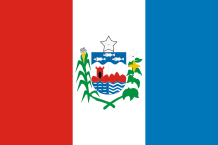 Alagoas
Alagoas is one of Brazil's smallest but most scenically gifted states — its coastline between Maceió and the São Francisco River mouth includes Maragogi, whose offshore natural pools (galés) of crystalline warm water in a marine protected area are ranked among the most beautiful snorkelling sites in the country. Maceió, the state capital, sits on a coastal lagoon with white-sand beaches, and its Pontal da Barra neighbourhood produces the finest renda de bilro handmade lace in the northeast in a tradition going back to Portuguese colonial times. The São Francisco River mouth at Penedo, where the great northeastern river finally reaches the sea through mangrove channels, is one of the most atmospheric destinations in the entire northeast.
-
18
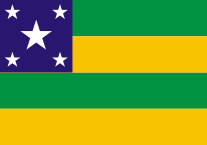 Sergipe
Sergipe is Brazil's smallest state and one of its most underestimated — a northeastern pocket of sugarcane coast, colonial-era engenhos (sugar mills), and riverine villages where the Festa de São João generates the most concentrated folk culture spectacle in Brazil per square kilometre. Aracaju, the state capital, is an agreeable beach city whose Atalaia beach and Orla neighbourhood promenade offer a genuine northeastern seafront culture without the tourist infrastructure that has transformed Fortaleza and Natal. The São Francisco River town of Penedo on the Alagoas border, with its 18th-century Franciscan churches rising from the riverbank above the mangroves, is the single most rewarding historical site in the entire lower São Francisco valley.
-
19
 Paraíba
Paraíba holds the geographic distinction of containing the easternmost point of the Americas — the Ponta do Seixas headland outside João Pessoa, where the first rays of sunrise in the Western Hemisphere break over a lighthouse above red-cliffed Atlantic beaches. João Pessoa is one of Brazil's most walkable and agreeable medium-sized cities, its colonial-era churches of the Cidade Alta combining with the Tambaú beachfront's relaxed seafront culture in a city that larger neighbours have consistently overlooked to visitors' benefit. The state's Boqueirão reservoir area preserves the folk music, artisan pottery, and Midsummer Festival (São João) traditions of the semi-arid Sertão that resisted modernisation far longer than the coastal cities.
-
20
 Espírito Santo
Espírito Santo is the quiet achiever of southeastern Brazil — a state of Germanic immigrant hill towns, historic tropical forests, and a coastline of relative serenity compared to its neighbours, whose state capital Vitória occupies an island in a bay so sheltered and reef-protected that it simultaneously functions as a commercial port and a swimming beach. The Guarapari beaches to the south, known for their monazite sand, attract health-conscious Brazilian holiday-makers to one of the coast's least-developed stretches. The historic towns of Domingos Martins and Santa Leopoldina in the state's interior hill country are the most complete surviving examples of German and Swiss immigrant vernacular architecture in Brazil, their half-timbered facades transplanting a European building tradition into tropical forest.
-
21
 Maranhão
Maranhão bridges two Brazils — the northeast of beaches and colonial history and the Amazon of rivers and forest — in a state whose Lençóis Maranhenses National Park is one of the most surreal landscapes on Earth: white sand dunes the size of mountains rising from a flat coastal plain, their valleys filling each rainy season with turquoise freshwater lagoons that appear and disappear with the rainfall cycle. São Luís, the state capital and a UNESCO World Heritage Site, is the only Brazilian city founded by the French and the best-preserved colonial urban landscape on the Atlantic coast, its blue-and-white Portuguese azulejo tiled facades covering entire city blocks in a pattern found nowhere else in South America. The Delta do Parnaíba at the state's western tip is one of the largest river deltas in the Americas — a spectacular wildlife landscape of channels, mangroves, and riverine beaches.
-
22
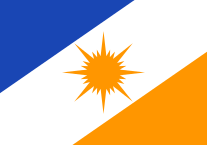 Tocantins
Tocantins is Brazil's newest state, separated from Goiás in 1988, and its Jalapão region — a landscape of golden quartzite waterfalls, cerrado dunes, and crystalline spring-fed rivers — has quietly become one of Brazil's most coveted adventure destinations for Brazilians who want wilderness without the tourist infrastructure. Palmas, the state capital, is one of the few planned cities built in Brazil after Brasília, its geometric lakeside layout on the Tocantins River reservoir an exercise in 1990s Brazilian urban optimism worth experiencing for its sheer improbability. The Ilha do Bananal — the world's largest river island — sits at the confluence of the Araguaia and Javaés rivers, its gallery forest and savanna home to jaguar, giant otters, and the Karajá and Ava-Canoeiro Indigenous peoples.
-
23
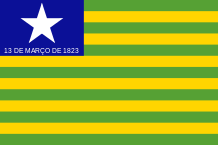 Piauí
Piauí
Piauí is one of Brazil's least-visited but most archaeologically significant states, home to the Serra da Capivara National Park — a UNESCO World Heritage Site whose sandstone canyon walls hold over 50,000 rock paintings up to 25,000 years old, potentially the oldest evidence of human habitation in the Americas and the subject of sustained international archaeological controversy. The Delta do Parnaíba on the state's northern coast, shared with Maranhão, is one of the largest river deltas in the Americas — a mosaic of sandy islands, pink-hued mangroves, and freshwater channels constituting one of the most remarkable river mouths in South America. Teresina, the state capital, is the entry point for a state whose cultural traditions — including the bumba-meu-boi festival and the vaquejada cattle-lassoing tradition — represent a deep and largely unvisited layer of Brazilian folk culture.
-
24
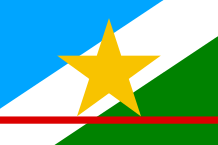 Roraima
Roraima is Brazil's northernmost state — a landscape of savannas, tropical forests, and the tepui table mountains of the Guiana Highlands whose Mount Roraima (shared with Venezuela and Guyana) rises to 2,810 metres in a landscape Arthur Conan Doyle used as the setting for The Lost World, its mist-shrouded summit supporting endemic succulents in basins filled by perpetual rain. The Yanomami Indigenous Territory in Roraima — the largest indigenous territory in Brazil — represents one of the final frontiers of minimally-contacted Indigenous Amazonian civilisation, and Boa Vista is the principal staging point for expeditions into the Guiana highland borderlands. The Pedra Pintada archaeological site near Boa Vista, where cave paintings and megafauna bones have been dated to 11,200 years ago, contributes to the ongoing debate about the peopling of the Americas.
-
25
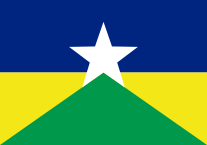 Rondônia
Rondônia is one of Brazil's youngest states, carved from the Amazon jungle during the 1970s BR-364 highway construction that opened the western Amazon to colonisation in one of the most environmentally consequential infrastructure decisions in Brazilian history. Porto Velho, the state capital on the Madeira River, was built alongside the Madeira-Mamoré Railway — the 'Devil's Railway' — whose construction in the early 20th century cost an estimated 6,000 lives to disease and accident, and whose preserved locomotives are now displayed along the riverside as testimony to the price of Amazonian ambition. The Pacaás Novos National Park in the state's west protects one of the least-studied forest transition zones in the Amazon, where Amazonian lowland meets the Bolivian highland plateau in a landscape of endemic wildlife and extraordinary botanical richness.
-
26
 Amapá
Amapá
Amapá is Brazil's Atlantic gateway to the Amazon — a northern state entirely north of the Equator, where the Amapá National Forest and the Cabo Orange National Park at the French Guiana border protect some of the least-disturbed coastal rainforest on the continent. Macapá, the state capital, sits exactly on the Equator — the Marco Zero monument marks the geographic line with a small plaza where a football match played across the hemispheres is technically half Northern and half Southern. The Oiapoque River crossing at the northern border connects Brazil's road network to French Guiana via the Binational Bridge, a crossing that delivers travellers from the Amazon basin into the European Union without departing the South American continent.
-
27
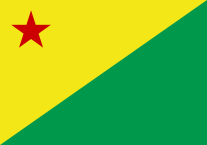 Acre
Acre
Acre is Brazil's most remote western state — a dense Amazon rainforest territory bordering Peru and Bolivia whose capital Rio Branco sits at the end of the BR-364 highway in a landscape that feels genuinely beyond the edge of the mapped world. The state's environmental politics have been shaped by the 1988 assassination of rubber tapper and forest activist Chico Mendes, whose memory pervades the culture and governance of a state whose communal extractivist reserves remain a model for sustainable Amazon management. The Rio Juruá river system shelters one of the highest densities of endemic species in the entire Amazon basin, making Acre a serious destination for birders and naturalists with the patience to reach it.