Most Popular
Based on Countries Been user data.
-
1
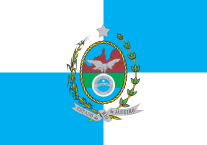 Rio de Janeiro
Few cities on Earth make a first impression quite like Rio — the granite peaks, the sweeping bays, the mosaic pavements, and the defiant joie de vivre of its cariocas conspire to produce something that bypasses rational analysis and goes straight to the gut. Christ the Redeemer on Corcovado, Sugarloaf rising from Guanabara Bay, and the kilometre of white sand at Copacabana are the icons, but Rio's real pleasures unfold in neighbourhood botequims, forró parties in Lapa, and the forest trails of Tijuca. Beyond the capital, the state hides the perfectly preserved colonial port of Paraty and the mountain forests of Itatiaia National Park.
-
2
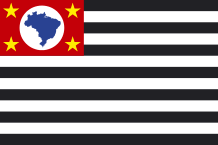 São Paulo
Brazil's economic engine and cultural powerhouse, São Paulo is the largest city in the Southern Hemisphere, home to a jaw-dropping restaurant scene, world-class museums like MASP, and a nightlife that runs until Tuesday. The state stretches from the Atlantic rainforest of Serra do Mar to the coffee-growing hills of the interior, with the historic town of Itu and wine country around Jundiaí adding unexpected texture. No country in the world packs quite so much ambition into a single metropolis.
-
3
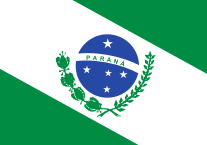 Paraná
Iguazu Falls — wider than Niagara, more powerful than Victoria — sits on Paraná's western border with Argentina and remains one of the most viscerally overwhelming natural wonders in the Americas: a two-kilometre semicircle of 275 individual cascades thundering into the gorge below. The state capital Curitiba has long been a model of urban planning innovation, famous for its bus rapid transit system and a civic culture that sets a Brazilian benchmark. The wild Ilha do Mel off the coast and the Tibagi Canyon in the interior add further depth to an underrated state.
-
4
 Amazonas
The largest state in Brazil by a wide margin, Amazonas contains the greatest expanse of tropical rainforest on Earth, bisected by the mighty Amazon and its tributaries in a network of waterways that dwarfs most European river systems. Manaus rises improbably from the jungle, its Teatro Amazonas opera house a gilded testament to the rubber-baron era when fortunes were made and squandered overnight. A river journey into the flooded forests of the Anavilhanas Archipelago is one of the definitive wildlife experiences in the Americas.
-
5
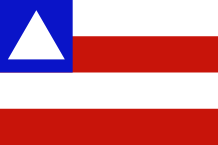 Bahia
Bahia
The soul of Afro-Brazilian culture, Bahia was the entry point for the largest forced migration in history and has forged from that heritage a civilisation of extraordinary creative depth: the music of axé and samba-reggae, the syncretic Candomblé religion, the martial art of capoeira, and the cuisine of acarajé and moqueca all radiate outward from Salvador's cobbled Pelourinho district. The Bahian coast, stretching from the coconut-fringed beaches of Praia do Forte to the dune-swept point at Caraíva, is one of Brazil's longest and most varied. In the interior, the Chapada Diamantina's waterfalls, caves, and tabletop mountains offer trekking on a par with anything in South America.
-
6
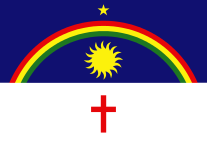 Pernambuco
Home to Recife — the 'Venice of Brazil' with its web of rivers and colonial bridges — and the UNESCO-listed hillside town of Olinda, Pernambuco is the cultural capital of Brazil's northeast. The archipelago of Fernando de Noronha, accessible only by small plane or boat, ranks among the world's finest marine ecosystems, with crystalline waters and nesting sea turtles. Carnival here burns longer and louder than almost anywhere else in Brazil.
-
7
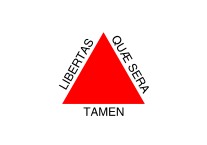 Minas Gerais
The land of gold and baroque genius, Minas Gerais gave Brazil its most magnificent colonial architecture in the hillside city of Ouro Preto — a UNESCO World Heritage Site — and Tiradentes, where eighteenth-century churches encrusted with goldleaf gleam against terracotta roofscapes. The state's dairy-and-corn kitchen produced the comfort food that underpins all of Brazilian cuisine: pão de queijo, feijão tropeiro, and the rich flavours of mineira cooking. Minas is also home to some of the country's finest cachaça distilleries and the rugged mountain scenery of the Serra do Cipó.
-
8
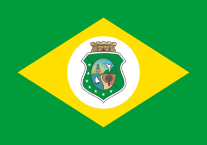 Ceará
Ceará
Fortaleza is northeastern Brazil's most exuberant beach city, a place where buggy rides over red sandstone cliffs and forró dancing under string lights are equally available around the clock. The state's coast holds Jericoacoara — consistently ranked among the world's best beaches — reachable only across sand dunes and inaccessible to private cars. The wind-sculpted dunes of Ceará have made it the undisputed capital of kitesurfing in South America.
-
9
 Distrito Federal
A planned capital planted in the heart of Brazil's empty cerrado, Brasília is one of the twentieth century's great urban experiments: a city designed from scratch by Lúcio Costa and Oscar Niemeyer whose monumental civic architecture earned UNESCO World Heritage status in 1987. The twin towers of the National Congress, the crown of the Palácio da Alvorada, and the soaring nave of the Metropolitan Cathedral are among the most photographed modernist buildings in the world. Away from the government quarter, Brasília has developed a genuine urban culture with excellent restaurants and a surprisingly vibrant nightlife.
-
10
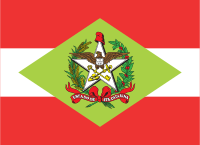 Santa Catarina
Flanked by the Serra Geral escarpment to the west and the Atlantic to the east, Santa Catarina is defined by its extraordinary coastline — Florianópolis alone has forty-two beaches ranging from wild surf breaks to calm family coves — and a cooler, German-inflected interior around Blumenau and Joinville. The state's strong immigrant heritage from Germany, Italy, and Ukraine has left an architectural and culinary legacy unlike anywhere else in Brazil. Santa Catarina consistently ranks among Brazil's safest and most prosperous states.
-
11
 Pará
Pará
Gateway to the lower Amazon, Pará is a state of enormous rivers and dense jungle, anchored by the port city of Belém, where the iconic Ver-o-Peso market spills fragrant tropical produce, freshwater fish, and Amazonian herbs onto the waterfront every morning. The island of Marajó — larger than Switzerland — lies in the Amazon's estuary and is home to water buffalo herds and distinctive pre-Columbian ceramics. Belém's food scene — tacacá, açaí, pato no tucupi — is one of Brazil's most distinctive and least imitated.
-
12
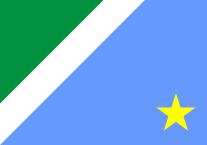 Mato Grosso do Sul
The southern gateway to the Pantanal — Earth's largest tropical wetland — Mato Grosso do Sul offers some of the best wildlife watching on the continent, with jaguars, giant river otters, hyacinth macaws, and capybara all visible from boats and jeeps around Corumbá and Bonito. The crystal-clear rivers around Bonito are unique in the world: you can snorkel through freshwater so transparent that fish swim around your legs as if unaware of your presence. Few places in Brazil combine accessibility with this density of dramatic natural spectacle.
-
13
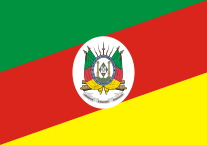 Rio Grande do Sul
Brazil's southernmost state is gaucho country — cattle ranches, mate-drinking cowboys, and a fierce regional identity that has long flirted with separatism. Porto Alegre is one of Brazil's most livable cities, with a leafy urban plan and a food scene anchored by churrasco and the wines of the Serra Gaúcha, Brazil's finest wine valley around Caxias do Sul and Bento Gonçalves. Canela and Gramado in the highlands offer an incongruous alpine village aesthetic, complete with fondue and hydrangea-lined streets.
-
14
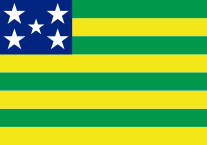 Goiás
Goiás
The vast cerrado heartland of central Brazil, Goiás shelters the otherworldly rock formations of Chapada dos Veadeiros — a UNESCO World Heritage site blazing with waterfalls and endemic wildlife. The colonial town of Pirenópolis enchants with baroque churches and a lively festival calendar, while the state capital Goiânia has quietly become one of Brazil's most livable cities. Goiás sits at the geographic and cultural crossroads of the country.
-
15
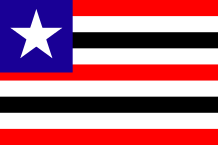 Maranhão
The Lençóis Maranhenses National Park — vast white sand dunes interlaced with luminous blue lagoons — looks like nothing else on the planet and draws visitors from across the globe to this otherwise overlooked northeastern state. The capital São Luís, with its extraordinary Portuguese azulejo-tiled colonial centre, is a UNESCO World Heritage Site of rare urban beauty. Between the dunes and the Parnaíba River delta, Maranhão rewards those willing to venture well off the tourist trail.
-
16
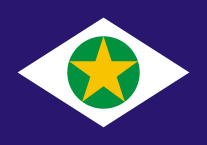 Mato Grosso
Brazil's third-largest state straddles the divide between the Amazon basin and the Pantanal wetlands, offering two of South America's most formidable ecosystems within a single administrative boundary. The Chapada dos Guimarães, just north of the capital Cuiabá, rises like a mesa from the surrounding flatlands, fringed by waterfalls and sandstone towers that have featured in major wildlife documentaries. Much of the state's northern rainforest shelters the Xingu Indigenous Territory — one of Brazil's largest indigenous reserves.
-
17
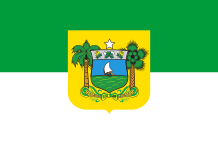 Rio Grande do Norte
Natal, the 'City of Sun', sits at the apex of a coastline that curves toward Africa in a great arc of red sandstone cliffs and white dunes, giving Rio Grande do Norte the highest sunshine count of any state capital in Brazil. The beaches of Genipabu, with their towering dunes and buggy rides, and the distant paradise of Pipa, with dolphins surfing in the bay below clay cliffs, are the state's signature draws. Rio Grande do Norte is also one of Brazil's leading cashew and salt producers, its salt flats visible from the air as vast geometric grids near Mossoró.
-
18
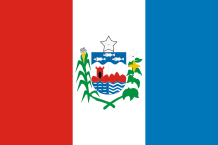 Alagoas
Brazil's second-smallest state punches far above its weight in beach currency: the Rota Ecológica between Maceió and Maragogi runs past a chain of natural pools formed by offshore coral reefs, filling with turquoise water at low tide. Maceió itself has a relaxed, unhurried energy that draws visitors back repeatedly, with a historic centre of pastel-coloured buildings and a seafood-driven food scene. Alagoas's remote north holds the mystical Cânion do Xingó, where the São Francisco River cuts through the parched sertão in dramatic style.
-
19
 Paraíba
João Pessoa, at Brazil's easternmost point, claims to be the second oldest city in the country and the first place in the Americas where the sun rises — a distinction the locals celebrate with genuine civic pride every evening at the beachfront Pôr do Sol de Tambaú. The state's coast holds Praia do Amor near Pipa, a surf village beloved by travellers who overstay their planned two nights, and the Pedra do Ingá, a riverbed boulder covered in mysterious pre-historic inscriptions. Paraíba's hinterland is raw caatinga country where the São Francisco River shapes everything.
-
20
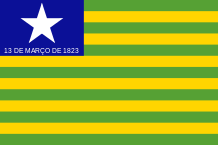 Piauí
Piauí
The Serra da Capivara National Park in Piauí contains the largest concentration of prehistoric rock paintings in the world — tens of thousands of images spanning 25,000 years — earning it UNESCO World Heritage recognition and a place among archaeology's most important sites. Piauí is one of Brazil's least-visited states, but those who make the journey discover the extraordinary Delta do Parnaíba, where the river fans into a labyrinthine estuary before meeting the sea. The state's austere caatinga scrubland has a stark beauty entirely its own.
-
21
 Espírito Santo
Wedged between Rio de Janeiro and Bahia, Espírito Santo is one of Brazil's most persistently overlooked states, despite possessing both a spectacular Atlantic coastline and a cool, coffee-growing highland in the Caparaó — home to Pico da Bandeira, the country's third-highest mountain. The Italian immigrant settlements of Domingos Martins and Venda Nova do Imigrante give the interior an unexpectedly European flavour, complete with stone churches and a tradition of pasta and polenta. The charming capital Vitória, spread across islands and peninsulas in a sheltered bay, is one of Brazil's most attractive state capitals.
-
22
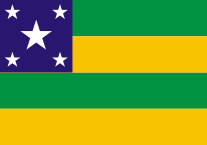 Sergipe
Brazil's smallest state by area is often bypassed by travellers racing between Bahia and Alagoas, yet Sergipe offers a quietly compelling reward: the UNESCO-listed town of São Cristóvão, one of the oldest settlements in Brazil, and the lagoon beaches of Aracaju's Orla Pôr do Sol, where the Sergipe River meets the Atlantic in a tangle of mangroves. The Cânion do Xingó, shared with Alagoas, is Sergipe's most dramatic natural feature. Small enough to explore in a weekend, it's the kind of place that surprises every visitor who actually stops.
-
23
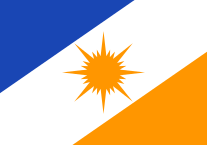 Tocantins
Brazil's newest state, created in 1988 from the northern half of Goiás, Tocantins is defined by the Jalapão region — where rust-red sand dunes, crystal fervedouros (natural springs), and remote waterfalls make for some of the country's most spectacular off-road adventures. The island of Bananal, the world's largest river island, sits in the Araguaia River and hosts traditional Karajá indigenous communities. Tocantins rewards the patient, self-sufficient traveller.
-
24
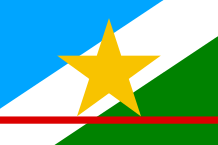 Roraima
Brazil's most northerly state, Roraima borders both Venezuela and Guyana and is defined by the tepuis — ancient sandstone tabletop mountains rising above the savanna in a landscape that inspired Arthur Conan Doyle's The Lost World. The Monte Roraima trek, accessible only with indigenous Pemón guides, traverses a summit plateau permanently shrouded in mist, where endemic plant species cling to bare rock and waterfalls cascade into the void. The capital Boa Vista, laid out in a radial plan on the Rio Branco, is the least-visited state capital in Brazil.
-
25
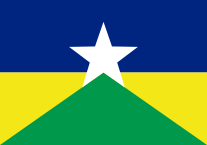 Rondônia
Carved from Amazonas and Mato Grosso in 1981, Rondônia remains one of Brazil's younger and wilder states, with much of its territory still covered by primary Amazon rainforest. The Pacaás Novos National Park and the Guaporé Biological Reserve protect swaths of extraordinary biodiversity, including rare macaws and river dolphins. Porto Velho, the state capital, sits on the Madeira River and serves as a launch point for river journeys deep into the western Amazon.
-
26
 Amapá
Amapá
Brazil's most northerly coastal state, Amapá sits at the mouth of the Amazon on the border with French Guiana and is nearly entirely covered by intact rainforest and mangrove systems. The Cabo Orange National Park protects a remote delta coast where giant sea turtles nest on deserted beaches and scarlet ibis flood the mangroves at dusk in one of South America's great wildlife spectacles. The capital Macapá is the only Brazilian state capital on the equator, and its eighteenth-century Fortaleza de São José de Macapá is an improbable reminder of colonial ambition at the edge of the known world.
-
27
 Acre
Acre
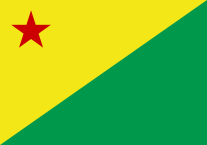
Brazil's most remote western state, Acre shares borders with Peru and Bolivia and is wrapped almost entirely in intact Amazon rainforest, making it one of the least-visited and most biologically rich corners of South America. The capital Rio Branco grew from a rubber-tappers' settlement and still bears that frontier character, with fascinating museums dedicated to the rubber boom and the legacy of eco-activist Chico Mendes. For true wilderness seekers, Acre is as off-grid as Brazil gets.