Most Popular
Based on Countries Been user data.
-
1
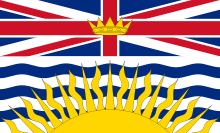 British Columbia
British Columbia is Canada at its most varied and its most cinematic: coastal rainforest, high alpine meadows, the Gulf Islands' sheltered bays, and the Okanagan's sun-drenched wine country all within a day's drive of each other. Vancouver, framed by mountains and ocean, consistently ranks among the world's most liveable cities, while Vancouver Island offers everything from whale watching off Telegraph Cove to the stately charm of Victoria's inner harbour. The Haida Gwaii archipelago and the Bowron Lake canoe circuit add a wilderness dimension that draws adventurers from across the world.
-
2
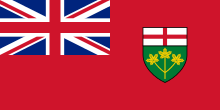 Ontario
Ontario is Canada's economic and cultural engine, anchored by Toronto — a global metropolis of extraordinary diversity where over 180 languages are spoken and the restaurant scene rivals any city in North America. Niagara Falls, the province's most visited attraction, is more impressive in person than any photograph can suggest, particularly in winter when ice formations create a landscape that has to be seen to be believed. Ottawa, the national capital, distils the best of Canada into a compact, bilingual city of world-class museums, the UNESCO-listed Rideau Canal, and a Parliament Hill that turns spectacular when lit for major celebrations.
-
3
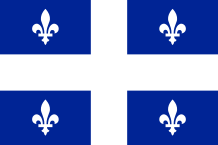 Quebec
Quebec is a nation within a nation — the only majority French-speaking jurisdiction in North America, where centuries of distinct culture, cuisine, and legal tradition have produced something genuinely unlike anywhere else on the continent. Quebec City's fortified Upper Town, the only walled city north of Mexico, is a UNESCO World Heritage Site where horse-drawn carriages navigate cobblestone streets beneath the Château Frontenac. Montreal operates on a different frequency: a city that invented its own hybrid identity through Expo 67, the Cirque du Soleil, and a food scene centred on smoked meat, bagels, and poutine that the rest of the world has been trying to replicate ever since.
-
4
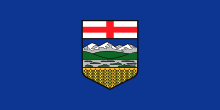 Alberta
Alberta contains two of the most awe-inspiring national parks on the planet — Banff and Jasper — where turquoise glacial lakes, ice-capped peaks, and the wildlife-rich Icefields Parkway create a mountain landscape that stops visitors cold. Calgary balances ranch-country heritage — Stampede Week remains the largest outdoor rodeo and festival in the world — with a modern downtown energy shaped by the oil economy and a booming arts scene. The Badlands around Drumheller, prehistoric and eerie, shelter the world's densest concentration of dinosaur fossils.
-
5
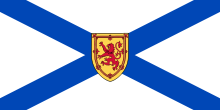 Nova Scotia
Nova Scotia juts into the Atlantic on a peninsula shaped by fishing, shipbuilding, and the sea — a Maritime province where the Celtic fiddle music of Cape Breton Island, the lighthouse-dotted Cabot Trail, and the historic waterfront of Halifax create an identity as distinctive as anywhere in Canada. Halifax, rebuilt after the catastrophic 1917 explosion, is now a university town of considerable energy, its seaport lined with restaurants and the Citadel Hill fort rising behind it. The Annapolis Valley's apple orchards and the tidal marshes of the Acadian heartland complete a province with Canada's most approachable Maritime character.
-
6
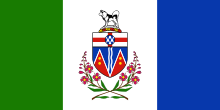 Yukon
Yukon
Yukon is Canada's wild northwest corner, a territory of gold-rush ghost towns, wolf packs, and the Kluane National Park's St. Elias Mountains — home to the world's largest non-polar icefields. The Klondike Gold Rush of 1898 defined the territory's character and still animates Dawson City, where wooden boardwalks, restored saloons, and the Palace Grand Theatre maintain a frontier authenticity that filmmakers have never quite replicated. The Top of the World Highway from Dawson into Alaska passes through some of the most spectacular and empty mountain landscape on the continent.
-
7
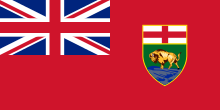 Manitoba
Manitoba is the geographical heart of Canada, a province of vast boreal forest, prairie grasslands, and more than 100,000 lakes that make it one of North America's great freshwater destinations. Winnipeg punches above its weight culturally — the Canadian Museum for Human Rights, the Exchange District's Victorian architecture, and the Forks, where the Red and Assiniboine rivers meet, anchor a city of genuine vitality. Churchill, on Hudson Bay, is arguably the world's best accessible location for polar bear viewing and beluga whale encounters.
-
8
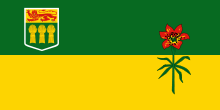 Saskatchewan
Saskatchewan is the prairie province that foreign visitors least expect and most remember — a place where the sky is the defining feature, stretching from horizon to horizon over wheat fields, river valleys, and grasslands that once sustained millions of bison. Saskatoon's riverbank arts scene and Waskesiu's lakeside lodges offer urban and wilderness pleasures in equal measure. The Qu'Appelle Valley and the Cypress Hills, rising improbably from the flatlands, provide the topographic drama that surprises every first-time visitor.
-
9
 New Brunswick
New Brunswick is the only officially bilingual province in Canada, where Acadian French culture has persisted alongside English-speaking communities in a relationship that has shaped the province's character for three centuries. The Bay of Fundy experiences the world's highest tidal range — the difference between high and low tide can exceed 16 metres, creating the flowerpot sea stacks at Hopewell Rocks that are fully submerged twice a day. Fredericton, the quietly elegant capital, and Saint John, an industrial port city with an unexpectedly vibrant arts scene, reward the travellers who venture beyond the Maritime tourist trail.
-
10
 Prince Edward Island
Prince Edward Island is Canada's smallest province and its most intensely pastoral — a red-soil island in the Gulf of St. Lawrence where potato fields, sandy beaches, and the literary legacy of Anne of Green Gables conspire to create something almost impossibly charming. Charlottetown, the site of the 1864 confederation conferences that created Canada, holds its place as the Cradle of Confederation with considerable pride and a theatre festival that draws visitors from across North America each summer. The island's cycling routes, lobster suppers, and craft brewery scene have built a tourism industry wildly disproportionate to its tiny population of 170,000.
-
11
 Newfoundland and Labrador
Newfoundland and Labrador occupies the eastern edge of North America with an independence of spirit rooted in centuries of isolation, cod fishery, and a dialect of English so distinct that linguists study it like a living museum piece. L'Anse aux Meadows, on the island's northern tip, is the authenticated site of a Norse settlement from around 1000 CE — the earliest known European presence in the Americas and a UNESCO World Heritage Site of global significance. The province's icebergs, calved from Greenland's glaciers and drifting south along Iceberg Alley, reach peak density in spring, drawing photographers from around the world to the cliff-tops above St. John's.
-
12
 Northwest Territories
The Northwest Territories is Canada's aurora heartland, a sub-Arctic wilderness of boreal forest, tundra, and interconnected waterways where the northern lights illuminate clear winter skies for much of the year. Yellowknife, the capital, sits on the north shore of Great Slave Lake and has built an entire industry around aurora tourism, with operators offering heated glass-roofed cabins and snowmobile expeditions. The Nahanni National Park Reserve, a UNESCO World Heritage Site, protects one of North America's wildest river canyons — Virginia Falls drops twice the height of Niagara with no road access.
-
13
 Nunavut
Nunavut is Canada's newest and largest territory, a vast Arctic expanse of tundra, ice, and fjord that covers nearly a fifth of the country's total area and is home to the majority of Canada's Inuit population. Iqaluit, the capital, is the only city in the territory — everything else is reached by small aircraft across a landscape so remote it makes other wilderness destinations seem suburban by comparison. For those willing to make the journey, Auyuittuq National Park's granite towers and the polar bear congregation at Foxe Basin offer encounters with the natural world at its most elemental.