Most Popular
Based on Countries Been user data.
-
1
 Paris
Paris
Paris is the world's most visited city — a place where Haussmann's boulevards frame the Eiffel Tower, the Louvre contains the largest art collection on Earth, and every arrondissement has its distinct character, from the anarchic booksellers of the Left Bank to the couture houses of the 8th. No itinerary does it justice; every visit leaves something undiscovered.
-
2
 Alpes-Maritimes
Alpes-Maritimes is the jewel of the French Riviera, combining the year-round glamour of Nice and Cannes with the vertiginous medieval villages of the arrière-pays. The Côte d'Azur's light captivated Chagall, Matisse, and Picasso; the mountains behind reach nearly 3,000 metres within an hour's drive of the beach.
-
3
 Haute-Savoie
Haute-Savoie is the Alps at their most dramatic: Mont Blanc — Western Europe's highest peak at 4,808 metres — presides over Chamonix, the cradle of mountaineering since the first ascent in 1786. Annecy, whose medieval old town straddles the clearest lake in Europe, draws visitors year-round, and ski resorts from Megève to Morzine extend the season to world-class standards.
-
4
 Bouches-du-Rhône
Bouches-du-Rhône centres on Marseille, France's second city and oldest continuously inhabited settlement, founded by Greek traders around 600 BC. The city's raw energy, extraordinary calanques coastline carved from white limestone, and soaring Notre-Dame de la Garde basilica contrast sharply with the refined elegance of Aix-en-Provence, 30 kilometres inland.
-
5
 Rhône
Rhône
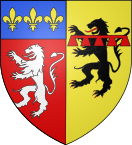
Rhône is anchored by Lyon, France's indisputable gastronomy capital — Paul Bocuse, the modern bouchon tradition, and more Michelin stars per resident than anywhere else in the country. The city's Renaissance old town, built on a hill between the Rhône and Saône rivers, is Europe's largest UNESCO-listed urban heritage site after Venice.
-
6
 Gironde
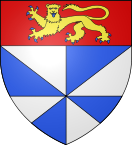
Gironde contains Bordeaux, whose 18th-century neoclassical port city earned UNESCO World Heritage status as an intact urban landscape. The Médoc, Graves, Saint-Émilion, and Pomerol wine appellations radiate from the city, and the Dune du Pilat — Europe's tallest sand dune, overlooking the Arcachon Basin — is one of the most extraordinary natural landforms in France.
-
7
 Vaucluse
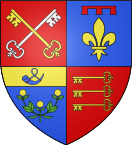
Vaucluse is Provence crystallised — lavender fields, vine-clad hillsides, and medieval villages perched above the Luberon. Avignon, seat of the Papacy from 1309 to 1377, is dominated by the Palais des Papes, Europe's largest Gothic palace, while the Festival d'Avignon, running since 1947, is the world's premier theatre festival.
-
8
 Yvelines
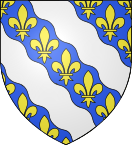
Yvelines contains Versailles — the Palace of Versailles, with its 700 rooms, Hall of Mirrors, and formal gardens designed by Le Nôtre across 800 hectares, is the supreme statement of French royal power and receives over ten million visitors a year. Beyond the palace, the forests of Rambouillet and the medieval town of Mantes-la-Jolie extend the department's considerable historical range.
-
9
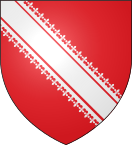 Bas-Rhin
Bas-Rhin is dominated by Strasbourg, home to the European Parliament, the Council of Europe, and a Gothic cathedral so intricately carved it was the world's tallest building for two centuries. The Alsatian wine road winds south through villages of half-timbered houses, geranium-bedecked windows, and storks nesting on church towers.
-
10
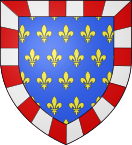 Indre-et-Loire
Indre-et-Loire is the glory of the Loire Valley — Amboise, where Leonardo da Vinci spent his final years; Chenonceau, arching across the Cher river on five elegant arches; Villandry, with its extraordinary formal gardens. Tours, the departmental capital, was the first true French Renaissance city and remains a civilised base for château-crawling.
-
11
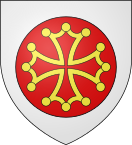 Hérault
Hérault faces the Mediterranean between the Rhône delta and the Hérault river, its long sandy beaches backed by shallow salt-water lagoons. Montpellier, the fastest-growing city in France for decades, combines a well-preserved medieval core, the oldest medical faculty in France, and a modern tram network connecting beaches and vineyards.
-
12
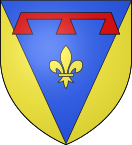 Var
Var
Var is the heart of the Côte d'Azur's most exclusive stretch, from the glamorous harbours of Saint-Tropez (whose natural port is too small for the yachts that crowd it in summer) to the red porphyry Esterel massif plunging into cobalt sea. Toulon, a major naval port since the 17th century, has a raw energy distinct from its glamorous neighbours, and the Massif des Maures shelters rare Hermann's tortoises.
-
13
 Haute-Garonne
Haute-Garonne is anchored by Toulouse, France's fourth-largest city, whose pink-brick buildings have earned it the nickname 'the Pink City'. The Basilica of Saint-Sernin is the largest surviving Romanesque church in Europe, and the Canal du Midi — which begins here — is one of the great 17th-century engineering works.
-
14
 Manche
Manche juts like a thumb into the Channel, its most famous landmark Mont-Saint-Michel — the tidal island abbey that draws over three million visitors annually — visible from 50 kilometres away across the bay. The department's Norman shoreline was the setting for D-Day landings on 6 June 1944, and Utah and Omaha beaches remain among the most visited Second World War sites.
-
15
 Calvados
Calvados lends its name to the apple brandy distilled here for centuries, but the department's most indelible mark on history is the five D-Day beaches where Allied forces landed on 6 June 1944. Bayeux contains its famous 70-metre embroidered chronicle of the 1066 Norman Conquest and survived the war entirely unscathed.
-
16
 Marne
Marne
Marne is the heart of the Champagne appellation, whose chalky subsoil stores millions of bottles of maturing wine in labyrinthine cellars beneath Reims and Épernay. Reims Cathedral, where the kings of France were crowned for eight centuries and whose bombarded towers were rebuilt after 1918, is one of the supreme achievements of Gothic architecture.
-
17
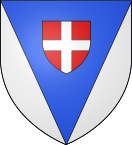 Savoie
Savoie is the skiing heart of the French Alps, home to the Tarentaise valley and the Trois Vallées — Val Thorens, Méribel, and Courchevel — the largest linked ski area in the world. In summer the department's lakes, hiking trails above Pralognan, and the Chartreuse and Aravis limestone massifs offer a completely different alpine experience.
-
18
 Corse-du-Sud
Corse-du-Sud covers the southern half of France's Mediterranean island, where the pink granite peaks of Bavella tower above beaches of fine white sand and gin-clear water. Ajaccio, birthplace of Napoleon Bonaparte, has a certain imperial swagger; the Gulf of Porto, with its dramatic red-rock calanques, is among UNESCO's most visually striking natural heritage sites.
-
19
 Haute-Corse
Haute-Corse covers the northern two-thirds of Corsica, where the dramatic Col de Bavella passes through red granite needles and ancient Genoese towers dot every headland. Calvi's citadel overlooks a crescent of white beach; Corte, high in the island's interior, was once the capital of Paoli's independent Corsican republic.
-
20
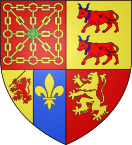 Pyrénées-Atlantiques
Pyrénées-Atlantiques unites two of France's most distinctive cultures: Basque Country in the west and the Béarn in the east. Biarritz has been a surf and spa capital since Napoleon III's era, while Saint-Jean-Pied-de-Port serves as the classic starting point of the Camino de Santiago.
-
21
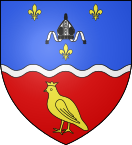 Charente-Maritime
Charente-Maritime stretches from the oyster parks of the Marennes-Oléron basin to the well-preserved 17th-century fortifications of La Rochelle, designed by Vauban. The Île de Ré — the 'white island' for its salt-flats, whitewashed cottages, and cycling paths — has been the most fashionable French island retreat for decades.
-
22
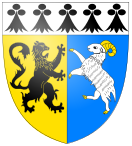 Finistère
Finistère ('Land's End' in Latin) juts into the Atlantic at France's westernmost tip, where the Pointe du Raz drops to crashing surf and the Crozon peninsula forms dramatic cliff-lined sea inlets. Breton identity is strongest here: street signs are bilingual, traditional pardon processions still wind through village streets, and Celtic music festivals draw audiences from Ireland to Galicia.
-
23
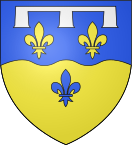 Loir-et-Cher
Loir-et-Cher is the Loire Valley's most concentrated stretch of royal châteaux: Chambord, whose double-helix staircase attributed to Leonardo da Vinci rises within a skyline of 365 chimneys; Cheverny, the château that inspired Hergé's Moulinsart in Tintin; Blois, whose four wings represent four centuries of French architectural styles.
-
24
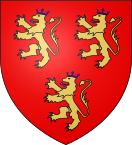 Dordogne
Dordogne is the undisputed capital of prehistoric France, home to the Vézère valley cave complex including Lascaux, painted 17,000 years ago. Medieval Sarlat, with its honey-coloured stone and almost undisturbed Renaissance townscape, draws visitors year-round; the department's bastide towns and foie gras traditions make it a culinary destination in its own right.
-
25
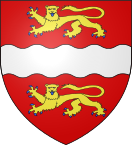 Seine-Maritime
Seine-Maritime rises from the lower Seine in sweeping chalk cliffs and broad agricultural plateaus. Rouen — where Joan of Arc was burned in 1431, where Monet painted the cathedral façade dozens of times, where Flaubert was born — is one of France's most rewarding cities; the chalk-arch sea cliffs at Étretat inspired Delacroix, Courbet, Monet, and Matisse.
-
26
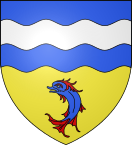 Isère
Isère
Isère is dominated by Grenoble, France's 'Capital of the Alps' and a major university and high-tech hub with a superb modern art museum and the mountains of Chartreuse and Vercors beginning at the city's edge. The Chartreuse monks still distill their legendary herbal liqueur in the département, and the fortified village of Crémieu is among the most photogenic in the Rhône basin.
-
27
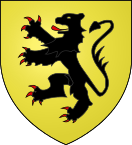 Nord
Nord
Nord is France's most densely populated department outside Paris, built on coal, lace, and a fierce pride in Flemish-inflected culture. Lille is one of Europe's great underrated cities: a beautiful Grande Place, the finest collection of Flemish baroque paintings outside Antwerp in the Palais des Beaux-Arts, and a vibrant street-food scene powered by two large universities.
-
28
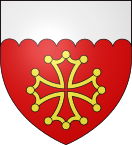 Gard
Gard
Gard is home to the Pont du Gard, a three-tiered Roman aqueduct soaring 49 metres above the Gardon river and the best-preserved Roman bridge in the world. Nîmes, the capital, rivals Rome in Roman monuments: a nearly intact amphitheatre still hosting events, a Temple of Augustus, and the Maison Carrée that Jefferson studied when designing Washington's public buildings.
-
29
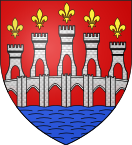 Lot
Lot
Lot is one of the most scenically dramatic departments in southern France: the pilgrim town of Rocamadour clings impossibly to a cliff face above the Alzou canyon, and the medieval city of Cahors sits in an almost complete loop of the Lot river. The department is known for its Malbec wine and the remarkable Valentré bridge, a 14th-century fortified river crossing.
-
30
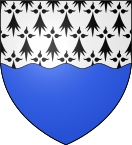 Morbihan
Morbihan ('Little Sea' in Breton) is centred on the sheltered Gulf of Morbihan, a near-enclosed inland sea dotted with dozens of islands. Carnac fields nearly 3,000 standing stones in the largest megalithic complex in the world, and the medieval walled city of Vannes, still girded by towers and ramparts, is one of Brittany's finest.
-
31
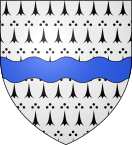 Loire-Atlantique
Loire-Atlantique occupies the great river's estuary and a city, Nantes, that has been one of France's most imaginative cultural experiments for two decades. The Machines de l'Île — giant kinetic sculptures including a 12-metre walking elephant — occupy the former shipyard island; the Château des Ducs de Bretagne, which Anne of Brittany ceded to France in 1532, anchors the old city.
-
32
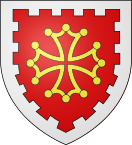 Aude
Aude
Aude is defined by two UNESCO icons: the double-walled citadel of Carcassonne, one of the best-preserved medieval fortifications on Earth, and the Canal du Midi, which cuts serenely through vineyards toward the Mediterranean. The Cathar heritage — ruined mountain castles perched over wild gorges — gives the department a dramatic, otherworldly character.
-
33
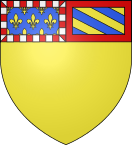 Côte-d'Or
Côte-d'Or runs along the famous Burgundy wine road from Dijon to Beaune, a strip of east-facing limestone slopes that produces some of the world's most celebrated Pinot Noir and Chardonnay. Dijon itself preserves a magnificent ducal palace surrounded by the pedestrianised streets of one of France's most architecturally coherent historic centres.
-
34
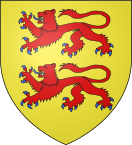 Hautes-Pyrénées
Hautes-Pyrénées is the department of Lourdes, which after Rome receives more Catholic pilgrims than anywhere else in the world, and the Pyrenean scenery is genuinely magnificent alongside the spiritual tourism. The glacial Gavarnie cirque is a UNESCO World Heritage natural site, and the Col du Tourmalet is the Tour de France's most climbed mountain pass.
-
35
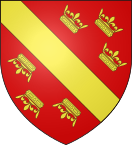 Haut-Rhin
Haut-Rhin is the southern half of Alsace, its Route des Vins lined with fairytale villages — Riquewihr, Kaysersberg, Eguisheim — that look unchanged since the 16th century. Colmar, the department capital, contains the Isenheim Altarpiece, Grünewald's harrowing and luminous triptych widely considered the most powerful religious painting in northern Europe.
-
36
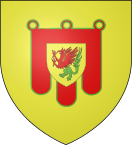 Puy-de-Dôme
Puy-de-Dôme is France's volcanic department, the Chaîne des Puys — a row of 80 dormant cinder cones — awarded UNESCO World Heritage status in 2018. The summit of Puy de Dôme, accessible by rack railway, overlooks Clermont-Ferrand and the entire Massif Central; the basilica of Orcival and the Romanesque church at Issoire are among the finest in Auvergne.
-
37
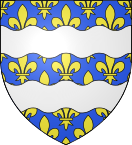 Seine-et-Marne
Seine-et-Marne is the green lung east of Paris, containing the vast forest of Fontainebleau — where 19th-century landscape painters invented plein-air painting — and the medieval walled market town of Provins, which once held the greatest fairs in northern Europe. Disneyland Paris sits at the department's western edge.
-
38
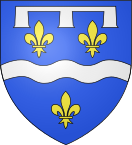 Loiret
Loiret contains Orléans, where Joan of Arc broke the English siege in 1429, making it one of the most resonant cities in French national memory. The Château de Sully-sur-Loire, a magnificent moated fortress reflected in the river, is one of the finest medieval castles in the valley.
-
39
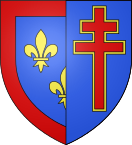 Maine-et-Loire
Maine-et-Loire is the heart of Anjou, whose mild climate and alluvial soils produce the Chenin Blanc wines of Savennières and Bonnezeaux. The Château d'Angers contains the Apocalypse Tapestry, the largest surviving medieval tapestry in the world at 100 metres long, commissioned in the 1370s.
-
40
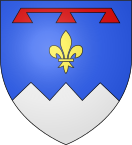 Alpes-de-Haute-Provence
Alpes-de-Haute-Provence is home to the spectacular Gorges du Verdon — Europe's answer to the Grand Canyon — whose turquoise waters draw kayakers and climbers from across the continent. The lavender plateau of Valensole in summer turns the department into a purple sea, and the Observatoire de Haute-Provence exploits some of the darkest skies in France.
-
41
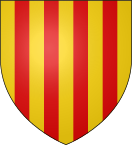 Pyrénées-Orientales
Pyrénées-Orientales is France's southernmost corner, where Catalan identity is proudly worn in the streets of Perpignan and in every menu's anchovies and crème catalane. Collioure's painted harbour once inspired Matisse and Derain, setting off the explosion of Fauvism.
-
42
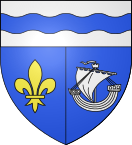 Hauts-de-Seine
Hauts-de-Seine is the inner suburb immediately west of Paris, containing La Défense — Europe's largest purpose-built business district, dominated by the Grande Arche that frames the same historical axis as the Arc de Triomphe and the Louvre. The Sèvres national porcelain factory, operating since 1756, and the art deco museums of Boulogne-Billancourt give the department unexpected cultural depth.
-
43
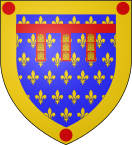 Pas-de-Calais
Pas-de-Calais faces England across the narrowest stretch of the Channel, where the white cliffs of the Opal Coast feel like a deliberate mirror to Dover. Beyond Calais and Boulogne-sur-Mer, the department hides medieval fortified towns, dramatic dune landscapes, and the battlefields of the Artois — witness to two world wars.
-
44
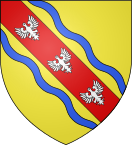 Meurthe-et-Moselle
Meurthe-et-Moselle contains Nancy, whose Place Stanislas is one of the finest 18th-century baroque ensembles in Europe, a UNESCO World Heritage composition of gilded gates, fountains, and harmonious architecture. Art Nouveau put Nancy on the world design map in the 1890s, and the Musée de l'École de Nancy is an essential stop for anyone interested in decorative arts.
-
45
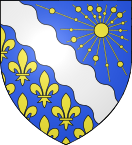 Essonne
Essonne is part of the Île-de-France immediately south of Paris, where royal hunting forests like Fontainebleau begin and ancient pilgrim towns like Étampes dot the Beauce plain. The medieval barn of Milly-la-Forêt, decorated by Jean Cocteau in 1959, is among the department's unexpected cultural highlights.
-
46
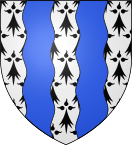 Ille-et-Vilaine
Ille-et-Vilaine contains Rennes, Brittany's historic capital, whose beautiful medieval quarter of half-timbered houses survived a 1720 fire and whose twice-weekly covered market and vibrant restaurant scene are among the best in France. The walled port of Saint-Malo, rebuilt stone by stone after wartime destruction, juts into the sea like a great granite aircraft carrier.
-
47
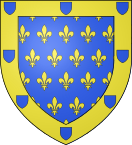 Ardèche
Ardèche is famous above all for its river gorges — the deepest in France — but also for the Chauvet Cave, which contains the world's oldest known cave paintings, some 36,000 years old. The narrow road along the rim of the canyon, high above the Ardèche river, is one of the great scenic drives in France.
-
48
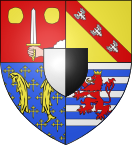 Moselle
Moselle is defined by Metz, whose St-Étienne Cathedral contains more medieval stained glass by area than any other church in France — 6,500 square metres of coloured light earning it the nickname 'God's lantern'. The Pompidou-Metz museum, opened in 2010, transformed the city's cultural identity with a dramatic building designed by Shigeru Ban.
-
49
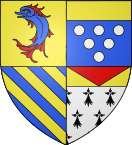 Drôme
Drôme
Drôme bridges the Rhône Valley and the pre-Alps, stretching from the flat plains around Valence to the wild limestone plateaus of the Vercors. Romans-sur-Isère, Montélimar (famous for its nougat), and the lavender-scented Drôme Provençale in the south make it an underrated gem of southeastern France.
-
50
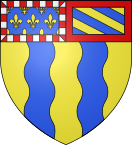 Saône-et-Loire
Saône-et-Loire is the long spine of Burgundy's southern half, from the medieval abbey of Cluny — once the most powerful monastery in Christendom — to the wine appellations of Pouilly-Fuissé and Mâcon. The Brionnais region in the south contains a remarkable concentration of Romanesque churches built in warm golden limestone.
-
51
 Côtes-d'Armor
Côtes-d'Armor is Brittany at its most rugged: the Pink Granite Coast near Perros-Guirec, where rosy boulders tumble into a cobalt sea, and the deeply indented estuaries sheltering oyster farmers and sailing boats. The medieval town of Dinan, perched above the Rance river gorge, is among the best-preserved in Brittany.
-
52
 Charente
Charente is inseparable from Cognac, the amber brandy aging for decades in warehouses perfumed with the so-called 'angel's share'. Angoulême has reinvented itself as the capital of French comic-strip art, its January festival drawing hundreds of thousands of fans; the Romanesque cathedral facade is among the richest in France.
-
53
 Doubs
Doubs
Doubs borders Switzerland and the character of the département reflects it — disciplined, clock-making, cheese-making, prosperous. Besançon, built in a loop of the Doubs river and protected by a Vauban citadel, was the birthplace of Victor Hugo and holds a UNESCO-listed fortress that also houses a natural history museum.
-
54
 Vienne
Vienne contains Poitiers, a city whose historic importance far exceeds its modest modern size: Charles Martel defeated the Arab invasion here in 732, Eleanor of Aquitaine was born in the Maubergeon Tower, and the Baptistère Saint-Jean is the oldest Christian building in France, dating from the 4th century. Futuroscope, the futuristic theme park on the city's outskirts, draws over two million visitors annually.
-
55
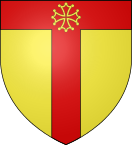 Tarn
Tarn
Tarn is a department of two faces: the bishop's city of Albi, where the fortress-cathedral of Sainte-Cécile — built in red brick to intimidate Cathar heretics — looms over the Tarn river, and the birthplace museum of Toulouse-Lautrec below. South of the river the landscape turns dramatic as the Black Mountain and Sidobre granite chaos pile up toward the Pyrenees.
-
56
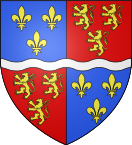 Somme
Somme
Somme takes its character from the chalk downs and tidal estuaries of northern Picardy, where the Baie de Somme shelters seals and migrating birds. Amiens Cathedral — the largest Gothic building in France — contains the most complete medieval interior of any French cathedral, and the Chemin de la Mémoire preserves the memory of the catastrophic 1916 Battle of the Somme.
-
57
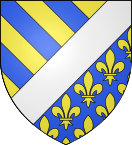 Oise
Oise
Oise contains Chantilly, whose château holds the second-finest collection of ancient paintings in France after the Louvre, and whose stables — designed as a palace for a prince who believed he would be reincarnated as a horse — now house the living Musée du Cheval. The Compiègne forest, where the WWI armistice was signed in 1918, covers the department's eastern half.
-
58
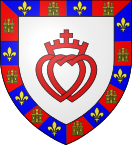 Vendée
Vendée extends along the Atlantic coast south of the Loire, its bocage and marshland once the scene of a counter-revolutionary uprising in the 1790s whose memory still shapes local identity. The Puy du Fou theme park — a unique theatrical-historical spectacle using 4,000 actors and cutting-edge stagecraft — has been voted the world's best theme park.
-
59
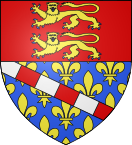 Eure
Eure
Eure contains Giverny, where Claude Monet built his celebrated water garden and painted the pond and its floating lilies in some of the most reproduced images in all of art history. The Seine valley is lined with Benedictine abbeys, including the haunting ruins of Jumièges, one of France's most atmospheric.
-
60
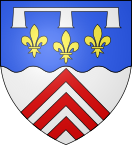 Eure-et-Loir
Eure-et-Loir is dominated by Chartres Cathedral, whose two mismatched spires have guided pilgrims across the flat Beauce grain plain for over 800 years. The cathedral's 13th-century stained glass — 172 windows covering 2,600 square metres — is considered the finest intact medieval glazing programme anywhere in the world.
-
61
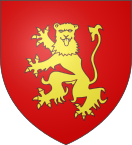 Aveyron
Aveyron is perhaps France's least-visited department per square kilometre, yet it conceals some of the country's most spectacular scenery: the Millau Viaduct soaring above the Tarn gorge as the tallest bridge on Earth, and the pilgrimage village of Conques, whose Romanesque abbey tympanum is a masterpiece of medieval sculpture.
-
62
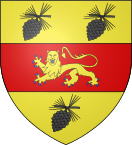 Landes
Landes is defined by the Landes forest, planted in the 19th century to drain swampy coastal land and now the largest man-made forest in Europe. The Atlantic coast — the Côte d'Argent — offers some of the finest surfing in Europe; Hossegor and Capbreton have hosted world championship surfing events and draw boarders from across the continent.
-
63
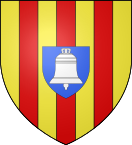 Ariège
Ariège lies deep in the Pyrenees, where prehistoric cave art at Niaux and Mas-d'Azil rivals Altamira and Lascaux in quality. The medieval Château de Foix towers over the confluence of three rivers, and the department's wild mountain landscapes — ski resorts, bear country, Cathar strongholds — reward travellers who venture off the well-worn southern routes.
-
64
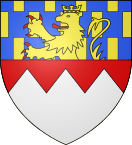 Jura
Jura
Jura lends its name to an entire geological period — the Jurassic — and is a département of modest ambitions and extraordinary pleasures: vin jaune made in ancient oxidative style, Comté cheese aged in mountain caves, and the Reculée des Planches limestone gorge with its waterfall frozen solid in winter.
-
65
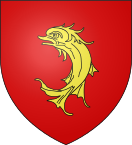 Loire
Loire
Loire is the industrial heartland of the Auvergne-Rhône-Alpes region, its capital Saint-Étienne once the arsenal of France's armies and now a city reinventing itself through design. The Gorges de la Loire, cut through volcanic basalt downstream, and the extraordinary Romanesque art at Saint-Chef give the department more than its industrial reputation suggests.
-
66
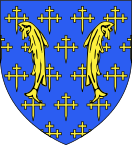 Meuse
Meuse
Meuse is inseparable from the Great War — Verdun, whose 300-day battle in 1916 consumed over 700,000 lives, gives the department an almost sacred gravity. The Ossuary of Douaumont and the vast forested no-man's-land, still too contaminated to farm, make this one of the most sobering and important historical landscapes in Europe.
-
67
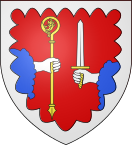 Haute-Loire
Haute-Loire is a département of volcanic plateaus and pilgrimage routes, where Le Puy-en-Velay's Cathedral of Notre-Dame occupies a lava plug rising 80 metres above the town. The department is a starting point for several routes of the Chemin de Saint-Jacques, and the upper Loire river valley here is a UNESCO World Heritage landscape.
-
68
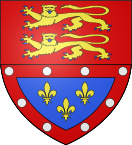 Orne
Orne
Orne is Normandy at its most equine: the Haras du Pin stud farm, founded by Colbert in the 17th century to breed horses for Louis XIV's armies, is the 'Versailles of horses', a baroque palace for stallions set in English-style parkland. The bocage landscapes of the Suisse Normande offer hiking, canoeing, and cliff-climbing along the Orne gorge.
-
69
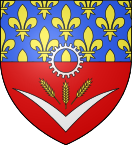 Seine-Saint-Denis
Seine-Saint-Denis is the inner suburb immediately north of Paris, containing the Basilica of Saint-Denis — the royal necropolis where every French king from Dagobert to Louis XVIII is buried and where Gothic architecture was essentially invented in the 12th century. The Stade de France, host of the 1998 World Cup final and 2024 Olympic athletics, rises from the same suburb.
-
70
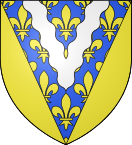 Val-de-Marne
Val-de-Marne wraps around Paris's southeastern edge, containing the Château de Vincennes — a medieval royal fortress preserved almost intact — and the Bois de Vincennes, the largest public green space in Paris. A Buddhist temple beside the Lac Daumesnil and the Musée de l'Air at Créteil add unexpected variety.
-
71
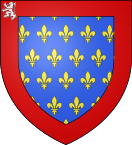 Sarthe
Sarthe is Le Mans, whose 24 Heures du Mans race has run every June since 1923 on a course partly using public roads. Plantagenet history is deeply embedded here: Henry II was born in Le Mans, and the cathedral's nave is a study in the transition between Romanesque and Gothic that influenced cathedral builders across England.
-
72
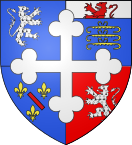 Ain
Ain
Ain occupies the rolling farmland of the Bresse plateau, famous for producing France's most prized chicken under strict AOC regulations. To the east, the gorges of the Ain river and the Bugey vineyard hills offer a surprisingly rugged counterpoint to all that pastoral gentility.
-
73
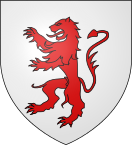 Gers
Gers
Gers is the soul of Gascony — a rolling landscape of sunflowers, Armagnac vineyards, and duck farms that produce the foie gras and confit consumed across France. Auch, the capital, contains a magnificent Gothic cathedral with Renaissance choir stalls carved with 1,500 figures; the tiny fortified village of Larressingle is one of the smallest in France.
-
74
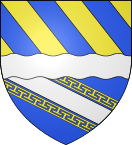 Aisne
Aisne
Aisne was the cradle of the Carolingian dynasty — Laon, perched dramatically on its ridge, was once a royal capital, and the surrounding plains hold some of France's finest Gothic cathedrals. The Chemin des Dames ridge, scene of catastrophic WWI offensives, remains one of France's most moving memorial landscapes.
-
75
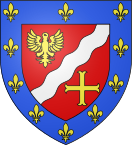 Val-d'Oise
Val-d'Oise lies north of Paris where the Oise river joins the Seine near Auvers-sur-Oise, where Vincent van Gogh spent his last 70 days and produced 80 paintings before his death in 1890. His room at the Auberge Ravoux and the wheat field above the village where he is buried have become pilgrimage sites for lovers of Impressionism.
-
76
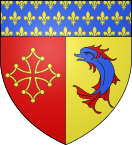 Hautes-Alpes
Hautes-Alpes sits at the highest elevations of the French Alps, its capital Briançon — the highest city in France — a UNESCO-listed fortified town. The Écrins National Park, covering much of the department, protects glaciers, ibex, and bearded vultures; the Serre-Chevalier ski area is one of the largest in the country.
-
77
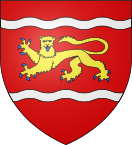 Lot-et-Garonne
Lot-et-Garonne is a gently rolling agricultural département between Bordeaux and Toulouse, its prunes from Agen so famous the variety bears the town's name worldwide. The bastide town of Monflanquin, founded in 1256, is among the best-preserved medieval new towns in France; Pujols, equally well-kept, overlooks the Lot valley.
-
78
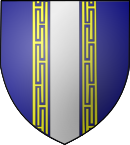 Haute-Marne
Haute-Marne lies between Champagne and Burgundy, its forests and valleys largely bypassed by the main tourist routes. Colombey-les-Deux-Églises is where Charles de Gaulle retired and died; his memorial and the enormous Cross of Lorraine on the ridge draw a steady pilgrimage of history-minded visitors.
-
79
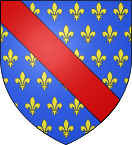 Allier
Allier is the heart of old Bourbon country, where the grand thermal spa town of Vichy soaks in faded belle époque grandeur and the medieval capital Moulins boasts a triptych by the Master of Moulins that rivals any Renaissance masterpiece. The Bourbonnais landscape of gentle valleys and oak forests is quintessential unhurried central France.
-
80
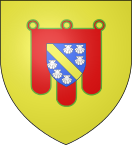 Cantal
Cantal is a dormant supervolcano, its vast rounded peaks the eroded remnants of what was once the largest volcano in Europe. The summit of Plomb du Cantal is accessed by cable car, the high pastures produce the cheese that bears the department's name, and Salers is arguably the most beautiful medieval village in central France.
-
81
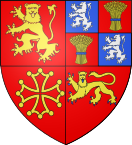 Tarn-et-Garonne
Tarn-et-Garonne is a fertile agricultural department where the Garonne and Tarn converge, its capital Montauban the birthplace of Ingres, whose academic classicism filled an entire dedicated museum here. The abbey church of Moissac contains a Romanesque cloister and portal tympanum so refined they can stand comparison with any medieval work in France.
-
82
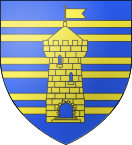 Territoire de Belfort
Territoire de Belfort is France's smallest department, created in 1871 after the Franco-Prussian War to give France a remnant of Alsace that had refused to surrender. The Lion of Belfort, carved in red sandstone by Frédéric Bartholdi (who also designed the Statue of Liberty) from the town's defensive rock, is among France's most powerful national monuments.
-
83
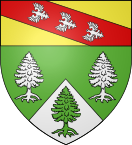 Vosges
Vosges is the ancient granite massif forming the western edge of Alsace, its rounded summits covered in spruce forest and its gentle western slopes draining toward Lorraine. The spa resort of Gérardmer, set beside a mountain lake, has been a popular retreat since the 19th century; the Vosges provide the most accessible ski terrain in northeastern France.
-
84
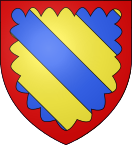 Nièvre
Nièvre occupies the geographic heart of France, where the upper Loire begins its long northward arc and the forested Morvan highlands shelter some of the country's quietest countryside. Nevers is known for the blue-on-white faience pottery still produced here and as the penultimate resting place of Bernadette Soubirous.
-
85
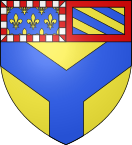 Yonne
Yonne
Yonne is the gateway to Burgundy, where the Yonne river flows through Auxerre — whose Gothic cathedral overlooks a skyline little changed in centuries — and the ancient pilgrimage hill of Vézelay, whose Romanesque basilica was the rallying point for the Second and Third Crusades and whose carved tympanum is a masterpiece of 12th-century sculpture.
-
86
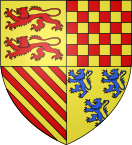 Corrèze
Corrèze is a department of forested plateaus and fast rivers, where the Vézère and Corrèze wind past medieval market towns like Brive-la-Gaillarde and Tulle, famous for its lace. The department has produced several French presidents, giving it an unlikely political cachet for its quiet, agricultural character.
-
87
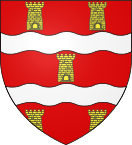 Deux-Sèvres
Deux-Sèvres occupies the borderland between the Loire and the Atlantic, its capital Niort known for a medieval fortress and a still-thriving mutual finance industry. The Marais Poitevin — the 'Green Venice' of Poitou, its flat-bottomed boats drifting under canopies of ash and alder — begins in the department and is among France's great wetland landscapes.
-
88
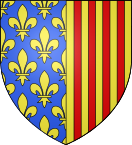 Lozère
Lozère is France's least populated department — fewer than 80,000 people in an area larger than many European countries — its high granite plateaus and deep gorges hauntingly empty. The Gorges du Tarn, carved between limestone causses, are among France's most dramatic inland waterways; wolves and vultures, reintroduced in recent decades, have returned to the Grands Causses.
-
89
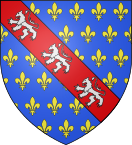 Creuse
Creuse is one of France's least-visited departments, a sparsely populated plateau of heath and granite where rivers cut deep valleys through oak and chestnut forests. It is famous for Aubusson, a tapestry-weaving capital whose workshop tradition dates back to the 15th century and whose modern artists revived the craft in the 20th.
-
90
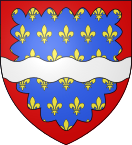 Cher
Cher
Cher sits in the geographic heart of France, its capital Bourges home to one of the finest Gothic cathedrals in Europe, whose five doorways and soaring nave rival those of Paris and Chartres. George Sand was born in the department, and the rural Berry landscape she immortalised — rolling meadows, châteaux, and troglodyte caves — remains little changed.
-
91
 Indre
Indre
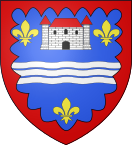
Indre is the quiet heartland of the Berry, where George Sand set her pastoral novels among rolling meadows, mill ponds, and market towns of a landscape barely changed since the 19th century. The Château d'Azay-le-Ferron and the surprising Romanesque church at Neuvy-Saint-Sépulchre (modelled on the Holy Sepulchre in Jerusalem) reward the patient traveller.
-
92
 Ardennes
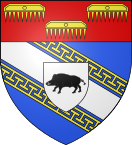
Ardennes shares its name with the dense forest that funnelled German armour in both 1914 and 1940, but the department's defining image is the lazy loops of the Meuse river winding through forested hills past the fortress town of Sedan. Arthur Rimbaud was born in Charleville-Mézières, and the annual puppet festival draws visitors from across Europe.
-
93
 Mayenne
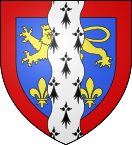
Mayenne is a quiet département of bocage — small fields enclosed by high hedgerows — with medieval walled towns like Laval and Vitré that go largely undiscovered by tourists. The Château de Laval, hung above the Mayenne river, houses one of the most unusual naive art collections in western France.
-
94
 Aube
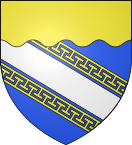
Aube
Aube is the heart of the Champagne region's south, where the Côte des Bar produces pinot noir-driven champagnes increasingly praised by connoisseurs. Troyes, the capital, is an extraordinary open-air museum of half-timbered medieval architecture, its fish-shaped street plan intact since the Middle Ages.
-
95
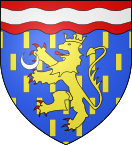 Haute-Saône
Haute-Saône borders Switzerland and the Vosges, a quiet département of forested plateaus and the headwaters of the Saône river. Vesoul is the gateway to the Ballons des Vosges Regional Nature Park, and the department's forests shelter deer, wild boar, and some of the most pristine river fishing in eastern France.
-
96
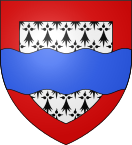 Haute-Vienne
Haute-Vienne is defined by Limoges, whose name is synonymous worldwide with fine porcelain — white kaolin deposits nearby made the city Europe's capital of translucent tableware from the 18th century onward. The Gothic Cathedral of Saint-Étienne, begun in 1273, is one of the finest in central France.