Most Popular
Based on Countries Been user data.
-
1
 Berlin
Berlin is Europe's most compelling capital — a city whose catastrophic 20th-century history, from Nazi terror to Cold War division, paradoxically created the conditions for one of the most intense concentrations of artistic and intellectual energy in the world. The physical evidence of that history is everywhere — the Holocaust Memorial, Wall remnants, the Stasi Museum, bullet-scarred facades in the east — but Berlin has processed its past with unusual directness. Its cultural dynamism, powered by relatively low costs and an openness to experimentation, has made Berlin the undisputed capital of European electronic music and a constant magnet for artists and architects worldwide.
-
2
 Bavaria
Bavaria is the Germany of the imagination — the lederhosen and beer gardens, the Alpine scenery and fairy-tale castles, the Oktoberfest and baroque countryside churches — but it is also a modern economic powerhouse, home to BMW, Siemens, and Allianz, and to Munich, which consistently ranks among Europe's most livable cities. The Alps in the south create landscapes of postcard perfection that still manage to surprise with their scale, while Bavaria maintains a distinct cultural identity in dialect, cuisine, and tradition that stands in interesting tension with the cosmopolitan dynamism of its capital.
-
3
 North Rhine-Westphalia
North Rhine-Westphalia is the economic engine of Germany — the most populous state in the country, home to some 18 million people in a densely connected network of cities including Cologne, Düsseldorf, Dortmund, and Bonn, each with its own distinct character. The Ruhr Valley was the industrial heart of Germany through the 20th century, its coal mines and steelworks driving the nation's postwar economic miracle; today the former industrial infrastructure has been creatively repurposed into cultural venues, museums, and parks. The Rhine cuts through the state from south to north past Cologne's Gothic cathedral and Düsseldorf's elegant Königsallee.
-
4
 Baden-Württemberg
Baden-Württemberg is the state that most embodies Germany's reputation for engineering precision and cultural depth — home to Mercedes-Benz, Porsche, Bosch, and SAP, but also to some of the country's most beautiful medieval towns and densely forested landscapes. The Black Forest stretches across the southwestern corner, its dark conifers and half-timbered villages giving the region a fairy-tale quality, while Heidelberg's ancient university, founded in 1386, draws students to a setting of unusual romantic beauty above a graceful bend in the Neckar River.
-
5
 Hesse
Hesse
Hesse occupies the geographic and economic center of Germany, its position reinforced by Frankfurt am Main's role as the country's financial capital and one of Europe's most important transportation hubs. Frankfurt's incongruous skyline of skyscrapers rises above a city that still preserves half-timbered buildings in the Römerberg district and world-class museums along the Museumsufer, while beyond the metropolitan area, the forested Taunus hills, the spa towns of the Rheingau, and the historic streets of Marburg offer a quieter Hesse.
-
6
 Hamburg
Hamburg is Germany's window on the world — a city built on trade whose mercantile confidence and cosmopolitan openness set it apart from the more insular character of the German interior. The port, the second largest in Europe, still defines the city's character: the Speicherstadt warehouse district, now a UNESCO site, has been transformed into a neighborhood of architecture studios and museums while retaining its brick-and-canal atmosphere. The Elbphilharmonie concert hall, opened in 2017 atop one of the old port warehouses, has become an architectural sensation and reaffirmed Hamburg's position as a city willing to invest ambitiously in culture.
-
7
 Saxony
Saxony is one of Germany's most culturally distinguished states, a region whose artistic and intellectual productivity — in music, visual arts, design, and literature — has been remarkable across centuries. Dresden was one of the most beautiful baroque cities in Europe before its destruction in February 1945, and the rebuilding of the Frauenkirche, completed in 2005, stands as one of the most moving acts of architectural restoration in postwar history. Leipzig complements Dresden with a different energy: it was Leipzig's Monday demonstrations in 1989 that catalyzed the peaceful revolution that brought down the Berlin Wall.
-
8
 Lower Saxony
Lower Saxony is one of Germany's most geographically varied states, stretching from the North Sea mudflats of the Wadden Sea coast across the broad North German Plain to the wooded ridges of the Harz mountains in the south. Hanover, the state capital, is best known for its enormous trade fair grounds — some of the world's largest exhibitions — but also harbors baroque Herrenhausen Gardens of surprising grandeur. The Lüneburg Heath, a vast expanse of purple heather that blooms in late summer, is one of Germany's most distinctive and romantically melancholy landscapes.
-
9
 Schleswig-Holstein
Schleswig-Holstein is Germany's northernmost state, caught between the North Sea to the west and the Baltic to the east in a narrow isthmus whose flat, windswept landscape has more in common with Denmark — which ruled it for centuries — than with the rest of Germany. The western coast is dominated by the Wadden Sea National Park, a tidal mudflat system of extraordinary ecological richness recognized by UNESCO as one of the world's most important natural areas. Lübeck, the former queen of the Hanseatic League, preserves a spectacular medieval townscape of brick Gothic churches and merchants' houses on an island encircled by the Trave River.
-
10
 Rhineland-Palatinate
Rhineland-Palatinate wraps around some of Germany's most romantic landscapes — the Middle Rhine Valley, where castle-topped cliffs rise above the river in a stretch designated a UNESCO World Heritage Site, is the archetype of what the world imagines Germany to look like. The state is the heart of German wine country, home to the Mosel Valley's steeply terraced Riesling vineyards and the Rheingau's prestigious estates, while Trier at the western edge preserves the most complete collection of Roman architecture north of the Alps.
-
11
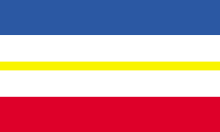 Mecklenburg-Vorpommern
Mecklenburg-Vorpommern is Germany's quiet corner — a sparsely populated state of Baltic coastline, glacial lakes, and old Hanseatic towns that rewards slow travel and a willingness to explore without a fixed itinerary. The island of Rügen, Germany's largest, features white chalk cliffs at Jasmund National Park that inspired Caspar David Friedrich's romantically sublime paintings. The three Hanseatic cities of Rostock, Stralsund, and Wismar preserve medieval brick Gothic architecture of exceptional quality — Stralsund's market square and the Wismar harbor are both UNESCO-listed.
-
12
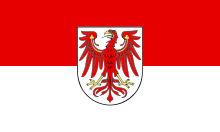 Brandenburg
Brandenburg is the state that surrounds Berlin without containing it, and its identity has been shaped by that peculiar relationship to one of Europe's most dynamic capitals. Potsdam, just 25 kilometers from Berlin's center, functions as a royal counterweight — its Sanssouci Palace complex, built by Frederick the Great as his summer retreat, fills an entire park with baroque and rococo architecture and immaculately maintained gardens. Beyond Potsdam, Brandenburg offers a landscape of glacially carved lakes, pine forests, and the Spreewald canal system, where Sorbian culture has persisted for centuries in labyrinthine waterways.
-
13
 Thuringia
Thuringia sits at the cultural heart of German history, a small forested state that produced a disproportionate share of the ideas and art that shaped modern civilization. Johann Sebastian Bach was born in Eisenach, Martin Luther translated the Bible into German at Wartburg Castle above the same city, Goethe and Schiller worked together in Weimar, and Walter Gropius founded the Bauhaus movement there a century later. The Thuringian Forest offers some of central Germany's finest hiking, while Erfurt's medieval cathedral hill makes it one of Germany's most rewarding and undervisited cities.
-
14
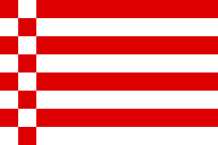 Bremen
Bremen is one of Europe's great trading cities — a free Hanseatic city that has guarded its independence through five centuries of German political upheaval. The medieval market square at its center is among the best-preserved in northern Europe, its Gothic Rathaus and the Roland statue together constituting a UNESCO World Heritage Site. Bremen's prosperity came from the sea, and the Weser river that runs through it still carries the memory of centuries of maritime commerce through its converted waterfront warehouses and fishermen's quarters.
-
15
 Saxony-Anhalt
Saxony-Anhalt holds a concentration of UNESCO World Heritage Sites that reflects its extraordinary importance to European history and culture. Wittenberg is where Martin Luther nailed his 95 Theses in 1517, igniting the Protestant Reformation that transformed not just Christianity but European civilization; Dessau is where Walter Gropius founded the Bauhaus school in 1919, establishing design principles that still shape how we make and think about objects and spaces. The Nebra Sky Disc, found in the hills near Halle and dated to around 1600 BCE, is the oldest known astronomical representation in the world.
-
16
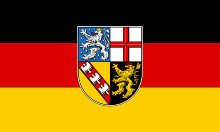 Saarland
Saarland is Germany's smallest non-city state, a compact territory whose history has been shaped by coal and steel on one side and by its position on the French border on the other. The French influence runs deeper than geography: the cuisine blends German substance with French refinement, the architecture of Saarbrücken bears the marks of French baroque urban planning, and cross-border commuting with neighboring Lorraine makes this one of the most genuinely Franco-German corners of Europe.