Most Popular
Based on Countries Been user data.
-
1
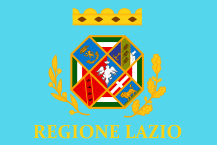 Lazio
Lazio
Lazio is Rome, and Rome is a city that refuses to be summarised — the Colosseum, the Pantheon, the Vatican Museums, the Sistine Chapel, and the Trastevere neighbourhood's vine-draped lanes are each a world-class destination in their own right. Away from the capital, the volcanic lakes of Bracciano and Bolsena offer swimming and medieval towns, while the Etruscan city of Tarquinia holds painted tombs that predate the founding of Rome. No region in Italy carries more of Western civilisation's weight.
-
2
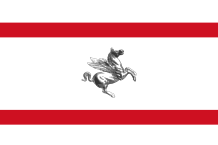 Tuscany
Tuscany is the landscape that taught the Western world what beauty looks like — cypress-lined roads, vineyards climbing to walled hilltowns, and the Arno winding through Florence beneath Brunelleschi's dome. The Uffizi holds more masterpieces per square metre than almost anywhere on earth, while Siena's Piazza del Campo is still the stage for the Palio, a bareback horse race that has run twice a year since the medieval era. Chianti, Montalcino, and Montepulciano keep the wine glass full from harvest to harvest.
-
3
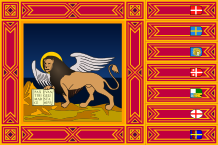 Veneto
Veneto holds Venice — which needs no introduction — but also the arena city of Verona, the Palladian villas of Vicenza, the wine roads of Valpolicella and Soave, and the Dolomite ski resorts of Cortina d'Ampezzo. Venice itself is a wonder of Gothic palaces and Byzantine mosaics built on a thousand islands connected by canals where the only traffic is gondolas, water-buses, and delivery boats. The terraferma behind the lagoon is quieter and in many ways more genuinely Venetian than the tourist-thronged campi of the Serenissima.
-
4
 Lombardy
Lombardy is Italy's economic engine, the industrial north that also happens to contain Lake Como, the Dolomite pre-Alps, the Renaissance palace city of Mantua, and Milan — a city whose fashion, finance, and football make it feel closer to London than to the stereotype of sun-drenched Italy. Da Vinci's Last Supper is here, in the refectory of Santa Maria delle Grazie, accessible only by timed-entry booking. The lake district — Como, Maggiore, Garda — has been drawing aristocrats and romantics since the Romantic era.
-
5
 Campania
Campania concentrates more world-famous experiences per square kilometre than almost any region on earth — Pompeii buried under Vesuvius, the white-washed cliff towns of the Amalfi Coast, and Naples, a city of furious energy whose street-food culture and subterranean Greek ruins could fill a week on their own. The islands of Capri and Ischia sit just offshore, adding blue grottos and thermal spas to the mix. Campania is overwhelming in the best possible sense.
-
6
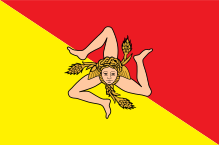 Sicily
Sicily is a whole civilization unto itself — Greek temples at Agrigento still more complete than anything in Greece, Arab-Norman cathedrals in Palermo where Islamic arches meet Byzantine mosaics, and the tectonic drama of Mount Etna, Europe's tallest active volcano, looming over vineyards that produce some of Italy's most exciting wines. Taormina clings to a clifftop above the Ionian Sea with views of Etna from an ancient Greek theatre. The island sits at a crossroads of cultures that stretches back three thousand years.
-
7
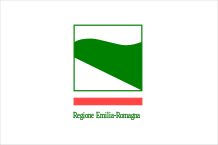 Emilia-Romagna
Emilia-Romagna is Italy's gastronomic heartland, the birthplace of Parmigiano-Reggiano, Prosciutto di Parma, and the hand-rolled pasta of Bologna. Beyond the food, it shelters Ferrari's hometown of Maranello, the mosaics of Ravenna, and a stretch of Adriatic coast that draws Italian families every summer. Few regions pack this much pleasure — culinary, artistic, and mechanical — into a single geography.
-
8
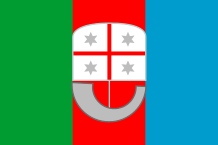 Liguria
Liguria is a narrow crescent of steep cliffs, fishing villages, and pesto-scented air squeezed between the Alps and the Ligurian Sea. The Cinque Terre — five pastel-painted villages clinging to terraced vineyards above sheer drops — have become one of Italy's most photographed stretches of coast. Genoa anchors the region with a medieval caruggi district, a towering lighthouse, and a mercantile swagger born of centuries as a maritime republic.
-
9
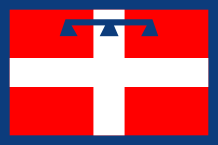 Piedmont
Piedmont sits in the shadow of the Alps at Italy's northwest corner, a region of serious wine, serious gastronomy, and a regal Savoy capital that looks more like Paris than anywhere else in Italy. The Langhe hills around Alba produce Barolo and Barbaresco, two of the world's great reds, and the white truffle season every autumn draws buyers prepared to pay four-figure sums per kilogram. Turin's Egyptian Museum, second only to Cairo's, and the Shroud of Turin tucked inside its baroque cathedral are reminders that this is a city with depth beyond its chocolate and Fiat heritage.
-
10
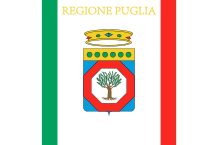 Apulia
Apulia — Puglia — is the heel of Italy's boot, a flat limestone plateau of olive groves, white-washed trulli houses, and baroque cities with a Baroque exuberance that outdoes even Rome. Alberobello's UNESCO-listed trulli district looks like something from a fairy tale, while Lecce's honeyed limestone churches have earned the city the title of the Florence of the South. The Salento peninsula at the very tip offers Adriatic and Ionian coastlines within walking distance of each other.
-
11
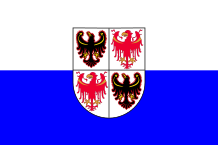 Trentino-Alto Adige/Südtirol
Trentino-Alto Adige/Südtirol is a bilingual region in the Dolomites where signposts appear in Italian and German, apple orchards fill the valley floors, and the jagged rose-coloured towers of the Pale di San Martino turn amber at sunset. Bolzano is home to Ötzi the Iceman, the 5,300-year-old mummy discovered in a glacier, whose preserved body and possessions fill an entire museum. The region's combination of world-class hiking, skiing, and one of the highest concentrations of Michelin-starred restaurants in Italy makes it a year-round destination.
-
12
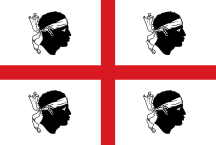 Sardinia
Sardinia is an island of ancient nuraghe towers, turquoise lagoons, and a coastline whose waters rival the Caribbean for clarity. The Costa Smeralda in the northeast draws the yachting crowd, while the wild interior holds Bronze Age mysteries and the longevity secrets of one of the world's Blue Zones. Cagliari's Phoenician quarter and the flamingos of the Molentargius wetlands add unexpected depth to a place most visitors see only from a beach umbrella.
-
13
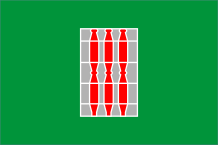 Umbria
Umbria calls itself the green heart of Italy — a landlocked region of rolling oak forests, monastic traditions, and hill towns where Franciscan and Gothic art reach their quietest, most contemplative peak. Assisi, birthplace of St Francis, is one of the most spiritually resonant places in Europe, its Basilica frescoed by Giotto in a sequence that launched the Renaissance. Orvieto's cathedral rising from a volcanic tufa cliff and the truffle markets of Norcia add a richness that keeps the region firmly in the memory long after departure.
-
14
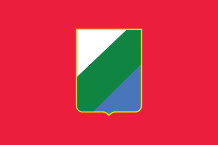 Abruzzo
Abruzzo is the green heart of Italy, a largely unspoiled region where the Apennines rear up to peaks of nearly three thousand metres and three national parks protect wolves, bears, and golden eagles. L'Aquila was rebuilt after the devastating 2009 earthquake with a tenacity that mirrors its medieval resilience, and the medieval hilltowns of Pescina and Santo Stefano di Sessanio have become benchmarks for sustainable rural tourism. The Trabocchi Coast stretches along the Adriatic like a dreamscape of wooden fishing platforms jutting into perfectly clear water.
-
15
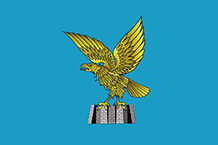 Friuli-Venezia Giulia
Friuli-Venezia Giulia is the northeastern corner where Latin, Slavic, and Germanic cultures meet on a coast that was once the frontier between the Habsburg empire and the Italian peninsula. Trieste retains the grand coffee-house culture and melancholic literary atmosphere that made it James Joyce's home for eleven years and Italo Svevo's muse. The Collio wine hills along the Slovenian border and the Carso plateau's underground rivers and caves make this one of the most geographically diverse regions in Italy.
-
16
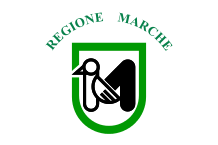 Marche
Marche unfolds between the Apennines and the Adriatic as one of Italy's best-kept secrets, its hill towns largely spared the tour-bus circuit. Urbino, birthplace of Raphael, rises from rolling farmland with a Renaissance palace that ranks among the finest in Europe. The Conero Riviera to the south offers limestone cliffs plunging into clear blue water that rivals anything on the more famous coastlines.
-
17
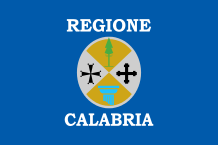 Calabria
Calabria is the toe of Italy's boot, a wild, sun-baked peninsula where Greek ruins at Locri and Riace stand alongside Byzantine-era cave churches and Norman castles. Tropea perches on a sheer tuff cliff above a beach of almost hallucinatory turquoise, consistently voted among Italy's most beautiful. The Aspromonte massif in the interior and the Sila plateau farther north offer cool forests and ancient villages largely untouched by mass tourism.
-
18
 Basilicata
Basilicata is one of Italy's most dramatically undervisited regions, its interior carved into ravines and topped with ancient hill towns that cling to the rock like barnacles. Matera, the Sassi city, is a UNESCO World Heritage site where people lived in cave dwellings continuously for nine thousand years — it served as ancient Jerusalem in Mel Gibson's The Passion of the Christ and as the backdrop of No Time to Die. The Pollino National Park and the volcanic black-sand beaches of the Tyrrhenian coast round out a region that rewards the curious traveller.
-
19
 Aosta Valley
The Aosta Valley is Italy's smallest region, a high Alpine valley carved by the Dora Baltea river beneath the shadows of Mont Blanc, the Matterhorn, and the Gran Paradiso. The Romans left a complete town — Augusta Praetoria — whose triumphal arch, theatre, and forum still stand in the regional capital, while a chain of medieval castles climbs the valley walls above every hairpin bend. In summer it is walking country; in winter it is one of Italy's premier ski destinations.
-
20
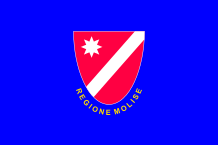 Molise
Molise is Italy's quietest region, a place of sheep transhumance routes, isolated Samnite ruins, and hill towns so unspoiled they feel like the Italy of a century ago. Sepino, with its intact Roman colony walls and forum, is one of the peninsula's least-visited archaeological sites — and one of its most atmospheric. The slow rhythm here is a feature, not a bug, for travellers looking to find a corner of the country that tourism hasn't reached.