Most Popular
Based on Countries Been user data.
-
1
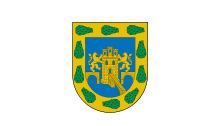 Mexico City
Mexico City is one of the great metropolises of the world — 21 million people spread across a former lake bed in a high-altitude valley, layered with Aztec ruins, Spanish baroque, 20th-century muralism, and some of the best restaurants in Latin America. Neighbourhoods like Roma, Condesa, and Coyoacán reward weeks of exploration.
-
2
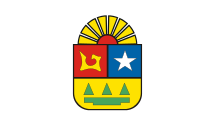 Quintana Roo
Quintana Roo is Mexico's Caribbean frontier — home to Cancún's hotel strip, the ancient walled city of Tulum perched on a sea cliff, and the Sian Ka'an biosphere reserve stretching across a third of the state. The offshore reef is part of the Mesoamerican Barrier Reef, the second longest in the world.
-
3
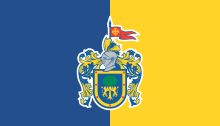 Jalisco
Jalisco is Mexico's cultural heartland — tequila was born in the town of the same name, mariachi music originated in Cocula, and Guadalajara is the country's second city, with a food scene and arts culture that rival the capital. Puerto Vallarta on the Pacific coast adds another dimension entirely.
-
4
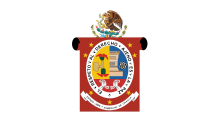 Oaxaca
Oaxaca has become one of the essential stops in Mexico, drawing visitors with its unrivalled cuisine — mole negro, tlayudas, mezcal — and a living craft tradition that includes black clay pottery and hand-woven textiles. Monte Albán, the Zapotec hilltop capital that flourished for 1,500 years, looms over the valley just outside the city.
-
5
 Yucatán
Yucatán is the heartland of Maya civilisation, and Chichen Itzá — its great pyramid El Castillo casting a serpent shadow on each equinox — draws more visitors than any site in Mexico. Mérida, the White City, is one of Latin America's most liveable colonial capitals, and the cenote-dotted peninsula offers swimming holes unlike anywhere else on earth.
-
6
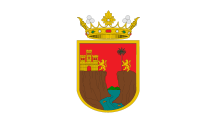 Chiapas
Chiapas is highland Maya country, and the ruins of Palenque — set in jungle above a plain of tropical mist — are among the most hauntingly beautiful in all of Mesoamerica. San Cristóbal de las Casas retains a distinct highland indigenous character, and the Sumidero Canyon, carved by the Grijalva River, drops a sheer kilometre to the water below.
-
7
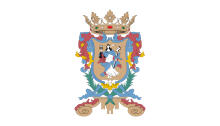 Guanajuato
Guanajuato state contains two of Mexico's most beloved cities: the colonial mining capital of Guanajuato, where streets tunnel beneath the city and a mummy museum occupies a former cemetery, and San Miguel de Allende, a Spanish-colonial jewel that has attracted artists and expatriates for decades. Both are UNESCO World Heritage Sites.
-
8
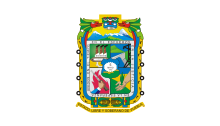 Puebla
Puebla sits in a highland valley between two great volcanoes, Popocatépetl and La Malinche, and gave the world both mole poblano and Talavera pottery. The historic centre packs more than 70 churches into a colonial grid, and nearby Cholula — with its enormous pyramid topped by a Spanish church — is one of Mexico's most arresting juxtapositions.
-
9
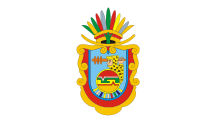 Guerrero
Guerrero curves along Mexico's Pacific coast and contains some of its most dramatic contrasts — Acapulco's cliff divers and turbulent recent history at one end, the almost-undiscovered bays around Zihuatanejo and Ixtapa at the other. The pre-Columbian cave paintings of Juxtlahuaca, deep in the mountains, are among the oldest in Mesoamerica.
-
10
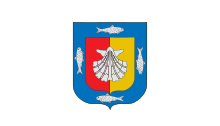 Baja California Sur
Baja California Sur is all dramatic desert-meets-ocean landscapes — the Arch of Cabo San Lucas, the whale-watching lagoons of Magdalena Bay, and the laid-back colonial port of La Paz. The Sea of Cortez, which Jacques Cousteau called the aquarium of the world, forms its entire eastern shore.
-
11
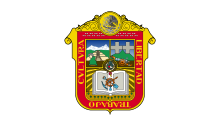 México
Estado de México (México state) wraps around three sides of the capital and contains the great pyramid complex of Teotihuacán, where the Avenue of the Dead stretches between the Pyramid of the Sun and the Pyramid of the Moon. The state is the most populous in the country, yet Teotihuacán — once among the largest cities on earth — remains its greatest draw.
-
12
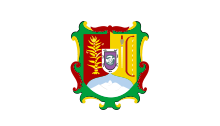 Nayarit
Nayarit's Riviera Nayarit coast, anchored by Sayulita and San Pancho, has become the hideaway of choice for travellers who find Puerto Vallarta too polished. The Huichol (Wixáritari) people of the sierra interior maintain one of the most intact indigenous ceremonial traditions in Mexico.
-
13
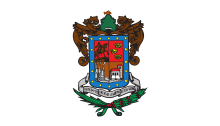 Michoacán
Michoacán is famous for two natural spectacles: the monarch butterfly migration, when hundreds of millions of monarchs drape entire forests in orange and black each winter, and the volcanic crater lake of Paricutín, which rose from a cornfield in 1943. Morelia's historic centre is one of the finest colonial ensembles in Latin America.
-
14
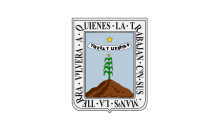 Morelos
Morelos is Mexico's smallest mainland state, a subtropical enclave of eternal spring that drew Aztec royalty to build summer palaces here. Cuernavaca earned its 'city of eternal spring' reputation for good reason, and the former home and studio of muralist Diego Rivera in Cuernavaca is one of the country's most intimate artist monuments.
-
15
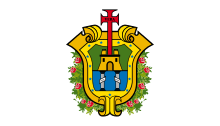 Veracruz
Veracruz is Mexico's window to the world — the port through which the conquistadors arrived and from which New World gold departed for Spain. The city's danzón culture, Afro-Caribbean rhythms, and legendary seafood make it one of the most musically alive places in the country, while the ancient Totonac city of El Tajín stands in the north.
-
16
 Chihuahua
Chihuahua is Mexico's largest state and home to one of its most spectacular natural wonders: the Copper Canyon system, a network of six canyons deeper and wider than the Grand Canyon. The Chepe train cuts through the gorge in one of the great railway journeys of the Americas.
-
17
 Sinaloa
Sinaloa's Pacific coast is synonymous with Mazatlán, a city that balances 19th-century elegance in its Centro Histórico with carnival energy on the Malecón. The fertile valleys inland feed much of Mexico's vegetable exports, earning the state a reputation as the breadbasket of the nation.
-
18
 Colima
Colima is Mexico's second-smallest state, dominated by the perfectly conical Volcán de Colima, one of the most active volcanoes in North America. Despite its size, it packs in Pacific beaches, colonial architecture in the capital, and a quiet dignity that larger tourist circuits rarely disturb.
-
19
 Nuevo León
Nuevo León is Mexico's industrial powerhouse, with Monterrey as its engine — a modern city of gleaming museums, craft breweries, and a thriving startup scene set against the jagged Sierra Madre. The Barrio Antiguo neighbourhood and the Fundidora Park, built on the ruins of a former steel mill, show a city comfortable with reinvention.
-
20
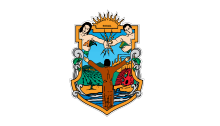 Baja California
Baja California stretches down the northwestern peninsula, with Tijuana at its northern tip and the wine-producing Valle de Guadalupe drawing visitors for entirely different reasons. Ensenada's fish tacos and Pacific surf culture feel a world apart from mainland Mexico, shaped by proximity to California and centuries of coastal isolation.
-
21
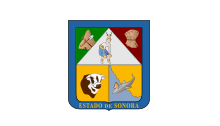 Sonora
Sonora is desert, cattle country, and coast in equal measure — the Sea of Cortez beaches around Guaymas and San Carlos attract divers and sport fishers, while the northern desert holds some of the most striking landscapes in North America. It's also the spiritual home of carne asada, and locals will tell you so with conviction.
-
22
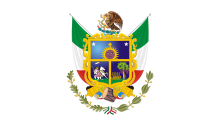 Querétaro
Querétaro is a colonial showpiece whose historic centre — another UNESCO site — spirals out from a perfectly preserved aqueduct of graceful stone arches. The city's recent emergence as a technology and aerospace hub has added a 21st-century layer to a place where the Emperor Maximilian was executed in 1867.
-
23
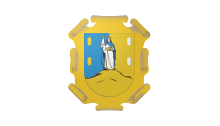 San Luis Potosí
San Luis Potosí encompasses extraordinary variety: the semi-desert Huasteca region with its turquoise waterfalls, the haunting ghost-town atmosphere of Real de Catorce perched at 2,700 metres, and a colonial capital with one of the most handsome main plazas in Mexico. It's a state that consistently surprises travellers who pass through.
-
24
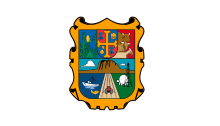 Tamaulipas
Tamaulipas runs along the Gulf of Mexico and the Rio Grande border, its northern cities like Matamoros and Nuevo Laredo shaped by cross-border commerce and migration history. The Laguna Madre, a hypersaline lagoon that runs the length of the coast, is one of only a handful of such ecosystems on earth.
-
25
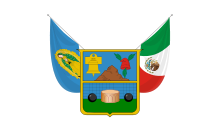 Hidalgo
Hidalgo is a compact state punching well above its weight, home to the extraordinary Hierve el Agua-like travertine pools of Tolantongo and the Tula archaeological site, capital of the Toltec empire. Pachuca, the state capital, was the entry point of mining technology from Cornwall and still hosts the world's oldest Association Football club in Mexico.
-
26
 Zacatecas
Zacatecas grew rich on silver, and its extraordinary colonial centre — now a UNESCO World Heritage Site — is a cascade of pink stone baroque facades tumbling down a narrow valley. The mines of Cerro de la Bufa produced nearly a quarter of the world's silver at the height of New Spain's wealth.
-
27
 Durango
Durango straddles the Sierra Madre Occidental, its rugged terrain once so impassable that it served as a hideout for Pancho Villa and a backdrop for dozens of Hollywood Westerns. The state capital's colonial centre — earthquakes and all — remains beautifully intact.
-
28
 Tabasco
Tabasco is the wet lowland heartland of Mexico, a river delta where the Grijalva and Usumacinta meet the Gulf — the same geography that cradled the Olmec civilisation, the Americas' first major culture. La Venta Park in Villahermosa displays colossal Olmec stone heads moved from the jungle with extraordinary effort.
-
29
 Campeche
Campeche's walled colonial city is among the best-preserved in the hemisphere — its pastel-painted fortifications were built to repel pirates, and today the streets inside feel almost unchanged from the 18th century. The Maya ruins of Calakmul, deep in the biosphere reserve to the south, once rivalled Tikal as the dominant power of the classic period.
-
30
 Aguascalientes
Aguascalientes is Mexico's smallest landlocked state and one of its most overlooked, yet the capital city's underground tunnel system — built to expand a city hemmed in by rivers — is genuinely unique. The Feria Nacional de San Marcos, held each spring, is the oldest and largest fair in the Americas.
-
31
 Tlaxcala
Tlaxcala is the smallest state in Mexico, yet its role in the conquest was outsized: the Tlaxcalans allied with Cortés against the Aztecs, a decision that shaped the outcome of an entire civilisation. The state capital's frescoed convents and the Zócalo lined with arcades make it a rewarding half-day detour from Puebla.
-
32
 Coahuila
Coahuila is the third-largest state in Mexico and one of its least-visited, a vast semi-arid plateau where the Chihuahuan Desert meets cross-border ranching culture. Saltillo's fine ceramics and the Battle of Buena Vista, fought here in 1847 against American forces, give it a quietly significant place in the country's history.