Most Popular
Based on Countries Been user data.
-
1
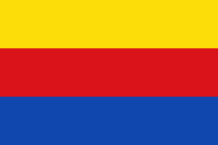 North Holland
North Holland is Amsterdam and its hinterland — the tulip fields of the Bollenstreek, the preserved wooden houses of Edam and Volendam on the former Zuiderzee, the cheese market at Alkmaar where white-uniformed carriers run the traditional wheels on a Friday morning. Amsterdam itself is a city of 165 canals, the Rijksmuseum's Rembrandt and Vermeer collections, the Anne Frank House, and a 17th-century canal ring of merchant mansions that is a UNESCO World Heritage site. Haarlem, just fifteen minutes from Amsterdam, has Frans Hals's greatest paintings in a converted almshouse and a Saturday flower market around the Grote Kerk that has operated for centuries.
-
2
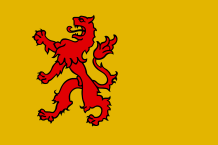 South Holland
South Holland is the province that contains the Netherlands in concentrated form: Amsterdam's royal rival The Hague with its international courts and Vermeer museum, the port city of Rotterdam whose World War II bombing allowed it to become the boldest architectural experiment in Northern Europe, Delft where Vermeer actually lived and where the blue-and-white pottery tradition continues in working factories open to visitors. Leiden, with its university founded in 1575 as a reward for resisting Spanish siege, and the Keukenhof bulb fields that turn the province's flat landscape into a carpet of tulips every spring round out a province that punches far above its modest size. The Kinderdijk windmill complex, a UNESCO World Heritage site, is the most visited sight in the Netherlands after the Rijksmuseum.
-
3
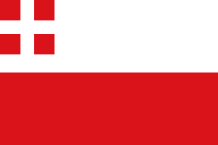 Utrecht
Utrecht Province occupies the geographic heart of the Netherlands, its compact capital city of Utrecht one of the country's great surprises — a medieval university city of 350,000 with canal wharves lined with restaurants and bars at water level, a Romanesque cathedral tower you can climb for views across the whole country, and a Dom square where the nave once stood before a hurricane removed it in 1674. The province also contains Amersfoort, one of the best-preserved medieval town centres in the country, and Slot Zuylen, a moated castle that sits in the river outside the city exactly as it has since the 13th century. Utrecht's central railway station is the busiest in the Netherlands, a reminder that this is the country's true crossroads.
-
4
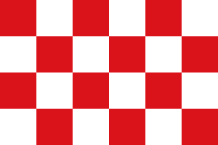 North Brabant
North Brabant is the Dutch south — a province of Burgundian food culture, Carnaval celebrations that make the rest of the Netherlands look reserved, and a design heritage anchored by Eindhoven and the Dutch Design Week that has made it one of Europe's most creative cities. The medieval city of 's-Hertogenbosch (Den Bosch), birthplace of the painter Hieronymus Bosch, has one of the finest Gothic cathedrals in the country and a lively restaurant scene that belies its modest size. Tilburg's textile industrial history and Breda's 15th-century Great Church complete a province that earns the nickname 'the Burgundian Netherlands'.
-
5
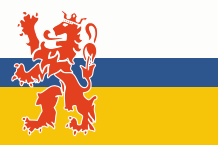 Limburg
Limburg is the Netherlands' southernmost province, a long thin finger of land squeezed between Belgium and Germany where the flat polder landscape finally finds hills — the Vaalserberg, at 322 metres, is the highest point in the country. Maastricht is the jewel: a medieval city of Roman foundations, Burgundian restaurants, the brilliant Bonnefanten Museum of contemporary art, and the Boekhandel Selexyz Dominicanen — a Dominican church converted into the world's most spectacular bookshop. Valkenburg, an hour south, is the only Dutch city with underground tunnels used for limestone quarrying since the Middle Ages and now containing the country's only winter Christmas market held inside caverns.
-
6
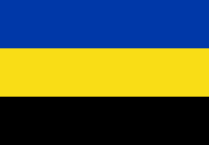 Gelderland
Gelderland is the Netherlands' largest province by area, stretching from the Rhine and Waal river plains in the south to the Veluwe heathland in the centre — a national park of pine forests, drifting sand dunes, and wild boar that feels implausibly remote for a country this dense. Arnhem hosts the Openluchtmuseum open-air collection of Dutch historical buildings and the annual Arnhem Fashion Biennale, while the Operation Market Garden battlefields and the Airborne Museum at Hartenstein just outside the city draw military history visitors from around the world. Nijmegen, the oldest city in the Netherlands, has a Roman history traceable to the first century and a lively university city culture.
-
7
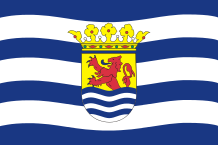 Zeeland
Zeeland is the Netherlands at its most elemental — a province of islands and peninsulas separated by the arms of the Rhine-Maas-Scheldt delta, its name meaning 'sea land' and its history one of constant negotiation with the North Sea. The Delta Works, a system of storm surge barriers completed in 1997 to protect the province after the catastrophic 1953 flood that killed 1,836 people, is considered one of the modern engineering wonders of the world. Middelburg, the medieval provincial capital, has a 12th-century abbey and a town hall with Gothic detailing that survived the bombing of 1940 and was meticulously restored stone by stone.
-
8
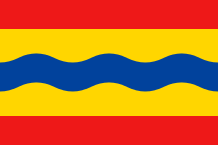 Overijssel
Overijssel stretches from the German border in the east to the Ijssel river valley in the west, its most famous destination the village of Giethoorn — a car-free labyrinth of thatched cottages connected by 8 kilometres of canals crossed by 176 wooden bridges, reachable only by boat, bicycle, or on foot. Zwolle, the provincial capital, has a well-preserved medieval centre with a star-shaped fortification plan and one of the finest Saturday markets in the eastern Netherlands. Enschede and Deventer round out a province that offers an alternative to the western Randstad cities for visitors willing to travel a little further.
-
9
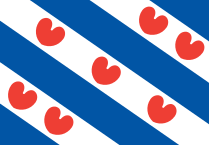 Friesland
Friesland is a province with its own language — Frisian, co-official with Dutch and spoken daily by over 400,000 people — its own flag, its own sense of identity forged in centuries of land reclamation from the North Sea. The Wadden Islands off the coast (Terschelling, Vlieland, Ameland, Schiermonnikoog) are a UNESCO World Heritage site of tidal flats, seal colonies, and cycling paths through dunes that draw Dutch holidaymakers every summer. Every ten years or so, when canals freeze solid, the Elfstedentocht — an 200-kilometre skating race through eleven Frisian cities — turns the province into the centre of the nation's attention.
-
10
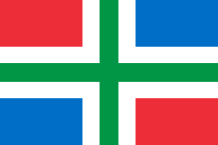 Groningen
Groningen Province occupies the far northeast, its capital Groningen city one of the Netherlands' great student cities — a quarter of its 230,000 inhabitants are students at two universities, giving it a café culture and nightlife scene out of proportion to its northern location. The province's flat agricultural landscape is dotted with terps, artificial earthen mounds on which villages were built to escape North Sea floods before the age of polders and dykes. The Groninger Museum, designed by Alessandro Mendini and Francesco Venezia in a deliberately provocative collection of pop-art pavilions floating in the canal, is one of the most architecturally startling in the country.
-
11
 Drenthe
Drenthe is the Netherlands' least-visited province and its most prehistoric — a plateau of heath and bog where fifty-four hunebedden (megalithic passage graves built around 3000 BC) are scattered across the landscape, the largest concentration of Neolithic monuments in the country. The open-air Openluchtmuseum in Arnhem may be better known, but Drenthe's Drents Museum in Assen holds the Pesse canoe, the world's oldest known boat, carved from a single pine log roughly ten thousand years ago. The province's cycling paths through heathland and through the National Park Drentsche Aa are among the most beautiful in the Netherlands.
-
12
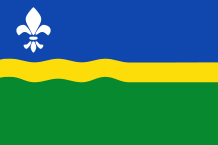 Flevoland
Flevoland is the world's largest artificial land mass — three polders drained from the former Zuiderzee between 1942 and 1968, a province that did not exist when most of the people now living in it were born. The land was drained with military precision and populated with new towns on a grid plan, the largest of which, Almere, has grown from nothing in 1976 to a city of 220,000. The Oostvaardersplassen nature reserve, where horses, cattle, and red deer roam a rewilded polder without management, became one of the most debated ecological experiments in Europe.