Most Popular
Based on Countries Been user data.
-
1
 Oslo
Oslo
Oslo sits at the head of the Oslofjord between pine-forested ridges on a site occupied since the Viking Age, and its recent decade of investment has transformed it into one of the most design-conscious and culturally vibrant capital cities in northern Europe. The waterfront Tjuvholmen district, the Astrup Fearnley Museum of Modern Art, and the swooping white-concrete Oslo Opera House have created an international-standard cultural mile along the fjordfront, while the Munch Museum and National Gallery house works that document Norway's outsized contribution to 19th and 20th-century art. The Holmenkollen ski jump above the city, the Vigeland Sculpture Park's 200 bronze and granite figures, and the Bymarken forest that begins at the tram terminus give Oslo an outdoor dimension most Nordic capitals cannot match.
-
2
 Hordaland
Hordaland is the gateway to the fjord landscape that defines Norway's international image, anchored by Bergen — the former Hanseatic trading post whose Bryggen wharf, a row of painted wooden buildings reflected in the harbour, is Norway's most photographed UNESCO World Heritage Site. The Hardangerfjord, the second-longest fjord in the world, cuts through the Hardanger plateau past orchards of apple and cherry trees producing Norway's most celebrated fruit beneath walls of snow-clad mountains. The Bergen Railway's most dramatic branch — the Flåm mountain railway, dropping from the Hardanger plateau to sea level — and the Voss adventure sports scene round out one of Europe's greatest outdoor regions.
-
3
 Møre og Romsdal
Møre og Romsdal delivers what most visitors come to Norway for in spectacular concentration: Geirangerfjord and Nærøyfjord together constitute a UNESCO World Heritage Site of staggering vertical drama, their thousand-metre walls dropping directly into still water beneath cascading waterfalls that freeze into silver columns through the winter. Ålesund, the county's largest city, was rebuilt in Art Nouveau style after an 1904 fire with financial assistance from Kaiser Wilhelm II, who summered here, and its elegant harbour-side facades make it the most architecturally coherent city in western Norway. The Atlantic Ocean Road — a series of concrete bridges threading between wave-battered islands off the Romsdal coast — has been voted the world's most beautiful drive in multiple international polls.
-
4
 Sogn og Fjordane
Sogn og Fjordane is Norway's deepest fjord country, where the Sognefjord — 205 kilometres long and 1,308 metres deep — is the longest and deepest fjord in Norway and the second in the world, its scale so immense that it takes an entire day's cruise to traverse its full length. The UNESCO-protected Nærøyfjord arm, barely 250 metres wide at its narrowest, funnels cruise ships and kayaks between walls of rock where waterfalls thread the spray-soaked cliff faces like silver ribbons. The Flåm Railway, ranked among the world's most scenic rail journeys, descends 863 metres in just 20 kilometres from the Myrdal mountain plateau to the Aurlandsfjord arm of the Sognefjord, passing eleven tunnels and the spectacular Kjosfossen waterfall.
-
5
 Rogaland
Rogaland is the oil capital of Norway — Stavanger's offshore petroleum industry transformed a modest fishing and canning town into a cosmopolitan city of international engineers, Michelin-starred restaurants, and the world's highest concentration of oil-sector companies per capita. But the county's great outdoors rival any Norwegian landscape: Preikestolen (Pulpit Rock), a flat cliff-top platform hovering 604 metres above Lysefjord, has become one of Europe's most famous hikes, and the Kjerag boulder — wedged between two rockfaces above the same fjord — draws adrenaline-seeking photographers from across the world. Stavanger's medieval stone cathedral, the restored old town (Gamle Stavanger) of 173 white wooden houses, and the Norwegian Petroleum Museum make the city equally rewarding for culture-seeking visitors.
-
6
 Sør-Trøndelag
Sør-Trøndelag is the spiritual capital of Norway, centred on Trondheim and the great Nidaros Cathedral — built over the tomb of Saint Olav, the Viking king who Christianised Norway, and for seven centuries the destination of Scandinavia's most important pilgrimage route. Trondheim itself is Norway's third city, a handsome university town of colourful timber wharfhouses reflected in the Nidelva River, with a cafe culture and festival calendar that belies its northern latitude of 63 degrees. The Bakklandet neighbourhood's cobbled streets, the Ringve Music Museum, and the city's medieval fortress Kristiansten make Trondheim one of Norway's most rewarding destinations for extended stays.
-
7
 Nordland
Nordland reaches from Mo i Rana, just south of the Arctic Circle, to the dramatic Lofoten archipelago and the whale-rich waters of the Vesterålen islands, encompassing Norway's most iconic island scenery. The Lofoten Islands — steep-walled peaks rising from mirror-flat sea — have become one of Norway's most recognisable images, their red-painted rorbuer (fishermen's cabins) converted into visitor accommodation around the same drying racks and cod-fishing traditions they have serviced for centuries. Bodø, the county capital, is the departure point for the world's strongest tidal current at Saltstraumen, where 400 million cubic metres of seawater force through a narrow 150-metre channel four times a day.
-
8
 Troms
Troms
Troms centres on Tromsø, the largest city north of the Arctic Circle in Norway, which has earned its reputation as the Northern Lights capital of the world for the reliable quality and frequency of aurora displays above its island setting from September through March. The Arctic Alpine Botanical Garden, the world's northernmost university, and a packed calendar of polar expeditions have given Tromsø a cosmopolitan energy surprising for a city of 75,000 at 69 degrees north. The Lyngen Alps, rising to glacier-capped peaks above the Lyngenfjord to the east, attract ski mountaineers who climb 1,800-metre summits and descend directly into the sea in a form of extreme skiing unique to this stretch of the Norwegian coast.
-
9
 Finnmark
Finnmark is Norway's vast Arctic frontier — stretching from the Barents Sea coast to the Finnish and Russian borders in a territory larger than Denmark, where the Northern Lights perform nightly above tundra landscapes that dwarf entire European countries. North Cape (Nordkapp), the northernmost point of mainland Europe at 71°N, draws tens of thousands of midnight-sun pilgrims each summer to stand on its black basalt plateau above the Arctic Ocean. The indigenous Sami people of Finnmark maintain their reindeer herding culture on the endless Finnmarksvidda plateau, and Kautokeino is the Sami cultural capital of Norway, home to the Sami National Theatre and the world's only Sami-language broadcasting service.
-
10
 Akershus
Akershus encircles Oslo in a ring of forests, fjord shoreline, and medieval history that includes Norway's most important Viking heritage sites — the Oseberg and Gokstad ships, raised from their burial mounds in the late 19th century and displayed in the Viking Ship Museum at Bygdøy. The Ekebergsletta ridge, just east of Oslo, is where Edvard Munch witnessed the 'infinite scream of nature' that inspired The Scream in 1893, and the ridge today offers the closest urban-fringe natural landscape to the Norwegian capital. Oslo Gardermoen Airport, the country's international aviation gateway at the county's northern end, handles the vast majority of Norway's visitor arrivals in a terminal designed by the celebrated Norwegian architectural firm Aviaplan.
-
11
 Oppland
Oppland is Norway's mountain heartland, home to Jotunheimen National Park — whose summits include Galdhøpiggen (2,469 m, Norway's highest peak) and Glittertind, and whose hiking trails represent the most challenging and rewarding terrain in the entire country. Lillehammer, the county's main city, hosted the 1994 Winter Olympics in a winter sports complex whose bobsled and ski-jump facilities remain in active use, and the Maihaugen open-air folk museum holds the largest collection of traditional Norwegian buildings in Scandinavia. The Gudbrandsdal valley, running north from Lillehammer to the Jotunheimen peaks, is the geographic backbone of Norwegian rural tradition — the Peer Gynt landscape of Ibsen's imagination, its wooden farms and upland summer pastures (seter) largely unchanged since the 19th century.
-
12
 Vestfold
Vestfold is Norway's Viking heartland — more burial mounds per square kilometre than anywhere else in Scandinavia, including the Borre National Park's ship burials and the Oseberg mound near Tønsberg, where one of the world's most sophisticated Viking-Age vessels was excavated in 1904 along with textiles, carvings, and household objects that revolutionised understanding of Norse material culture. Tønsberg, founded in 872, is the oldest town in Norway and was the kingdom's medieval capital, its strategic position controlling the Oslofjord narrows making it the natural centre of Norwegian power before Oslo's rise. Sandefjord, the county's other major town, was once the whaling capital of the world — its Whaling Museum holds a comprehensive record of an industry that took Norwegian ships to every ocean on Earth from the 1890s through the 1960s.
-
13
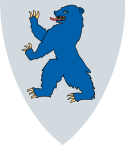 Buskerud
Buskerud extends from the Oslofjord shore westward through the Numedal valley and the Norefjell ski plateau to the vast Hardangervidda National Park — Europe's largest mountain plateau and home to its largest wild reindeer herd, a landscape of ancient ice-smoothed rock and meltwater lakes that feels untouched since the last glacier retreated. Kongsberg, the county's most historic town, was built on silver — the Kongsberg Silver Mines, discovered in 1623, funded the Norwegian mint for 300 years and are now a museum where visitors can pan for silver in the original underground galleries. The ski resort of Geilo, sitting between Oslo and Bergen on the Bergen Railway, serves Norway's most accessible alpine terrain and a cross-country skiing paradise on the Hardangervidda from November through May.
-
14
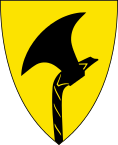 Telemark
Telemark gave the world its name for the elegant ski turn invented on its snow-covered ridges in the 19th century, and the county's mountain landscapes — Gaustatoppen's brooding summit visible from a quarter of Norway on a clear day — still attract skiers, hikers, and backcountry travellers whose pilgrimages feel unchanged from the era that invented the sport. The Telemark Canal, a 105-kilometre waterway completed in 1892 linking Skien to Dalen through 18 locks, is one of Norway's most spectacular engineering achievements — a Victorian marvel that still carries passenger boats through landscapes of birch forests and steep valley walls in full working order. The Rjukan-Notodden Industrial Heritage Site, where WWII saboteurs destroyed the heavy water plant that could have enabled Nazi Germany's nuclear programme, is a UNESCO World Heritage Site that commemorates Norway's most celebrated act of wartime resistance.
-
15
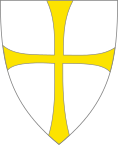 Nord-Trøndelag
Nord-Trøndelag extends from the outer coast of Trondheimfjord through the Innherred agricultural heartland to the Swedish border, a county whose most famous site is Røros — the best-preserved 17th-century copper-mining town in Europe, a UNESCO World Heritage Site of extraordinary completeness where wooden houses painted red, ochre, and black line cobbled streets that look entirely unchanged from the engravings made when the mines were operating. The Stiklestad battlefield north of Steinkjer marks where King Olav II died in 1030, a defeat that paradoxically turned him into Saint Olav and launched the Nidaros Cathedral pilgrimage tradition that shaped Norwegian national identity for centuries. The county's coastal Vikna archipelago forms one of Norway's largest fishing ports by catch volume, its open sea-eagle landscape and dramatic Atlantic weather attracting wildlife-watchers and coastal kayakers from across Europe.
-
16
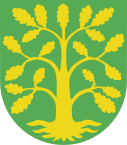 Vest-Agder
Vest-Agder anchors Norway's far south at the Lindesnes lighthouse — the southernmost point of mainland Norway, where the North Sea and the Skagerrak meet in waters Hanseatic traders have navigated since the Middle Ages. Kristiansand, the county capital and Norway's fifth largest city, draws Scandinavian families to Dyreparken zoo and the Sørlandet summer coast in a region whose warm, dry summers attract more Norwegian holidaymakers per capita than anywhere else in the country. The Setesdal Valley, cutting north from the coast into upland moors, preserves traditional Norwegian building styles, folk costume, and the Hardanger fiddle tradition in villages that modernisation has left remarkably intact.
-
17
 Aust-Agder
Aust-Agder extends along Norway's southern Skagerrak coast in a landscape of smooth sea-worn granite skerries, sheltered coves, and white-painted coastal towns that have drawn Scandinavian summer vacationers since the 19th century. Arendal, the county capital, spreads across a cluster of small islands with a colourful wooden-house waterfront that earned it the nickname 'the Venice of Norway' from 19th-century travellers, its merchant-era quayside architecture still largely intact. Grimstad, where Henrik Ibsen served as a pharmacy apprentice and began his early writing career, preserves the modest house where Norway's greatest dramatist started the life that would change world theatre.
-
18
 Hedmark
Hedmark is Norway's largest county by area — a vast inland territory of pine forests, gentle farmland, and slow rivers bordering Sweden along its entire eastern edge, where Scandinavian landscapes at their most meditative and unspoilt unfold in every direction. Hamar, the county capital on the shore of Lake Mjøsa (Norway's largest lake), rose to medieval prominence as a bishop's seat whose cathedral ruins — now enclosed in a striking modern glass structure — stand as testimony to a lost civic grandeur. The Glomma River, Norway's longest, begins its 600-kilometre journey to the Oslofjord from the Røros area, and the county's traditional log-built farmsteads represent some of Norway's finest vernacular architecture.
-
19
 Østfold
Østfold occupies Norway's southeastern corner between the Oslofjord and the Swedish border, a county of rolling agricultural landscapes interrupted by the historic fortified towns of Fredrikstad and Halden, whose strategic positions on the E6 corridor shaped centuries of Scandinavian conflict. Fredrikstad's Gamlebyen — the old town — is the best-preserved fortified town in Scandinavia, its 17th-century bastions, moated ramparts, and cobbled interior streets so intact that film companies use it without additional set dressing for historical productions. Halden's Fredriksten Fortress, which repelled repeated Swedish invasion attempts across three centuries, is where King Charles XII of Sweden died during an assault in 1718 — one of the most consequential deaths in Scandinavian political history, witnessed from a hilltop above the same river that still flows below.