Most Popular
Based on Countries Been user data.
-
1
 Lesser Poland Voivodeship
Lesser Poland Voivodeship contains Kraków — the capital of the Polish kings, the city that survived World War II virtually intact, and the most visited city in Poland by a considerable margin. The Wawel Hill complex (castle, cathedral, dragon's cave) above the Vistula, the medieval cloth hall in the market square, the Schindler's Factory Museum in Kazimierz, and the Wieliczka Salt Mine (a UNESCO World Heritage site of underground chapels carved from salt) make Kraków a city where three days feels barely sufficient. The voivodeship also contains Auschwitz-Birkenau, the most visited memorial site in the world, and Zakopane in the Tatry mountains — Poland's premier ski and hiking resort.
-
2
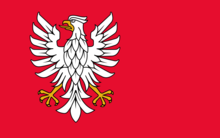 Masovian Voivodeship
Masovian Voivodeship contains Warsaw — the capital that was systematically destroyed by the Nazis in 1944 and rebuilt, street by street and façade by façade, from pre-war photographs and architectural drawings, a feat of collective memory and determination that earned the Old Town UNESCO World Heritage status in 1980. Warsaw's Royal Castle, the Chopin Museum, the POLIN Museum of the History of Polish Jews (the finest museum of Jewish history in the world), and the neon-signed night culture of the Praga district make it one of the most compelling capitals in Europe. The voivodeship also contains Żelazowa Wola, Chopin's birthplace, and the Kampinos National Park forest just outside the city.
-
3
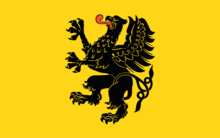 Pomeranian Voivodeship
Pomeranian Voivodeship contains Gdańsk, the city where World War II began and where Solidarity was born — a port whose amber-trading Gothic prosperity survives in the Long Market's coloured merchant houses and whose shipyard gate on Wałęsa Street is one of the most emotionally loaded entrances in European history. The Malbork Castle nearby, built by the Teutonic Knights in the 13th century, is the largest Gothic castle in the world by land area and a UNESCO World Heritage site. The Trójmiasto (Tri-city) of Gdańsk, Gdynia, and Sopot runs together along the Baltic coast, adding art deco architecture and Poland's most fashionable beach resort to the mix.
-
4
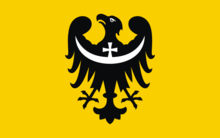 Lower Silesian Voivodeship
Lower Silesia is the most Central European part of Poland — a region that was German for seven centuries before being reassigned to Poland in 1945, its capital Wrocław rebuilt on an island in the Oder River with a market square that rivals Kraków's for sheer 14th-century grandeur. The voivodeship contains the underground Project Riese tunnels carved by forced labour beneath the Owl Mountains, the spa towns of Szklarska Poręba and Karpacz in the Karkonosze range, and more medieval monasteries and Baroque manor houses than can comfortably be counted. Wrocław's 2016 tenure as European Capital of Culture confirmed what travellers had been discovering for a decade: this is one of the best cities in Central Europe.
-
5
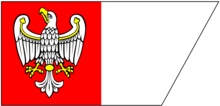 Greater Poland Voivodeship
Greater Poland Voivodeship (Wielkopolska) is the historical cradle of the Polish state — the region where, according to chroniclers, the Piast dynasty established the first Polish kingdom in the 10th century, with Gniezno as its first capital and Poznań as the place where the first Polish bishop was consecrated. Poznań today is a thriving trade-fair city whose Renaissance Old Market Square and 16th-century town hall — two mechanical goats butt heads in the clock tower every noon — attract visitors who are surprised by how much the city has to offer. The Piast Route connecting Gniezno, Poznań, and Kruszwica traces the early medieval foundations of Polish identity through a landscape of lakes and castles.
-
6
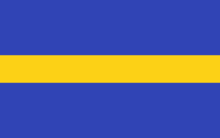 Silesian Voivodeship
Silesian Voivodeship is Poland's industrial heartland — the Upper Silesian coal basin that powered Polish industry for a century and is now reinventing itself as a culture and design region, the 2022 city of culture Katowice having transformed from a grey mining city into a destination with a world-class concert hall (the NOSPR Philharmonic) and the energy of a city determined to redefine itself. Katowice Nikiszowiec, a self-contained workers' estate of red-brick tenements built between 1908 and 1919, is now a protected heritage district of streets and courtyards that feel entirely removed from the modern city around them. The Silesian Museum in a repurposed mine shaft and the Tychy beer brewery tradition round out a voivodeship that rewards the curious.
-
7
 Kuyavian-Pomeranian Voivodeship
Kuyavian-Pomeranian Voivodeship balances two historic cities of very different character: Bydgoszcz, an industrial city on the Brda Canal with a waterfront of granaries that earned it the nickname the Little Venice of Poland, and Toruń, the best-preserved Gothic city in Poland and the birthplace of Nicolaus Copernicus. Toruń's Old Town, a UNESCO World Heritage site, is a textbook example of medieval Hanseatic prosperity — a castle, a town hall, and streets of brick merchant houses that the Vistula floods have never managed to obliterate. The voivodeship also contains Ciechocinek, the largest inland spa town in Poland, built around salt graduation towers that still produce therapeutic brine.
-
8
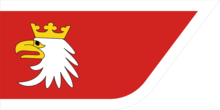 Warmian-Masurian Voivodeship
Warmia-Masuria is Poland's lake district, a landscape of two thousand glacial lakes, dark boreal forest, and Teutonic Knight castles whose red-brick towers still rise from forested hills across the northeastern corner of the country. The Masurian Great Lakes — connected by rivers and canals into a single sailing ground larger than any in Central Europe — draw Polish sailors every summer, the water town of Mikołajki their unofficial capital. The Kętrzyn area preserves Wolf's Lair (Wilczy Szaniec), Hitler's wartime headquarters where the July 1944 assassination attempt took place, now a roofless concrete ruin deep in the forest.
-
9
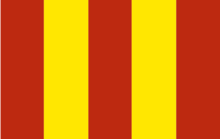 Łódź Voivodeship
Łódź Voivodeship is centred on Poland's third-largest city, which developed so rapidly during the industrial revolution that it went from a village of 700 people in 1820 to a textile metropolis of half a million by 1900, its fabric mills owned by German, Jewish, and Polish industrialists whose villas and factory palaces still line the central Piotrkowska Street. The Manufaktura complex, the largest urban regeneration project in Poland, converted a 19th-century cotton factory into a shopping, cultural, and entertainment district that has become a template for post-industrial reuse across the country. Łódź's film school, which trained Polański, Kieślowski, and Wajda, gives the city a cultural depth that its industrial reputation doesn't advertise.
-
10
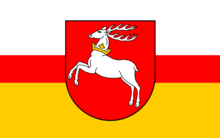 Lublin Voivodeship
Lublin Voivodeship contains Lublin, one of Poland's most historically layered cities — a Renaissance old town on a hill above the Bystrzyca river, a castle that once hosted Polish-Lithuanian Union negotiations, and a Jewish quarter whose pre-war vitality is commemorated in the Grodzka Gate 'NN Theatre' that has become one of the most thoughtful memorial projects in Europe. Zamość, an hour south, is a Renaissance planned city built in 1580 by the chancellor Jan Zamoyski to a perfect Italian urban design, its arcaded market square virtually unchanged from the original plan and a UNESCO World Heritage site. The Roztocze highlands in the south of the voivodeship are a landscape of watermills, sandy rivers, and forest that remains genuinely off the international tourist map.
-
11
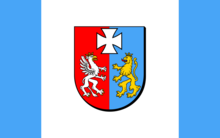 Podkarpackie Voivodeship
Podkarpackie Voivodeship is Poland's southeastern corner, a Carpathian foothill landscape of wooden churches, oil wells (the world's first commercial oil well was sunk here in 1854), and mountain resorts in the Bieszczady range whose rolling sub-alpine meadows (połoniny) are as wild as any landscape in the country. The Subcarpathian wooden churches route, much of which is a UNESCO World Heritage site, threads through villages of extraordinary preserved vernacular architecture — Greek Catholic, Roman Catholic, and Orthodox — that reflects the Lemko and Bojko cultures that inhabited the region before the post-war deportations. Rzeszów, the energetic regional capital, has invested heavily in its old town and is now one of Poland's fastest-growing cities.
-
12
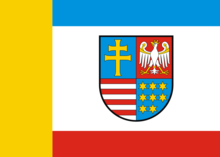 Świętokrzyskie Voivodeship
Świętokrzyskie Voivodeship takes its name from the Holy Cross Mountains (Góry Świętokrzyskie), one of the oldest mountain ranges in the world, whose rounded quartzite ridges are covered in ancient forest and crowned with the Benedictine monastery of Święty Krzyż, a pilgrimage site since the 11th century. Kielce, the regional capital, has a 17th-century bishops' palace in the centre that contains a remarkable collection of Flemish and Dutch painting. The Jura Krakowsko-Częstochowska limestone upland in the south of the voivodeship is a landscape of white rock outcrops and castle ruins stretching in a chain from Kraków to Częstochowa — the Eagle's Nest Trail.
-
13
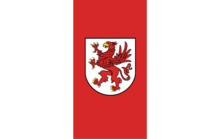 West Pomeranian Voivodeship
West Pomeranian Voivodeship stretches along Poland's Baltic coast from the German border to just short of Gdańsk, its capital Szczecin a Prussian port city that emerged from World War II largely intact and is now one of Poland's most underrated city breaks. The Baltic coast here is a string of sandy beaches backed by dunes and pine forests — Świnoujście, Kołobrzeg, and Międzyzdroje — that fill with Polish families every summer. The Lower Oder Valley National Park and the Szczecin Lagoon, shared with Germany, form a wetland of European importance for migrating birds.
-
14
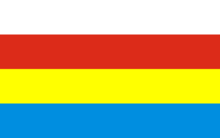 Podlaskie Voivodeship
Podlaskie Voivodeship is Poland's wild east — a borderland of primeval forest, Orthodox church onion domes, and Tatar mosques that reflects the multi-ethnic history of a region where Polish, Belarusian, Lithuanian, Jewish, and Muslim communities lived side by side for centuries. The Białowieża Forest, straddling the border with Belarus, is the last remaining fragment of the primeval lowland forest that once covered all of Europe, still inhabited by the European bison herd that was hunted to extinction in the wild and reintroduced from captive animals. Białystok, the regional capital, has one of the finest Baroque palace complexes in Poland and a street food scene shaped by its Tatar community.
-
15
 Opole Voivodeship
Opole Voivodeship is the smallest voivodeship in Poland and the most distinctly Central European — a former Silesian region with a large German-speaking minority that gives it a bilingual character visible on road signs, in church records, and in the architecture of its market towns. Opole itself is a pleasant small city on the Oder with a round island in the river containing the oldest part of the town, and the annual Opole Song Festival — Poland's equivalent of the Eurovision national selection — has made it famous far beyond its modest size. The Góra Świętej Anny (Saint Anne's Mountain), a place of Catholic pilgrimage and the site of a 1921 Upper Silesian uprising, is the voivodeship's most historically charged landmark.
-
16
 Lubusz Voivodeship
Lubusz Voivodeship is the green lung of western Poland — a province of European bison in Bory Dolnośląskie forest, the Oder River's wetland meanders forming a national park on the German border, and the Lebus Upland of vineyard slopes that makes this one of the only wine-growing regions in Poland. Zielona Góra, the southern capital, hosts Poland's only wine festival in September, a distinctly un-Polish event that draws visitors from across the country. The town of Łagów, with its medieval castle reflected in a lake, is the hidden gem that gives the voivodeship's less-visited landscape a very specific quality of beauty.