Most Popular
Based on Countries Been user data.
-
1
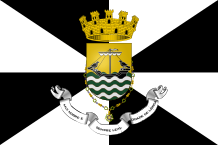 Lisboa
Lisboa is Portugal at its most vertigo-inducing: seven hills, pastel-painted trams, and a waterfront where the 25 de Abril bridge's silhouette makes sunset look perpetually cinematic. The Belém district's Hieronymites Monastery and Tower — both UNESCO World Heritage Sites — commemorate the Age of Discovery that once made this city the centre of a global empire, while the Alfama's cobblestoned hillside fado houses ensure the past never quite recedes.
-
2
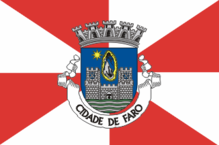 Faro
Faro
Faro district — better known simply as the Algarve — is Portugal's sun-baked southern coast, where sea-carved limestone stacks frame golden beaches that stretch for 150 kilometres from the Spanish border to Cape St. Vincent. The region transitions inland from busy resort towns like Albufeira and Lagos into a quieter hillside Algarve of orange groves, schist villages, and the remarkable Monchique spa town perched above everything on Portugal's highest southern ridge.
-
3
 Porto
Porto
Porto is everything Lisbon is not: a steep, salt-bleached Atlantic city that trades in granite rather than limestone, porto wine rather than vinho verde, and a northern directness that manifests in some of the country's best food, from the monumental francesinha sandwich to the freshest bacalhau preparations. The UNESCO-listed Ribeira waterfront, the tiled azulejo facades, and the port wine lodges of Vila Nova de Gaia just across the Douro collectively make Porto one of Europe's most photogenic cities.
-
4
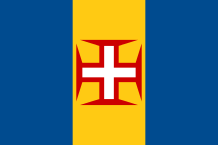 Madeira
Madeira rises steeply from the Atlantic as a year-round garden island, its terraced hillsides draped in bougainvillea, banana groves, and ancient laurisilva forest that predates the last ice age. Funchal's mosaic pavements and old-town wine lodges anchor the island's genteel tradition while the levada walking trails and vertiginous coastal cliffs ensure Madeira is emphatically not just a place for the sun lounger.
-
5
 Azores
Scattered across 2,300 kilometres of open Atlantic, the nine volcanic islands of the Azores form one of Europe's most dramatic archipelagos — calderas, hydrothermal lakes, and whale-watching waters that rival anywhere on earth. São Miguel's Sete Cidades crater lakes and Faial's black-sand caldera are the postcard images, but each island rewards exploration with a distinct personality shaped by centuries of mid-ocean isolation.
-
6
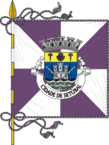 Setúbal
Setúbal wraps around one of Europe's finest natural harbours and gives way south to the Arrábida Natural Park, where limestone cliffs plunge into turquoise water so clear it looks more Caribbean than Atlantic. The fishing town of Sesimbra and the blue-tiled streets of Palmela sit within easy reach of Lisbon, making Setúbal one of the capital region's most rewarding day-trip destinations.
-
7
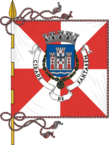 Santarém
Santarém's rolling Ribatejo plains feed the bulls and horses of Portugal's equestrian tradition, but the district draws its greatest pilgrim traffic to Fátima, where apparitions reported in 1917 transformed a hillside hamlet into one of the world's most visited Catholic shrines. Tomar's fortified Convent of Christ, built by the Knights Templar and later expanded in dazzling Manueline style, is another UNESCO heavyweight hiding in this often-overlooked district.
-
8
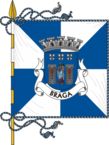 Braga
Braga
Braga is Portugal's ecclesiastical capital and its most youthful city — a university crowd animating streets that lead up to Bom Jesus do Monte, the baroque stairway sanctuary whose zigzag ascent lined with allegorical fountains has been a pilgrimage draw since the eighteenth century. Nearby Guimarães, birthplace of the first Portuguese king and also UNESCO-listed, adds a perfectly preserved medieval centre to a district that manages to be simultaneously ancient and bracingly alive.
-
9
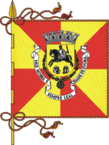 Évora
Évora
Évora's UNESCO-listed historic centre is ringed by well-preserved Roman walls and dominated by a Cathedral begun in 1186 and a Temple of Diana that has stood in the city's main square since the second century — a density of layered history that few Portuguese cities can match. Beyond the walls, the cork-covered Alentejo countryside conceals prehistoric dolmens, country estates producing bold red wines, and villages where time appears to have moved at a different pace entirely.
-
10
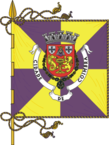 Coimbra
Coimbra gave Portugal its first and most venerated university, founded in 1290 and whose baroque library — the Biblioteca Joanina, its shelves guarded by a colony of bats that eat the bookworm — ranks among the most spectacular rooms in Europe. The city drapes over both banks of the Mondego River with a gravity appropriate to a place that trained generations of doctors, lawyers, and poets, and its own melancholy Coimbra fado style, distinct from Lisbon's, lingers in the steep alleyways long after dark.
-
11
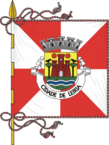 Leiria
Leiria punches well above its size as a district, sheltering three of Portugal's greatest medieval monuments — the UNESCO Monasteries of Batalha and Alcobaça and the Knights Templar stronghold at Tomar — all within a short drive of each other. Add the village of Nazaré, where winter swells exceeding twenty metres have turned a modest fishing beach into the stage for the world's most extreme big-wave surfing, and Leiria's claim on the traveller's attention is undeniable.
-
12
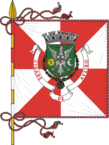 Aveiro
Aveiro earns its 'Venice of Portugal' billing from the painted moliceiro boats that glide through canals originally dug to harvest seaweed for the salt-marsh fields that still define the coastline. The city's elaborate Art Nouveau architecture, the long sand-bar beaches of Costa Nova with their striped houses, and the region's celebrated ovos moles egg pastries make this compact district quietly irresistible.
-
13
 Viana do Castelo
Viana do Castelo guards the mouth of the Lima River at Portugal's green north-western corner, a city of baroque bridges, gilded church interiors, and an embroidery tradition so intricate that the red-and-black folk costumes are registered cultural heritage. Inland, the Minho valley unfolds into terraced vineyards producing the crisp vinho verde that travels the world, though it always tastes best looking out over the hills where it grew.
-
14
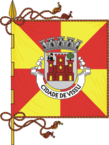 Viseu
Viseu
Viseu sits at the heart of the Dão wine region, whose granite soils and cool nights produce some of Portugal's most structured and age-worthy reds, poured in quintas scattered across a gently hilly landscape of vines and pine. The city's Grão Vasco Museum holds an exceptional collection of sixteenth-century Renaissance painting by the artist for whom the gallery is named, and the hilltop cathedral square rivals any civic space in the country for sheer medieval drama.
-
15
 Vila Real
Vila Real anchors the upper Douro Valley, the steeply terraced schist-walled vineyards that produce port wine having been carved by hand from near-vertical hillsides over three centuries of back-breaking labour — a landscape UNESCO declared a World Heritage Site in 2001. Mateus Palace just outside town, its baroque facade reflected in an ornamental lake, is arguably Portugal's most reproduced image after appearing on millions of wine bottles from the 1950s onward.
-
16
 Beja
Beja
Beja sits at the heart of the vast Alentejo plain where wheat, cork oak, and olive trees stretch to every horizon under a sky that seems twice as large as elsewhere in Portugal. The whitewashed town itself is dominated by the Torre de Menagem, a medieval keep that held Queen Leonor and inspired one of Portugal's most celebrated love-letter scandals, but Beja's real draw is the unhurried Alentejo rhythm and the region's earthy, restorative cuisine.
-
17
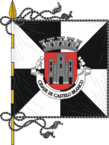 Castelo Branco
Castelo Branco straddles the watershed between Portugal and Spain, its district bisected by the Serra da Gardunha and dotted with schist villages that cling to granite boulders as if they grew there. The Bishops' Garden in the town itself is a baroque masterpiece of boxwood topiaries and stone allegorical figures, while the surrounding Beira Baixa countryside produces the embroidered colchas bedspreads that are among the most distinctive handicrafts in the country.
-
18
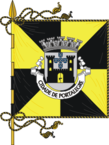 Portalegre
Portalegre occupies the remote north-eastern Alentejo, a district of schist-built hilltop villages, the Serra de São Mamede Natural Park, and the fortified border town of Elvas whose remarkable star-shaped fortifications were added to UNESCO's World Heritage List in 2012. The tapestry workshops that once made Portalegre's manufactory famous have quieted, but the district retains a dignified, unhurried quality that rewards those willing to travel the extra distance.
-
19
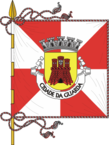 Guarda
Guarda sits at over a thousand metres on the flanks of the Serra da Estrela, Portugal's highest mountain range, and holds the distinction of being the country's highest, coldest, and easternmost city — a fact its residents wear with considerable pride. The region's glacially carved valleys hide ancient Jewish quarters in the villages of Belmonte and Trancoso, while the ski resort at Torre offers Portugal's only meaningful winter-sport experience.
-
20
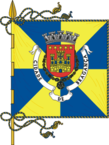 Bragança
Bragança occupies Portugal's most remote north-eastern corner, a Celtic-Iberian landscape of chestnut forests, wild boar, and stone villages speaking the endangered Mirandese language — the country's only officially recognised minority tongue. The medieval citadel rising above the modern town preserves a twelfth-century keep, a pillory, and a pre-Romanesque church assembled in a tight cluster that feels unchanged for centuries, visited by relatively few and rewarding all who make the journey.