Most Popular
Based on Countries Been user data.
-
1
 Barcelona
Barcelona province is the entry point for most visitors to Spain and home to one of the world's most self-confident and creatively charged cities — Gaudí's extraordinary Sagrada Família, a basilica under construction since 1882 and unlike anything else built by human hands, defines a skyline that rewards extended contemplation. Beyond the city, the Costa Brava coves, the Penedès wine country, and the mountain monastery of Montserrat extend the province's appeal across an exceptionally rich and compact landscape.
-
2
 Madrid
The Community of Madrid is one of the world's greatest concentrations of museum masterpieces — the Prado's unrivalled collection of Velázquez, Goya, and El Greco; the Reina Sofía housing Picasso's Guernica; and the Thyssen-Bornemisza's extraordinary private collection together form a 'Golden Triangle of Art' within fifteen minutes' walk of each other. Madrid is equally defined by its street life — the tapas crawls of La Latina, the Sunday El Rastro market, and the tradition of eating dinner at ten or eleven at night give the capital an intensity of public life that runs considerably later than any other European city.
-
3
 Balearic Islands
The Balearic Islands divide into four distinct worlds: Mallorca's limestone Tramuntana mountains — UNESCO-listed for their cultural landscape of stone terraces, olive groves, and medieval hilltop villages — give way to the cosmopolitan capital of Palma; Ibiza's superclub reputation coexists with a UNESCO-walled old city and coves of startling beauty; Menorca's British colonial architecture and prehistoric stone monuments make it the most quietly distinctive; and tiny Formentera remains a refuge of sandy pine-fringed beaches and crystalline turquoise water. Together they draw over 13 million visitors each year.
-
4
 Málaga
Málaga province stretches along the Costa del Sol but contains considerably more than beach resorts — the Picasso Museum in his birthplace, the Alcazaba and Gibralfaro castle above the city, and the revived historic quarter constitute a destination of genuine quality. Ronda, perched on a gorge above the Tajo canyon whose vertical walls drop 120 metres to the Guadalevín river, is one of the most dramatically sited towns in Spain, and the white villages of the Axarquía inland — Frigiliana, Nerja, Competa — are among Andalusia's most beautifully preserved.
-
5
 Alicante
Alicante province has attracted more northern European sun-seekers than almost any other stretch of Mediterranean coast — the Costa Blanca's reliable sunshine and warm shallow waters made Benidorm the template for mass beach tourism in the 1960s. Yet the province also contains genuine treasures: the medieval castle of Santa Bárbara rising sheer above Alicante city, the elegant whitewashed village of Altea on its hillside, and the dramatic Montgó massif rising sheer from the coast near Dénia.
-
6
 Seville
Seville is the capital of Andalusia and the archetype of what the world imagines when it imagines Spain — the Alcázar palace where Mudéjar tilework and Gothic vaulting coexist in a setting of gardens and fountains, the cathedral whose size required Gothic architects to boast that 'those who come after us will think we were mad', and the Giralda tower, a mosque minaret turned church bell tower, whose ramps rather than stairs were built so the muezzin could ascend on horseback. The Barrio de Santa Cruz and the April Feria together represent the most complete expression of Andalusian culture in existence.
-
7
 Granada
The province of Granada holds the supreme surviving achievement of Moorish Spain — the Alhambra palace complex above the city, a citadel of pavilions, throne rooms, and gardens where the play of water, light, and geometric stucco decoration reaches a sensory intensity impossible to prepare for. Below the hill, the Albaicín quarter of whitewashed terraced houses and cave neighborhoods retains the Moorish atmosphere into the streets, while the Sierra Nevada above offers skiing from December to April on Spain's highest peaks.
-
8
 Santa Cruz de Tenerife
The Province of Santa Cruz de Tenerife encompasses the western Canary Islands, of which Tenerife is the largest and most visited Spanish island — El Teide, a 3,718-metre volcanic peak and Spain's highest point, stands above a UNESCO World Heritage caldera of black lava and ancient pine forest in a landscape of genuinely alien beauty. The island divides dramatically: the sunny resort strips of the south versus the lush banana plantations, cloud forests, and historic colonial towns of La Laguna and La Orotava in the north.
-
9
 Las Palmas
The Province of Las Palmas encompasses the eastern Canary Islands — Gran Canaria, Fuerteventura, and Lanzarote — each shaped by the same Atlantic volcanic forces but expressing them in entirely distinct ways. Lanzarote's alien landscape of black lava fields and white cubic architecture has achieved UNESCO Biosphere Reserve status, its character shaped in part by the artist César Manrique who fought to prevent high-rise development; Fuerteventura's endless beaches draw wind and kite surfers from across Europe; and Gran Canaria's variation from Maspalomas sand dunes to laurisilva cloud forests earns it the 'continent in miniature' description.
-
10
 Valencia
Valencia is the birthplace of paella, and the rice paddies of the Albufera lagoon still supply the short-grain grain for a dish whose proper preparation — cooked over orange-wood embers in a flat pan with chicken, rabbit, and green beans — remains a point of fierce local pride. Santiago Calatrava's City of Arts and Sciences provides dramatic modern architecture in the former Turia riverbed, and the week-long Las Fallas festival in March, when thousands of satirical papier-mâché monuments are burned simultaneously across the city, is one of the world's great spectacles.
-
11
 Gipuzkoa
Gipuzkoa is home to San Sebastián, a city that has achieved global culinary fame so disproportionate to its size that it is regularly cited as the greatest food city on earth — its pintxos bars pack more creative cooking per square metre than anywhere else, and its constellation of Michelin-starred restaurants has changed the way the world thinks about what restaurants can be. La Concha beach, a perfect horseshoe of fine sand between two headlands with the island of Santa Clara at its center, is by common consensus Europe's most beautiful urban beach.
-
12
 Girona
Girona province contains some of Catalonia's most varied territory — the volcanic basalt landscape of La Garrotxa, whose beech forests and crater lakes make it Spain's best-preserved volcanic zone, and the Costa Brava's rugged coves that Salvador Dalí and Marc Chagall found so compelling they settled here. The city of Girona — medieval walls walkable in their entirety, a cathedral perched dramatically above the old Jewish quarter, colorful houses reflected in the Onyar river — is among the most beautiful cities in Catalonia, and El Celler de Can Roca, twice ranked the world's best restaurant, has made the province a destination for the food-obsessed.
-
13
 A Coruña
A Coruña province holds the emotional endpoint of the Camino de Santiago — the cathedral city of Santiago de Compostela, where the apostle James is said to be buried and where hundreds of thousands of pilgrims arrive each year after journeys of weeks or months. The Pórtico de la Gloria inside the cathedral, completed by Master Mateo in 1188, is one of the supreme achievements of Romanesque sculpture in Europe, and the province's wild Atlantic coast — the Costa da Morte, the Coast of Death — has a stark, powerful beauty shaped by centuries of shipwrecks on its granite headlands.
-
14
 Cádiz
Cádiz
Cádiz is the oldest continuously inhabited city in Western Europe, its narrow Atlantic peninsula jutting into the ocean at the southwestern tip of Spain in a setting of extraordinary light where the quality of illumination reflected off sea on three sides is unlike anywhere else in the country. The province combines the dazzling white hill towns of the Sierra de Grazalema with the entirely distinct culture of Jerez de la Frontera, where sherry wine and flamenco were born together in the bodegas and tablaos of Andalusia's most atmospheric inland city.
-
15
 Tarragona
Tarragona was one of the most important cities in the Roman Empire — Tarraco served as the capital of Hispania Citerior, Rome's first province in Iberia, and the city preserves an exceptional collection of Roman monuments including an amphitheater overlooking the Mediterranean, earning UNESCO World Heritage status for an ensemble embedded in the living city. The province also encompasses the Priorat wine region, whose ancient Grenache and Carignan vines on steep slate terraces produce Spain's most intense and mineral reds.
-
16
 Biscay
Biscay is the most industrially developed of the Basque provinces, yet Bilbao transformed from a declining steel town into one of Europe's most celebrated cultural destinations after Frank Gehry's titanium-clad Guggenheim Museum opened in 1997, triggering a wave of civic renewal that other post-industrial cities have spent decades trying to replicate. The coast alternates between rugged cliffs and fishing villages where txakoli wine is poured on the spot and freshly landed fish reaches the plate within hours.
-
17
 Toledo
Toledo sits on a granite hill encircled on three sides by the Tajo river, its skyline of cathedral tower, Alcázar fortress, and synagogue domes constituting one of the most iconic urban profiles in Spain. The city was Spain's imperial capital until 1561 and serves as the supreme expression of the three-culture heritage — Christian, Jewish, and Moorish communities created a synthesis of art, scholarship, and architecture that El Greco, who settled here from Crete in 1577, captured with obsessive intensity in his paintings of the city under stormy skies.
-
18
 Córdoba
Córdoba's Great Mosque — the Mezquita — is one of the most astonishing buildings in the world: a forest of 856 columns beneath horseshoe arches striped in red and white, its original function as the prayer hall of the Caliphate of Córdoba overlaid by a Renaissance cathedral built into its center during the Reconquista. The city was the intellectual capital of Europe in the 10th century, housing the greatest library west of Baghdad, and the medieval Jewish quarter of narrow whitewashed streets, flower-filled patios, and tiny synagogues retains an extraordinary atmosphere of layered civilization.
-
19
 Navarre
Navarre is where the Camino de Santiago enters Spain, the pilgrimage route descending from the Pyrenean pass of Roncesvalles — where Roland fell, according to the 12th-century chanson — through medieval towns and vine-covered valleys to the meseta. Pamplona's San Fermín festival, with its week of running before bulls through streets barely wide enough and its nightly raucous celebration, is probably the world's most famous festival outside Carnival, but Navarre's independent medieval kingdom left a remarkable heritage of Romanesque churches and monasteries across the province.
-
20
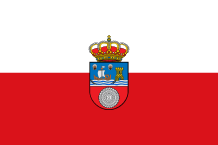 Cantabria
Cantabria packs an astonishing range into its narrow coastal strip: the spectacular Picos de Europa massif rises immediately behind a green Atlantic coast of dramatic cliffs, surf beaches, and fishing villages of considerable charm. The province contains the Altamira cave, whose 14,000-year-old polychrome bison paintings are among the greatest achievements of prehistoric art — Picasso said 'after Altamira, all is decadence' — and the perfectly preserved Renaissance village of Santillana del Mar is one of Spain's most beautiful historic towns.
-
21
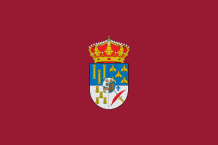 Salamanca
Salamanca is Spain's most beautiful university city, its Plaza Mayor — four continuous sides of golden Churrigueresque baroque arcades enclosing a space of perfect civic proportions — considered by common consent the finest public square in the country. The University of Salamanca, founded by Alfonso IX in 1218, is one of the oldest in the world, and its elaborate Plateresque facade contains a hidden frog carved into the stone that generations of students have sought as a charm for exam luck.
-
22
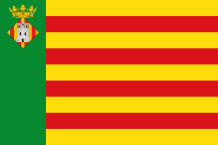 Castellón
Castellón bridges Valencia's industrial north and the rugged interior of the Maestrazgo plateau, where medieval hill towns like Morella — entirely encircled by walls with a castle above — preserve a character so intact it functions as a living museum of medieval Aragonese life. The province's Costa del Azahar, the Orange Blossom Coast, offers a quieter alternative to the Valencian strip further south, and the orange and citrus groves of the interior valleys fill the spring air with the scent that gives the coast its name.
-
23
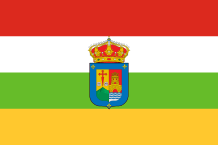 La Rioja
La Rioja is Spain's smallest mainland autonomous community and its most wine-saturated landscape — the name Rioja is synonymous worldwide with Tempranillo-based reds that established Spanish wine's international reputation, and the Ebro valley is mapped with bodegas both centuries-old and architecturally audacious, including Frank Gehry's extraordinary Marqués de Riscal winery. The monasteries of San Millán de la Cogolla, where the first written words in the Spanish language were inscribed in the 10th century, are a UNESCO World Heritage Site of considerable linguistic significance.
-
24
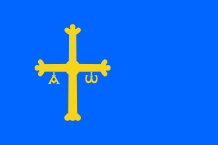 Asturias
Asturias is green Spain — wet, lush, and dramatically mountainous in a way that sets it completely apart from the sun-parched south, its Atlantic coast of dramatic cliffs and fishing villages backed immediately by the Picos de Europa rising to nearly 2,700 metres. The principality was the only corner of Iberia never conquered by the Moors, making it the birthplace of the Christian Reconquista, and its pre-Romanesque churches — small, severe, and jewel-like — are among the oldest surviving Christian buildings in Europe.
-
25
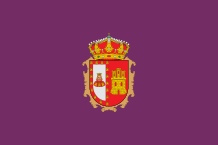 Burgos
Burgos Cathedral is one of the supreme achievements of Spanish Gothic architecture, its lacy stone towers visible for miles across the Castilian meseta, sheltering the tomb of El Cid and an altarpiece of gilded extravagance. The province sits astride the Camino de Santiago — hundreds of thousands walk through each year — and the landscape of broad wheat fields and dramatic canyon gorges has a character of arid grandeur matched by the prehistoric caves of Atapuerca, a UNESCO site containing the oldest known human remains in Europe.
-
26
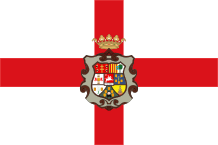 Huesca
Huesca province encompasses the Spanish Pyrenees at their highest and most dramatic — the Ordesa y Monte Perdido National Park, a UNESCO World Heritage Site, contains canyons, waterfalls, and high limestone plateaux of breathtaking scale, with chamois on the rocky ridges and lammergeiers riding the thermals overhead. The medieval village of Ainsa at the confluence of the Ara and Cinca rivers is one of the best-preserved walled towns in the Pyrenees, and the province offers world-class trekking, climbing, and skiing at resorts from Formigal to Cerler.
-
27
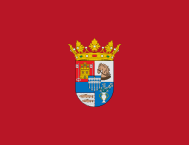 Segovia
Segovia's Roman aqueduct — 166 arches of granite blocks laid without mortar, standing 28 metres high and still structurally sound after 2,000 years — is one of the most remarkable engineering works from the ancient world to have survived intact in a living city. The Alcázar at the city's prow-shaped rock spur, its towers above the confluence of two rivers supposedly inspiring Disney's Sleeping Beauty castle, served as a royal residence for Castilian monarchs, and the suckling pig roasted in the city's restaurants — so tender it is carved at the table with the edge of a plate — is the definitive local experience.
-
28
 Zaragoza
Zaragoza's old city rises above the Ebro River around the Basílica del Pilar, a baroque dome complex whose twelve towers reflected in the river form one of Spain's most recognisable skylines, marking the site where the Virgin Mary is said to have appeared to the apostle James in 40 AD. The province stretches across much of Aragon, from the Pyrenean foothills to the arid badlands of the Bardenas Reales — a lunar landscape of eroded clay chimneys used repeatedly as a film location for its eerie, otherworldly quality.
-
29
 Huelva
Huelva province is where the Americas were launched — Christopher Columbus set sail from Palos de la Frontera in 1492, and the monastery of La Rábida where he planned the voyage still stands above the estuary exactly as it did that morning. The province is also home to the Doñana National Park, one of Europe's most critical wetland ecosystems, while the jamón ibérico de bellota produced around Jabugo in the Sierra de Aracena is widely considered the finest cured ham in the world.
-
30
 Almería
Almería is Spain's most arid province, a landscape of badlands and semi-desert that has doubled as the American West in hundreds of spaghetti westerns filmed at Fort Bravo and Mini Hollywood in the Tabernas Desert — Sergio Leone shot the entirety of his Dollars Trilogy here. The coast redeems the aridity spectacularly: the Cabo de Gata-Níjar Natural Park preserves volcanic black and white beaches and crystalline waters among the least developed and most beautiful on the entire Mediterranean.
-
31
 Jaén
Jaén
Jaén is the olive oil capital of the world — an astonishing 66 million olive trees carpet the rolling hills of this Andalusian province in rows so regular and extensive they can be seen from space, producing more olive oil than the entire output of many countries. Within the province, Úbeda and Baeza form a pair of Renaissance towns of such architectural coherence that UNESCO designated them jointly as a World Heritage Site — an unexpected concentration of Italian Renaissance genius in a landscape of silver-green olives and golden stone.
-
32
 Cáceres
Cáceres is Spain's largest province by area, its vast dehesa landscape of scattered oaks and wandering black Iberian pigs representing one of the most pristine agricultural ecosystems in Europe. The provincial capital's old city is a UNESCO World Heritage Site of such architectural completeness — medieval palaces, towers, convents, and plazas virtually unchanged since the 15th century — that it has been used repeatedly as a location for Game of Thrones, and the absence of mass tourism makes it one of Spain's most rewarding discoveries.
-
33
 Lleida
Lleida province offers access to the most spectacular skiing and hiking in the Catalan Pyrenees — the Baqueira-Beret resort, preferred retreat of the Spanish royal family, sits at the head of the lush Aran Valley, a Gascon-speaking enclave that feels geographically part of France. The Aigüestortes i Estany de Sant Maurici National Park, whose glacial lakes and granite peaks represent the finest high mountain scenery in Catalonia, is closed to private vehicles, preserving an unusual solitude.
-
34
 Murcia
Murcia is the driest region in Europe, its semi-arid landscape of esparto plains and mountain ranges shaped by a climate more North African than Spanish. The city of Cartagena, one of the most important ports in the ancient Mediterranean world — founded by the Carthaginians, conquered by Rome — preserves a remarkable concentration of Roman and Carthaginian remains embedded in a still-working port city, and its Art Nouveau urban center is one of the finest in southeastern Spain.
-
35
 Pontevedra
Pontevedra province is the Atlantic heartland of the Rías Baixas wine region, where Albariño grapes grown on granite pergolas produce Spain's most celebrated white wine — perfectly matched to the extraordinary seafood landed daily in the port of Vigo, the largest fishing port in Europe. The old city of Pontevedra, unusually free of traffic and beautifully maintained around its granite plazas and colonnaded market, is architecturally among the finest in Galicia.
-
36
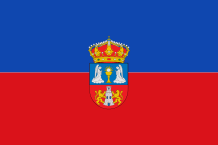 Lugo
Lugo
Lugo is the only city in the world completely encircled by an intact Roman wall — the 2nd-century walls are two kilometres in circumference, walkable in their entirety on the wide paved top, and survive in a state of preservation that earned them UNESCO World Heritage status. The province is the most traditionally rural corner of Galicia, and the Camino Primitivo — the oldest of all Camino routes, walked by King Alfonso II in the 9th century — passes through on its way to Santiago.
-
37
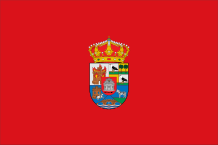 Ávila
Ávila
Ávila is the highest provincial capital in Spain, its extraordinary medieval walls — over 2,500 metres of granite battlements with 88 towers, built in the 11th and 12th centuries — encircling an old city virtually unchanged since the Middle Ages in one of the most complete urban fortifications in the world. The mystical reformer Teresa of Ávila was born here in 1515, founded the Discalced Carmelite order in the face of fierce opposition, and transformed the city into a major pilgrimage destination whose spiritual intensity it has never entirely lost.
-
38
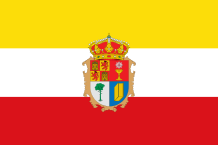 Cuenca
Cuenca's fame rests on two remarkable things: the Casas Colgadas — medieval houses cantilevered over a gorge above the Huécar river, their wooden balconies hanging in space above the canyon — and the Ciudad Encantada, where centuries of erosion have sculpted enormous limestone formations into improbable shapes. It is one of Castilla-La Mancha's most rewarding destinations, a UNESCO World Heritage city that conceals surprises far beyond its famous hanging houses.
-
39
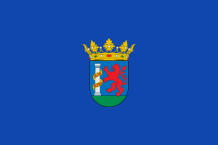 Badajoz
Badajoz is Spain's largest province by area, its vast dehesa landscape of scattered oaks and wandering black Iberian pigs representing one of the most pristine agricultural ecosystems in Europe — a way of land management essentially unchanged since Roman times. The Roman city of Mérida, Extremadura's capital, preserves the most complete collection of Roman monuments outside Italy, earning UNESCO World Heritage status for an amphitheater, aqueduct, circus, and bridge still embedded in the living city.
-
40
 Valladolid
Valladolid was briefly the imperial capital of Spain and the birthplace of Philip II, its monumental Renaissance architecture reflecting a moment when this Castilian city stood at the center of world affairs — Columbus died here in 1506, and Cervantes lived here. Today it is the wine capital of the Ribera del Duero, where Tinto Fino grapes produce some of Spain's most prestigious and age-worthy reds, and the National Museum of Sculpture houses Europe's largest collection of polychrome wooden religious sculpture.
-
41
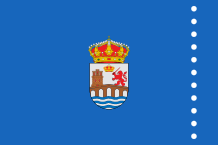 Ourense
Ourense is inland Galicia at its most traditional and least visited — a province of mountains, chestnut forests, and river valleys whose thermal springs have been appreciated since Roman times and still feed a remarkable concentration of natural hot pools in and around the city center. The Ribeira Sacra wine region, where Godello and Mencía grapes grow on vertiginous terraced slopes above the Sil river canyon — so steep that all harvesting is done by hand — is among the most dramatically beautiful wine landscapes in Europe.
-
42
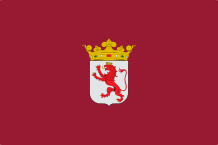 León
León
León province occupies the northwestern corner of the Castilian meseta, its harsh continental climate and vast cereal plains framing one of Spain's most spectacular Gothic cathedrals — enormous windows fill the interior with light that shifts from gold to violet through the day. The Camino Francés, the most-walked branch of the Camino de Santiago, passes directly through the city of León, and the medieval pilgrim hospice of San Marcos, now a five-star parador, is one of the finest Renaissance buildings in Spain.
-
43
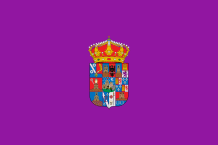 Guadalajara
Guadalajara province lies in the highlands northeast of Madrid, its Serranía landscape of deep river canyons, pine forests, and medieval castles relatively overlooked given its proximity to the capital. The Walled City of Sigüenza, with its Romanesque cathedral and its parador in the former bishop's castle, is one of the finest and least-visited historic cities in Castilla, and the dramatic Tajo river gorge and the ruins of Medinaceli are equally rewarding for those who make the detour.
-
44
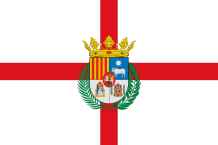 Teruel
Teruel holds the most complete collection of Mudéjar architecture in the world — towers, churches, and coffered ceilings created by Islamic craftsmen working under Christian rule form a hybrid art of geometric tile and brick decoration so accomplished that UNESCO granted World Heritage status to the Mudéjar of Aragon. The province is Aragon's most sparsely inhabited and, to many travellers, most rewarding — its landscapes of eroded badlands, deep Jurassic gorges, and immense empty skies represent one of the last great undiscovered areas of Western Europe.
-
45
 Palencia
Palencia is perhaps Spain's least-known provincial capital, its modest size belying a cathedral known as 'the unknown beautiful' — its interior a Gothic forest of proportions that surpass many more famous Spanish cathedrals, its cloister preserving Romanesque carvings of exceptional quality. The province is richly stocked with Romanesque churches in lonely landscapes, and the Canal de Castilla passes through, an 18th-century engineering project of surprising ambition whose length now makes for excellent cycling through the meseta.
-
46
 Zamora
Zamora is Spain's greatest concentration of Romanesque architecture — a modest provincial city on the banks of the Duero containing 24 Romanesque buildings within its medieval walls, more than any comparable area in the world. Its Semana Santa processions are among the most atmospherically intense in the country — hooded cofrades carrying centuries-old polychrome pasos through stone streets to the sound of drums in the darkness — representing a tradition of public devotion quite unlike anything elsewhere in Spain.
-
47
 Ciudad Real
Ciudad Real is the heart of La Mancha, the plateau landscape that Cervantes immortalized in Don Quixote — windmills still turn on ridgelines above Campo de Criptana and Consuegra, and the flat, dusty plain between them retains exactly the quality that drove a gentleman of La Mancha to mistake them for giants. The province holds the Tablas de Daimiel wetlands — a remnant floodplain, now a national park and critical refuge for migratory birds — and the Parque Nacional de Cabañeros preserves one of the last large areas of Mediterranean woodland in the Iberian Peninsula.
-
48
 Albacete
Albacete sits on the high plateau of La Mancha, the windmill-dotted landscape that Cervantes immortalized in Don Quixote, its flat horizons and ruined castles retaining exactly the character that drove a gentleman of La Mancha to mistake mills for giants. The provincial capital has been a centre of artisanal knife-making since Moorish times, and the saffron fields of the southern plains turn the earth scarlet each October during harvest, one of the most spectacular seasonal landscapes in Spain.
-
49
 Soria
Soria
Soria is Spain's least densely populated province, a high plateau landscape of juniper scrubland, river canyons, and sheep tracks that the Castilian poet Antonio Machado described with melancholy precision during his years teaching here. The Cañón del Río Lobos — a limestone gorge inhabited by griffon vultures — is one of Castilla's finest natural parks, while the ruins of Numantia on the plateau above the Duero, where Celtiberian defenders chose death over surrender to Rome in 133 BC, give the landscape a historical weight matched by few places in Spain.
-
50
 Álava
Álava
Álava is the southernmost and largest of the three Basque provinces, its landscape shifting from the dramatic Gorbeia mountains in the west to the wine terraces of the Rioja Alavesa in the south. Vitoria-Gasteiz, the capital of the Basque Country, has reinvented itself as one of Europe's greenest and most liveable cities, its medieval old town encircled by a ring of parks and a contemporary art scene disproportionate to its size.
-
51
 Ceuta
Ceuta
Ceuta is a Spanish autonomous city physically located on the northern tip of Africa, a remarkable political anomaly where the European Union meets the Moroccan coast across a frontier fence that marks one of the world's sharpest economic and cultural divides. Its strategic position guarding the Strait of Gibraltar has been fought over since antiquity, reflected in the Royal Walls built in successive phases from the medieval period onward and in the Monte Hacho promontory whose fortifications have been in continuous military use for two thousand years.
-
52
 Melilla
Melilla is a Spanish autonomous city on the north coast of Africa remarkable for containing the largest concentration of Art Nouveau architecture in Spain after Barcelona — over 70 Modernista buildings grace its streets, the legacy of a building boom between 1900 and 1930. The historic fortress quarter of Melilla la Vieja, built in successive phases from the 15th century onward, is a labyrinth of Renaissance military architecture whose layers of defence walls, moats, and bastions tell the story of five centuries of strategic competition.