Most Popular
Based on Countries Been user data.
-
1
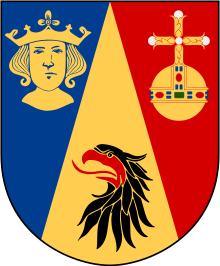 Stockholm County
Stockholm County is the Swedish capital and its archipelago — a city of 1.6 million built across fourteen islands where Lake Mälaren drains into the Baltic, with 30,000 islands stretching out to the open sea. Gamla Stan's medieval old town occupies its own island with the Royal Palace at one end; the Vasa Museum's salvaged 17th-century warship, ABBA The Museum, and Skansen open-air folk museum are among the finest attractions in Scandinavia. The archipelago to the east is one of Europe's great sailing and kayaking grounds, reachable by ferry from the city centre.
-
2
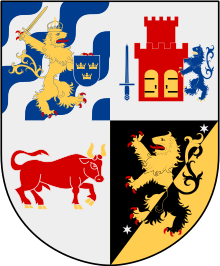 Västra Götaland County
Västra Götaland County contains Sweden's second city, Gothenburg — a west-coast port of fresh seafood, trams, and design culture that has produced some of the most influential industrial designers in European history. The Bohuslän Coast north of the city is Sweden's most dramatic coastal scenery: bare granite islands, lobster harbours, and the UNESCO-listed Bronze Age rock carvings of Tanum. Inland, Lake Vänern — the EU's largest lake — and the Göta Canal connect the county to the broader Swedish heartland.
-
3
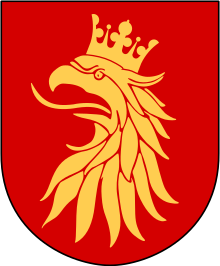 Skåne County
Skåne County is Sweden's southernmost province, its agricultural plains and gentle hills bearing a closer cultural resemblance to Denmark across the Öresund than to the forests of northern Sweden — historically accurate, since Skåne was Danish territory until 1658. Malmö, now linked to Copenhagen by the Øresund Bridge, has transformed from a post-industrial port into one of Scandinavia's most architecturally adventurous cities. The medieval university city of Lund, the castle ruins of Helsingborg, and the apple orchards and manor houses of the interior complete a county that rewards every direction of exploration.
-
4
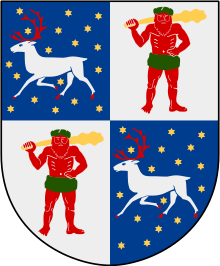 Norrbotten County
Norrbotten County is Sweden's largest county by area — bigger than England — occupying the Arctic north between the Norwegian and Finnish borders, with the Lule River system cutting from mountain to sea through boreal wilderness. Jukkasjärvi's Icehotel, rebuilt each winter from blocks cut from the Torne River, is one of the world's most singular hotel experiences, its artisan suites drawing guests from forty countries. Midnight sun, Northern Lights, Sami reindeer culture, and the ongoing physical relocation of Kiruna city above the iron ore mine make this the most extraordinary county in Sweden.
-
5
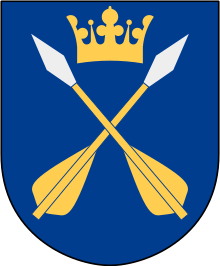 Dalarna County
Dalarna is Sweden's most sentimental county — the place where Midsommar is celebrated with the greatest ceremony, where the hand-painted Dala horse figurine was invented, and where artist Anders Zorn preserved folk traditions of a way of life already fading when he painted it. The Falun copper mine, a UNESCO World Heritage site, coloured the entire Swedish countryside with its distinctive red paint (Falu rödfärg) and enriched the Swedish crown for three centuries. In winter, the Vasaloppet cross-country ski race from Sälen to Mora draws 15,000 competitors through the county's snow-covered forests.
-
6
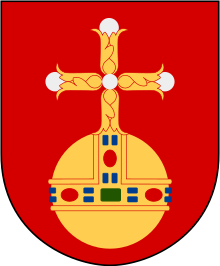 Uppsala County
Uppsala County holds Sweden's most important university city, where the university founded in 1477 shaped Swedish intellectual, scientific, and religious life for five centuries, and the 15th-century cathedral — the tallest in Scandinavia — rises above a city that still revolves around its academic calendar. Carl Linnaeus, inventor of the modern biological naming system, created his famous botanical garden here in 1745, still functioning as a teaching and public garden. The royal burial mounds at Gamla Uppsala, just north of the city, are among the most significant pre-Christian monuments in Scandinavia.
-
7
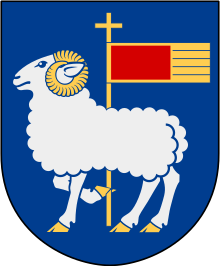 Gotland County
Gotland County is Sweden's largest island, a limestone plateau in the middle of the Baltic that in summer is the country's most coveted holiday destination — warm, dry, and lit with an afternoon light that painters have chased for generations. Visby, the medieval ring-walled city, is a UNESCO World Heritage site and one of the best-preserved Hanseatic trading towns in the world, its 13th-century wall almost entirely intact. Every August, Medieval Week fills the cobblestone lanes with jousting, banquets, and forty thousand visitors in period costume.
-
8
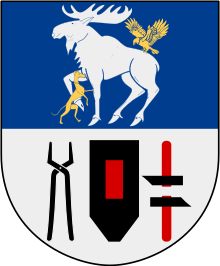 Jämtland County
Jämtland County is Sweden's mountain county, where the Scandinavian Alps rise above the tree line and the Åre ski resort draws international visitors every winter for some of the best downhill skiing in Scandinavia. Östersund, the only city north of 63° on the country's spine, sits on the shore of Lake Storsjön, where a creature resembling the Loch Ness Monster has been reported for centuries. The high fells along the Norwegian border are summer hiking territory of extraordinary emptiness and beauty.
-
9
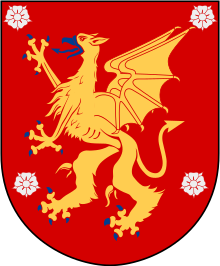 Östergötland County
Östergötland is one of Sweden's most historically layered counties — its plains contain more runestones per square kilometre than almost anywhere in the country, settled continuously since the Iron Age. Linköping's medieval cathedral, one of the finest in Scandinavia, anchors a city also known for Saab's military aviation heritage and the open-air Gamla Linköping district of preserved wooden houses. The Göta Canal cuts through the county, its 19th-century engineering feat of locks still carrying leisure boats in summer.
-
10
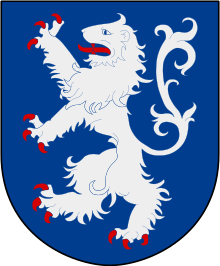 Halland County
Halland County runs along Sweden's west coast between Gothenburg and the Öresund, its flat sandy beaches — Tylösand, Båstad, Falkenberg — filling with Swedish summer crowds every July. The dunes and seafood shacks of Tylösand near Halmstad are as close to a beach-resort culture as Sweden gets. Varberg's 13th-century fortress houses a museum containing the world's most completely preserved medieval garment, adding unexpected depth to a county better known for its coastline.
-
11
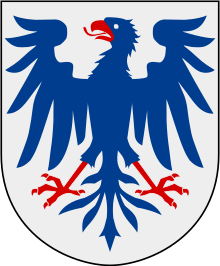 Värmland County
Värmland County stretches from Lake Vänern — the largest lake in the EU — north into forest wilderness near the Norwegian border, a landscape of river valleys, moose, and literary legend. Selma Lagerlöf, the first woman to win the Nobel Prize in Literature, was born at Mårbacka in Värmland, and her manor house is open to visitors. Karlstad, the sunny county capital on the Klarälven delta, has an outdoor culture and café society that seems improbable at 59° north.
-
12
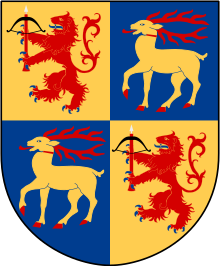 Kalmar County
Kalmar County runs along the Baltic coast opposite the island of Öland, the two connected by a six-kilometre bridge that makes Öland one of Sweden's most accessible summer destinations. Kalmar Castle is one of the best-preserved Renaissance castles in Scandinavia — it was here that the Kalmar Union treaty uniting Denmark, Norway, and Sweden was signed in 1397. The county's fishing villages, windmill-dotted limestone plains, and the UNESCO-listed southern tip of Öland draw visitors from across the country every summer.
-
13
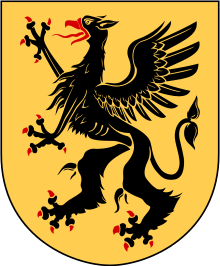 Södermanland County
Södermanland County curves around the southern shore of Lake Mälaren, its landscape of forested ridges and Baltic-coast inlets dotted with Viking-era runestones and medieval stone churches in almost every parish. Strängnäs Cathedral, begun in the 13th century, contains the tomb of King Karl IX, and the town's quiet streets along the lake give little hint of how central it was to early Swedish statehood. Eskilstuna, once the Sheffield of Sweden for its cutlery industry, has reinvented itself as a design and culture city.
-
14
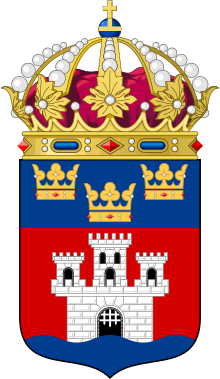 Jönköping County
Jönköping County sits astride Lake Vättern, the second-largest lake in Sweden, whose cold, clear waters stretch fifty kilometres at their widest — a body of water large enough to generate its own local weather. The city of Jönköping was for two centuries the world capital of the safety match industry, a history told at the lakeside Match Museum. Taberg mountain, Hjo's wooden town architecture, and the Brahehus castle ruin overlooking the lake make this county worth lingering in.
-
15
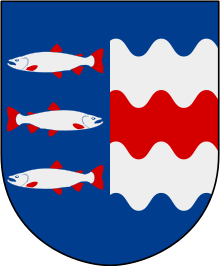 Västernorrland County
Västernorrland County hugs the Bothnian coast north of Gävleborg, its greatest distinction the High Coast (Höga Kusten) — a UNESCO World Heritage site where the land is rising from the sea at eight millimetres per year, the ongoing rebound from the last ice age. The dramatic cliffs, deep bays, and red fishing cottages are best explored by ferry or kayak. Sundsvall, entirely rebuilt in stone after a catastrophic 1888 fire, is one of the finest 19th-century stone city centres in Scandinavia.
-
16
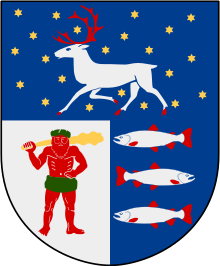 Västerbotten County
Västerbotten County covers the boreal forest belt between the Bothnian coast and the Norwegian mountains, its coastal city of Umeå transforming over thirty years into Sweden's youngest and fastest-growing city, driven by a university of forty thousand students. The county is famous for Västerbottensost, a sharp, crystalline hard cheese that defines Swedish cuisine from north to south. Inland, the Vindelälven river — legally protected for its entire length — flows through a wilderness where wolverines and lynx still roam.
-
17
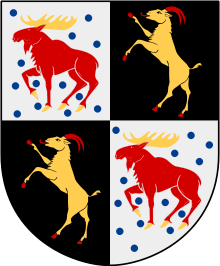 Gävleborg County
Gävleborg County stretches from the Bothnian coast inland through boreal forest to the Dalarna border, its landscape shaped by centuries of ironworking and the Ljusnan and Dala rivers. Hudiksvall's 18th-century wooden town quarter survived fire and war and remains one of the best-preserved in central Sweden. The offshore island chain running along the coast is a quiet alternative to the busier southern archipelagos.
-
18
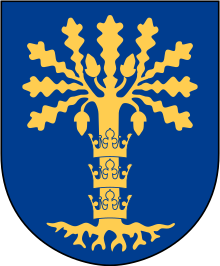 Blekinge County
Blekinge County is Sweden's smallest, a compact slice of south coast archipelago where the naval city of Karlskrona was founded in 1680 — its baroque urban plan on three islands, designed to house the Swedish navy, is now a UNESCO World Heritage site. The county's archipelago is the most sheltered on the Swedish coast, with granite skerries, clear water, and a mild microclimate that supports remarkable marine life. Karlskrona's naval heritage and the quiet fishing villages along the coast reward an overnight stay in a county most visitors pass through.
-
19
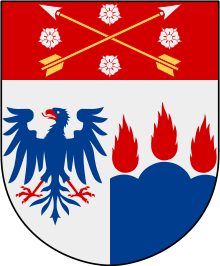 Örebro County
Örebro County sits at the geographic centre of Sweden, its focal point the red-brick Örebro Castle on an island in the Svartån river — a fortress standing since the 13th century that now houses the county governor's offices. The county's central position has made Örebro one of Sweden's fastest-growing cities, with a lively restaurant scene and a university filling its streets with students. Karlskoga, home of Alfred Nobel who invented dynamite and established the Nobel Prizes, adds another layer of significance.
-
20
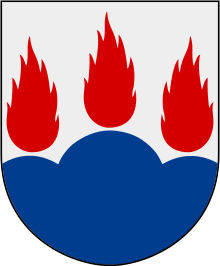 Västmanland County
Västmanland County lies west of Stockholm along the northern shore of Lake Mälaren, its commercial heart the city of Västerås — one of Sweden's oldest trading cities, home to a cathedral containing the tomb of Erik XIV. The county's agricultural lowlands give way to iron-producing forests in the north, a history commemorated at the Engelsberg Ironworks, a UNESCO World Heritage site and one of the best-preserved blast-furnace complexes from the age of iron. Lake Mälaren's archipelago along the county's southern edge is dotted with summer cottages and medieval church ruins.
-
21
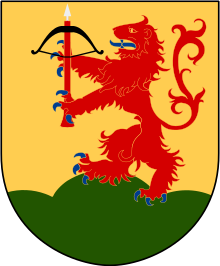 Kronoberg County
Kronoberg County is the heart of Sweden's Kingdom of Crystal, a stretch of boreal forest where dozens of glass factories have operated since the 18th century, exploiting abundant sand and timber to produce work sold across the world. Kosta Boda and Orrefors — two of the most famous names in Swedish glass — both have their studios here, with factory shops and glass-blowing demonstrations. Växjö, the county capital, is one of Sweden's greenest cities and the base for exploring forest lakes and glassworks.