Most Popular
Based on Countries Been user data.
-
1
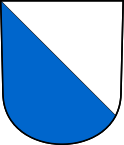 Zürich
Zürich is Switzerland's largest city and its economic engine — the Bahnhofstrasse, running from the central station to the lake, is one of the world's most expensive shopping streets, and the Paradeplatz at its heart is flanked by the headquarters of UBS and Credit Suisse, establishing the geography of Swiss banking with unusual literalness. Yet the city that outsiders imagine as austere and expensive is in practice remarkably livable — the Langstrasse district is the most concentrated nightlife area in Central Europe, the lake and river swimming culture is free and deeply democratic, and the old town on both banks of the Limmat is dense with history from the Reformation onwards, where Zwingli preached at the Grossmünster and the Kunsthaus houses the most important art collection in Switzerland. The city consistently ranks at the top of global quality-of-life indices, which goes some way to explaining why it is also consistently expensive.
-
2
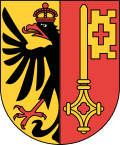 Geneva
Geneva is Switzerland's most international city — home to more than 200 international organisations including the United Nations European headquarters, the International Committee of the Red Cross, and CERN, where the Large Hadron Collider runs beneath the French border. The old town rises above the lake on a natural promontory where Calvin once set the theological agenda for Reformation Europe, and the Jet d'Eau — a water jet shooting 140 metres above Lake Geneva — has become the city's most recognisable emblem. Despite its cosmopolitan character and French-speaking identity, Geneva feels surprisingly small and walkable, its concentration of international culture, watchmaking heritage, and lakeside promenades contained within a remarkably compact geography.
-
3
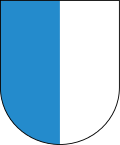 Lucerne
Lucerne is the city that most foreign visitors conjure when they imagine Switzerland — the Chapel Bridge spanning the Reuss with its painted triangle panels, the Lion Monument cut into a sandstone cliff to commemorate the Swiss Guards who died defending the Tuileries in 1792, and the glittering lake surrounded by mountains that give the region the quality of an oil painting come to life. The old town is compact enough to explore in an afternoon but consistently rewarding, and the lake itself serves as the gateway to the original cantons of Uri, Schwyz, and Unterwalden where the Swiss Confederation was founded in 1291. Mount Pilatus, reached by the world's steepest cogwheel railway, rises immediately above the city to offer panoramas across a country that seems almost implausibly beautiful.
-
4
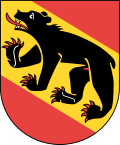 Bern
Bern
Bern is simultaneously Switzerland's federal capital and its most cinematically preserved medieval city — a UNESCO-listed old town of sandstone arcades and clock towers built on a peninsula of the Aare, its streets virtually unchanged since the 15th century. The Bernese Oberland to the south is some of the most dramatic mountain scenery in Europe: Interlaken sits between two lakes at the gateway to the Jungfrau region, where the Eiger's north face looms over Grindelwald and the Jungfraujoch railway station, at 3,454 metres, delivers visitors to the roof of Europe by cogwheel train. The canton also produces Emmental cheese in the gentle farmland northeast of the capital.
-
5
 Vaud
Vaud
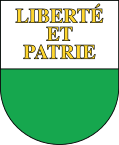
Vaud claims the most glittering stretch of the Swiss Riviera — the northern shore of Lake Geneva, where Lausanne's terraced city climbs from the waterfront and Montreux's casino gardens face the French Alps across the water with theatrical confidence. The Lavaux vineyard terraces east of Lausanne, a UNESCO World Heritage Site, have been cut into the steep southern slopes since the 12th century and produce some of the finest white wines in Central Europe; wine tourism here is unpretentious and deeply pleasurable. Inland, the Vaudois Alps give way to the Jorat plateau, where the canton's agricultural identity reasserts itself far from the lakeside crowds.
-
6
 Valais
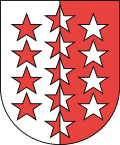
Valais contains the highest concentration of four-thousand-metre peaks in the Alps — 36 of them, including the Dom, the Monte Rosa massif, and the unmistakable pyramid of the Matterhorn at 4,478 metres, which has made Zermatt one of the most photographed and most visited mountain villages in the world. The Rhône Valley runs east to west through the canton, separating the Pennine Alps on the south from the Bernese Alps on the north, and the valley's sunshine hours — exceptional for Switzerland — support both serious viticulture and the fruit orchards that supply Swiss supermarkets. Verbier, Saas-Fee, and Crans-Montana complete a constellation of ski resorts that makes Valais the single most important winter sports destination in a country that has the entire Alps to choose from.
-
7
 Graubünden
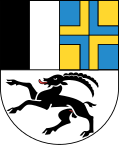
Graubünden is Switzerland's largest and most linguistically improbable canton — a territory of 150 valleys where German, Italian, and Romansh are all official languages, and where the landscape shifts from the sub-Alpine meadows of the Prättigau to the glacier country of the Silvretta and the brown-and-ochre Engadine valley, which has produced the most sophisticated mountain resort culture in the world. St. Moritz invented Alpine tourism in the 1860s when hotelier Johannes Badrutt bet English guests they would find the winter sunnier than London, won the bet, and effectively created modern ski tourism; today the Upper Engadine remains the gold standard of luxury mountain travel. Davos, at the head of a separate valley, combines a major ski area with the World Economic Forum, giving it a global notoriety that its rugged setting does little to explain.
-
8
 Basel-Stadt
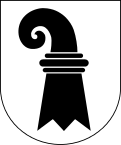
Basel-Stadt, the city half-canton pressed into a bend of the Rhine on the French and German borders, contains more museums per square kilometre than almost any other city in the world — forty of them in a city of 180,000 people — anchored by the Kunstmuseum, the oldest public art collection in the world, and the Fondation Beyeler, one of the finest private modern art galleries anywhere. Art Basel, held in June, transforms the city into the global art market's most important annual gathering, filling hotels from the Jura to the Black Forest, but for the remaining fifty-one weeks the city rewards visitors with a self-confident architectural culture that has commissioned major works from Renzo Piano, Frank Gehry, Herzog and de Meuron, and Zaha Hadid for its pharmaceutical campuses and cultural institutions. The Rhine itself, broad and fast here, is the city's most distinctive feature — Basel residents swim in the current as a summer sport, carried downstream in a tradition that feels authentically its own.
-
9
 Ticino
Ticino is the Switzerland that nobody expects — a canton that faces Italy rather than the Alpine north, where the language is Italian, the architecture is Lombard baroque, and the climate is warm enough in the southern lake district for palm trees and outdoor dining in March. Lugano sits on its lake with the self-assurance of a small Mediterranean city, its lakeside promenade backed by Italianate arcades and the Monte San Salvatore and Monte Brè accessible by funicular; Locarno, at the northern tip of Lake Maggiore, hosts the International Film Festival each August in its piazza under the open sky, and the Sacro Monte di Orselina above the town is a UNESCO World Heritage pilgrimage site. The Lepontine Alps in the north are the Switzerland of granite ridges and remote valleys, barely populated and barely visited, a wilderness within a densely organised small country.
-
10
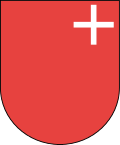 Schwyz
Schwyz gave Switzerland its name — the medieval charter of 1291 that launched the Confederation was sealed between Uri, Unterwalden, and Schwyz on the Rütli meadow above Lake Lucerne, and the canton still guards the Federal Charter in the Forum of Swiss History in Schwyz town. The Rigi, accessible from Arth-Goldau or by lake steamer from Lucerne, was the first mountain to be served by a cogwheel railway, in 1871, and the panorama from its summit across the lake country gives the best single view of central Switzerland available without serious mountaineering. The canton also contains Einsiedeln, whose baroque monastery church — built around a Black Madonna shrine that has drawn pilgrims from across Catholic Europe for a thousand years — remains one of the great ecclesiastical interiors of the German-speaking world.
-
11
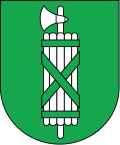 St. Gallen
St. Gallen occupies Switzerland's northeastern corner where the Rhine Valley opens toward Lake Constance, and its eponymous city contains one of the great libraries of the medieval world — the Abbey of St. Gallen, founded in the 7th century, whose rococo reading room shelves manuscripts that predate the printing press by seven hundred years. The canton was long the beating heart of Switzerland's textile industry, and the fine embroidery produced here still supplies luxury fashion houses across Europe. The southern reaches rise into the Alpstein massif, where the Säntis peak and the Toggenburg valley offer hiking of genuine remoteness.
-
12
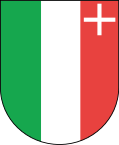 Neuchâtel
Neuchâtel sits on the northern shore of the lake that bears its name, its yellow sandstone old town rising above a Renaissance château and a Gothic collegiate church that together create one of the most elegant urban tableaux in the French-speaking cantons. The canton is the beating heart of Swiss watchmaking — the Vallée des Ponts and the arc jurassien contain the workshops and manufactures of dozens of firms, from mass-market to haute horlogerie, and the Musée international d'horlogerie in La Chaux-de-Fonds explains the industry's astonishing craft depth. La Chaux-de-Fonds itself, the birthplace of Le Corbusier and the world's most completely watch-industry-planned city, is a UNESCO World Heritage Site.
-
13
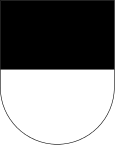 Fribourg
Fribourg occupies the cultural fault line between German and French Switzerland — the Saane/Sarine river runs through the cantonal capital dividing the Basse-Ville from the Haute-Ville, and the linguistic border has run through these streets since the early Middle Ages, creating a city and a canton of unusual bilingual complexity. The medieval old town, perched on a dramatic sandstone promontory above a deep loop of the Sarine, is one of the largest intact Gothic urban ensembles in Switzerland, its cathedral containing some of the finest tympanum sculpture north of the Alps. The canton's agricultural heartland, the Gruyères district to the south, is the origin of the eponymous cheese and the backdrop for the Château de Gruyères, a storybook hilltop castle that makes the cheese tourism worth it.
-
14
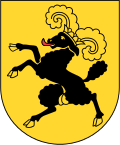 Schaffhausen
Schaffhausen occupies Switzerland's northernmost exclave above the Rhine, a piece of national territory almost entirely surrounded by Germany, and its old town is one of the best-preserved in the country — a compact grid of bay-windowed guild houses and the Munot fortress above the river, whose bells still ring at ten each evening according to a custom established in the Thirty Years' War. The Rhine Falls at Neuhausen, four kilometres west, is the largest waterfall in Europe by volume, a 150-metre-wide curtain of water that crashes twenty-three metres into a basin of extraordinary noise and spray — an entirely underrated natural spectacle given how few international visitors include it on their Swiss itineraries. The canton's wine production, focused on the Blauburgunder grape, is modest but of high quality.
-
15
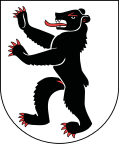 Appenzell Inner Rhodes
Appenzell Inner Rhodes is the smallest Swiss canton by population and the last to grant women's suffrage — not until 1990, when the Federal Supreme Court compelled it — yet this history of stubborn independence is inseparable from the culture that makes the canton so compelling to visit. Appenzell town's painted façades and the traditions of Alpfahrt (cattle drives), embroidery, and folk music concentrated in a few square miles of eastern Alpine foothill country create the densest expression of traditional Swiss identity available in a single day's visit. The Landsgemeinde, the outdoor democratic assembly in which citizens vote by raised hands in the main square each April, is one of the last living examples of direct democracy practiced in the way the Swiss Confederation was designed to work.
-
16
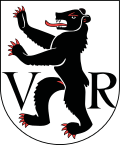 Appenzell Outer Rhodes
Appenzell Outer Rhodes occupies the outer ring of the Appenzell district in northeastern Switzerland, a landscape of intensely green rolling hills above the Rhine Valley and Lake Constance where farmhouses painted with traditional folk motifs look out across a countryside that appears to have changed little in a century. The half-canton produces the pungent Appenzeller cheese — one of Switzerland's strongest and most aromatic — at dairies that still follow methods documented in manuscripts from the 13th century. The craft traditions here run deep: embroidery, folk music, and the Landsgemeinde outdoor assembly, though the open-air parliament now belongs only to Inner Rhodes, remain markers of a culture that prizes continuity.
-
17
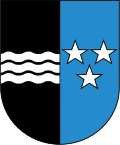 Aargau
Aargau is the most historically layered of the central Swiss cantons — the territory where the Habsburg dynasty originated, where the Romans built the legionary fortress of Vindonissa, and where the Aare, Reuss, and Limmat rivers converge in a well-watered agricultural lowland still dotted with medieval castles. Baden has been one of Europe's spa towns since Roman times, its thermal springs attracting visitors across fifteen centuries, and the old town retains a covered wooden bridge and merchant facades of quiet distinction. The canton lacks a single magnetic destination but rewards unhurried exploration, particularly for travellers interested in Swiss history beneath the Alpine tourist trail.
-
18
 Thurgau
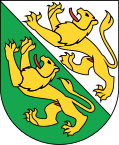
Thurgau stretches along the southern shore of Lake Constance from the Untersee to the Rhine, a fertile agricultural canton of orchards, vineyards, and Biedermeier country houses that sits in the shadow of its more celebrated neighbours without particularly minding. The canton produces more apple juice than any other part of Switzerland, and the cider houses and fruit farms along the lake road represent a form of food tourism quite different from the cheese and chocolate clichés. The Rhine island of Werd, connected to the shore by a footbridge, contains a small Franciscan monastery of considerable tranquillity, and the Kreuzlingen lakefront, effectively continuous with Constance across the German border, offers boat excursions across one of Europe's largest freshwater lakes.
-
19
 Uri
Uri
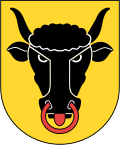
Uri is where the Swiss Confederation mythology reaches its densest concentration — William Tell was supposedly born at Bürglen at the head of the Reuss valley, the Rütli meadow on the lake shore was the site of the 1291 oath, and the Gotthard massif at the canton's southern end has been the most strategically important mountain crossing in Europe since the Romans. The St. Gotthard road opened the pass for year-round transit in 1882 and for regular traffic in 1980, making Uri a corridor rather than a destination — a role that has preserved its extraordinary emptiness while carrying the continent's north-south trade through its valley. Andermatt, at the Gotthard crossroads, is being transformed into a major ski resort by an Egyptian investor; for the moment it retains a faded alpine charm.
-
20
 Zug
Zug
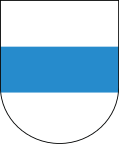
Zug is the smallest and most financially extraordinary of Swiss cantons — a lakeside territory of barely 240 square kilometres whose combination of low cantonal taxes, central location, and exceptional quality of life has attracted multinational corporations and crypto firms in such numbers that its GDP per capita is among the highest in the world. The old town on the lake shore is an understated gem of fountains and Gothic facades that receives a fraction of the visitors who descend on Lucerne thirty kilometres to the south, and the Zugersee is a beautiful lake in its own right, reflecting the Rigi and the Pilatus on clear days. The kirsch cherry brandy produced in the canton's orchards gave the world the Zuger Kirschtorte, one of the more underrated contributions of a very well-fed country.
-
21
 Obwalden
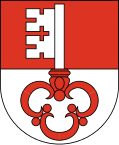
Obwalden, the outer half of the old Unterwalden forest canton, runs south from the shores of Lake Sarnen into the mountains that surround the Engelberg valley — a geography that has produced both a major ski resort and a monastic tradition of unusual continuity. The Benedictine Abbey of Engelberg, founded in 1120, still functions as an active monastery while running a cheese dairy, a chocolate shop, and a guesthouse for the ski town that has grown around it, the combination of sacred and après-ski feeling distinctly Swiss. The Titlis glacier at 3,020 metres, reached by the world's first revolving cable car, is Obwalden's most dramatic draw and the highest accessible point in Central Switzerland.
-
22
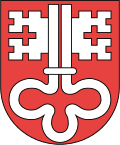 Nidwalden
Nidwalden wraps around the southern shore of Lake Lucerne between the forests of Stansstad and the lower slopes of the Bürgenstock ridge, a landscape of spectacular lake views and quiet villages that has long attracted discreet luxury tourism to the clifftop Bürgenstock resort above the water. The cantonal capital Stans preserves a handsome market square and the Church of St. Peter and Paul, a quiet counterpoint to the palatial resort hotels that make Nidwalden an exclusive destination for visitors who want alpine scenery without the crowds. Together with neighbouring Obwalden it once formed the single half-canton of Unterwalden, one of the three founding forest cantons of the Swiss Confederation.
-
23
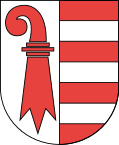 Jura
Jura
Jura is Switzerland's youngest canton, carved out of Bern in 1979 after decades of linguistic and cultural agitation by the French-speaking Jurassian population, and its hard-won independence gives it a distinct identity that sets it apart from the Confederation's older members. The landscape is one of rolling forested plateaux and quiet limestone gorges — the Franches-Montagnes plateau in particular is horse country, its wide open pastures a world away from Alpine Switzerland. The region's watchmaking tradition, shared with neighbouring Neuchâtel, means that several of the world's most prestigious watch manufacturers are based here, in villages that otherwise look entirely unremarkable.
-
24
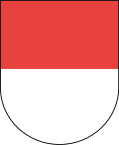 Solothurn
Solothurn is a Baroque city so complete and so concentrated that it has been called the most beautiful Baroque city in Switzerland — the Cathedral of St. Ursus, the arsenal, the old city gates, and the fountains were all constructed during the tenure of the French ambassadors to the Swiss Confederation who chose Solothurn as their residence, leaving behind a layer of 17th and 18th-century civic magnificence quite out of proportion to the town's modest size. The Weissenstein ridge above the city, reached by the last manually operated gondola in Switzerland, offers panoramic views south across the Mittelland plateau to the Alps that have made Solothurn a favourite excursion destination since the 18th century. The obsession with the number eleven — eleven churches, eleven fountains, eleven towers, the cathedral completed in 1773 on the 11th of November — adds an enjoyably eccentric footnote to the city's considerable civic charms.
-
25
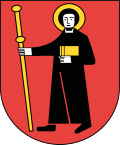 Glarus
Glarus is one of Switzerland's smallest and least-visited cantons — a single valley running south from the shore of Lake Walen into the high Glärnisch massif, where the isolated farming communities practise the Landsgemeinde, the ancient outdoor democratic assembly in which citizens vote by raised hands in the main square each April. The canton was devastated by a fire in 1861 that destroyed the old cantonal capital, which was rebuilt to a grid plan on progressive urban principles that still give it an oddly rational feeling for a Swiss mountain village. The Klöntal reservoir and the Glärnisch peaks above 2,900 metres offer excellent hiking and ski touring for visitors willing to forgo the more famous neighbouring resorts.
-
26
 Basel-Landschaft
Basel-Landschaft, the rural half-canton that split from Basel-Stadt in 1833, wraps around the city in a wide arc of Jurassian foothills and Birsig valley farmland, preserving the slower rhythms and lower costs of the Swiss countryside within reach of one of Europe's most culturally concentrated cities. The Jura villages are quietly attractive and frequently ignored, and the Augusta Raurica Roman ruins at Augst — the best-preserved Roman theatre north of the Alps — sit in the valley without the tourist infrastructure they would attract anywhere else in Europe. The canton has the unfortunate distinction of being Switzerland's least-visited, which for travellers who discover it becomes a quiet recommendation.