Most Popular
Every country and territory, the most visited cities and a selection of the UNESCO World Heritage Sites in Oceania.
-
1
The Great Barrier Reef, the Outback, iconic Sydney Harbour and some of the world's best surf beaches — Australia's sheer scale and natural variety are simply staggering.
-
2
Middle-earth come to life — towering fjords, geothermal wonders, bungee jumping birthplace and some of the most spectacular hiking trails on the planet.
-
3
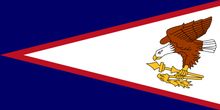 American Samoa Territory
A US territory in Polynesia and the only part of the United States south of the equator, with the National Park of American Samoa spread over three islands of rainforest and reef.
-
4
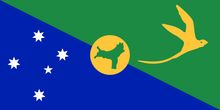 Christmas Island Territory
An Australian territory closer to Java than to Australia, where tens of millions of red crabs migrate to the sea each year in one of the great wildlife spectacles.
-
5
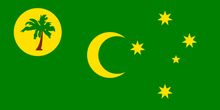 Cocos (Keeling) Islands Territory
Two Australian coral atolls in the Indian Ocean with a Malay Muslim population, twenty-seven islands and almost no visitors.
-
6
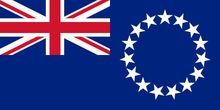 Cook Islands Territory
Fifteen islands in free association with New Zealand, with Rarotonga's mountainous interior and the Aitutaki lagoon regularly called the most beautiful in the Pacific.
-
7
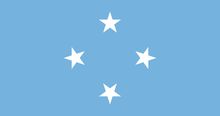 Federated States of Micronesia
Four states across 600 islands, including Chuuk Lagoon's sunken Japanese fleet and the basalt city of Nan Madol built on artificial islets off Pohnpei.
-
8
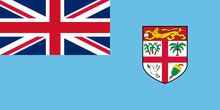 Fiji
Fiji
Three hundred islands, of which about a third are inhabited, with soft-coral diving, the Yasawa chain and a kava-drinking welcome that visitors remember longest.
-
9
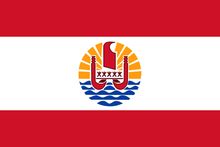 French Polynesia Territory
Tahiti, Bora Bora and the Tuamotus — 118 islands across an area the size of Europe, with overwater bungalows in the lagoons and Marquesan archaeology in the north.
-
10
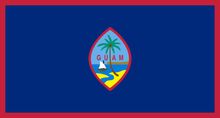 Guam Territory
A US territory and the Pacific's main air hub, with Spanish colonial forts, war memorials from the 1944 recapture, and reef diving off Apra Harbor.
-
11
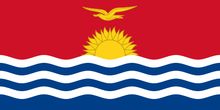 Kiribati
Thirty-three atolls straddling the equator and the date line, among the most exposed countries on earth to sea-level rise, with the vast Phoenix Islands marine reserve.
-
12
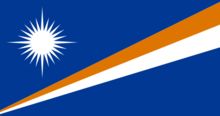 Marshall Islands
Twenty-nine atolls including Bikini, where nuclear testing left a lagoon full of sunken warships, and Kwajalein, the largest lagoon on earth.
-
13
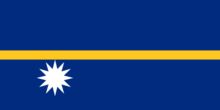 Nauru
Nauru
The world's smallest island nation at 21 square kilometres, stripped by a century of phosphate mining, with a single road around the perimeter.
-
14
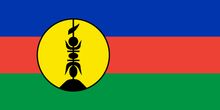 New Caledonia Territory
A French territory with the world's second-largest barrier reef, a lagoon on the World Heritage list, and a Kanak culture distinct from the French settler population.
-
15
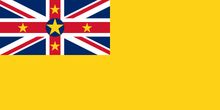 Niue Territory
One of the smallest countries anywhere, a single raised coral atoll in free association with New Zealand, where humpback whales come close enough to swim with.
-
16
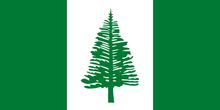 Norfolk Island Territory
A tiny Australian external territory in the Tasman Sea, settled by Bounty mutineers' descendants from Pitcairn, with its own language and convict-era buildings.
-
17
 Northern Mariana Islands Territory
A US commonwealth including Saipan and Tinian, with wartime history, limestone caves and the Mariana Trench — the deepest point on earth — offshore.
-
18
 Palau
Palau
Jellyfish Lake, the Rock Islands and the wreck-strewn reefs make Palau one of the world's top dive destinations, and it protects 80 per cent of its waters.
-
19
 Papua New Guinea
Over 800 languages, the Kokoda Track, Sepik river art and birds of paradise — the most culturally diverse country on earth and one of the least travelled.
-
20
 Pitcairn Islands Territory
Four islands with fewer than fifty residents, all descended from Bounty mutineers, reached by a supply ship from Mangareva a few times a year.
-
21
 Samoa
Samoa
The heart of Polynesia, with To Sua ocean trench, Robert Louis Stevenson's house above Apia, and a fa'a Samoa way of life still ordering daily village routine.
-
22
 Solomon Islands
Nearly a thousand islands, with some of the best wreck diving in the world in Iron Bottom Sound, where dozens of ships sank during the Guadalcanal campaign.
-
23
 Tokelau Territory
Three atolls in free association with New Zealand, with no airstrip at all — reached only by a boat that runs every couple of weeks from Samoa.
-
24
 Tonga
Tonga
The only Pacific nation never colonised, with a monarchy still in place, humpback whales that calve in its waters, and blowholes along the Tongatapu coast.
-
25
 Tuvalu
Nine low atolls averaging two metres above sea level, whose airstrip doubles as the village green between the twice-weekly flights.
-
26
 United States Minor Outlying Islands Territory
Scattered uninhabited US islands, mostly Pacific — Midway, Wake, Baker — that are wildlife refuges, war graves and almost impossible to visit.
-
27
 Vanuatu
Eighty-three islands with active volcanoes you can walk to the rim of, land diving on Pentecost that inspired bungee jumping, and the wreck of the SS President Coolidge.
-
28
 Wallis and Futuna Islands Territory
A French territory of three main islands with the most traditional Polynesian society in the region, where customary kings still hold authority alongside French administration.