Most Popular
Top cities and UNESCO World Heritage Sites in Andorra.
-
1
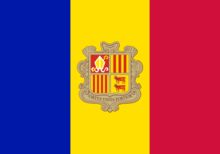 Andorra la Vella
Europe's highest capital city, perched at over 1,000 metres in a narrow Pyrenean valley, mixes medieval stonework with glass-fronted malls built for the duty-free shopping that has long defined Andorran tourism. The 16th-century Casa de la Vall, seat of the country's parliament for nearly 400 years until 2011, sits just blocks from the crowds hunting tax-free electronics and perfume.
-
2
Escaldes-Engordany
Technically its own parish but fused seamlessly with the capital next door, this spa town built its modern identity around Caldea, a glass-pyramid thermal complex fed by natural hot springs that draws day-trippers from across the Pyrenees. Its streets blend casual nightlife with some of the country's best-regarded restaurants.
-
3
Encamp
A working parish rather than a resort town, Encamp holds the National Automobile Museum's collection of vintage cars and motorcycles alongside its own share of the Grandvalira ski domain, reached by the Funicamp cable car. It's a quieter base for visitors who want the slopes without the Soldeu crowds.
-
4
Canillo
The largest and highest parish by area shelters the Romanesque bell tower of Sant Joan de Caselles, one of Andorra's best-preserved 11th-century churches, beneath peaks that feed the Grandvalira ski domain. The Roc del Quer viewing platform, a steel walkway cantilevered over a sheer drop, has become one of the country's most photographed spots.
-
5
Soldeu
This former hamlet of stone farmhouses reinvented itself as the liveliest base in the Grandvalira ski domain, Andorra's largest, with an après-ski scene that rivals bigger Alpine names. Summer turns the same slopes into mountain-biking and hiking terrain.
-
6
El Tarter
A quieter neighbor to Soldeu within the same Grandvalira lift network, El Tarter keeps a more local, less built-up feel while still sitting minutes from the pistes. Its gondola link makes it a practical, lower-key base for skiers.
-
7
Pas de la Casa
Sitting directly on the French border at over 2,000 metres, this duty-free ski town grew up almost entirely around commerce and skiing rather than Andorran tradition, and French day-trippers still cross over for cheap fuel, alcohol, and tobacco. Its position atop the Grandvalira domain gives it some of the most reliable snow in the Pyrenees.
-
8
Ordino
Widely considered Andorra's most charming village, Ordino's stone-and-slate houses surround the Casa d'Areny-Plandolit, a 17th-century noble residence turned museum that captures pre-tourism Andorran life. The Vallnord-Ordino Arcalís ski area above it draws a smaller, more local crowd than Grandvalira.
-
9
La Massana
This central parish anchors the Vallnord ski domain and makes a practical base for reaching both the Arinsal and Pal sectors, alongside hiking trails into the high Pyrenees. It has less built-up sprawl than Canillo's resort towns.
-
10
Arinsal
A compact ski village at the head of its own valley, Arinsal built its reputation on affordable lift passes and a lively bar scene that draws a younger, more budget-conscious crowd than Soldeu. The cable car linking it to Pal created one of the Pyrenees' larger interconnected ski areas.
-
11
Pal
Connected to Arinsal by cable car to form part of the Vallnord domain, Pal keeps a gentler, family-oriented character with wide beginner runs and sweeping views over La Massana's valley.
-
12
Sant Julià de Lòria
Andorra's southernmost parish, hugging the Spanish border, trades ski slopes for Naturlandia, a mountain adventure park whose toboggan run is billed as the world's longest. Its old quarter preserves some of the country's least-touristed Romanesque architecture.
-
13
El Serrat
A scattering of stone hamlets at the head of Ordino's valley, El Serrat has stayed largely rural, with old farmhouses now serving as guesthouses for visitors exploring the high trails toward Vallnord-Arcalís rather than the resort circuit further south.
-
14
Llorts
One of the last places in Andorra where tobacco is still grown commercially, this small Ordino-parish village preserves a slower, agricultural side of the country that the ski towns rarely show.
-
15
Meritxell
The sanctuary of Our Lady of Meritxell, patron saint of Andorra, was rebuilt in a striking modernist style by Catalan architect Ricardo Bofill after a 1972 fire destroyed the original chapel, and it remains the spiritual center of the country's one major religious pilgrimage.
-
16
Santa Coloma
Home to Andorra's oldest surviving church, a pre-Romanesque chapel with a circular bell tower dating to before the 11th century, Santa Coloma offers a quieter counterpoint to the shopping streets of the nearby capital.
-
17
Madriu-Perafita-Claror Valley
Andorra's only UNESCO World Heritage Site protects a glacially carved valley of stone shepherd's huts, terraced fields, and high mountain lakes that together tell the story of a thousand years of Pyrenean agro-pastoral life. Hiking trails into the valley start just outside Escaldes-Engordany and climb toward some of the country's wildest, least-developed terrain.
-
18
Arcalís
The remote, high-altitude sector of the Vallnord ski domain above Ordino, Arcalís stays less crowded than Grandvalira thanks to a longer approach drive, rewarding visitors with some of Andorra's most dramatic alpine scenery and access to the Tristaina lakes trailhead.